Should You Give Her Your Initials? A Guide to Two-Initial Necklaces
What a two-initial necklace actually means, when the timing is right, and how to choose between one, two, or three initials.
Key Takeaways
- A two-initial necklace says something specific It's not a generic gift. Two initials together are a deliberate statement about your bond — which is exactly what makes it meaningful, and why timing matters.
- It's not for early dating A personalised necklace carrying both your initials is a committed-relationship gift. If you're still in the first few months, a single initial is the better call.
- One, two, or three — each means something different One initial is sweet. Two says you're in this together. Three brings a child or third person into the story — ideal for a growing family.
- Solid gold is the right material for a keepsake This is a piece she'll wear for years. Solid gold — 14ct or 18ct — holds its quality and its meaning. Plated doesn't.
- It can grow with the relationship Start with two initials, add a third for a new family member. The piece doesn't just mark a moment — it can mark a whole chapter.
In This Guide
- Chapter I What a Two-Initial Necklace Actually Means — the symbolism behind pairing initials
- Chapter II When Is the Right Time? — a plain guide to relationship timing
- Chapter III One, Two, or Three Initials — what each version means and when to choose it
- Chapter IV The Best Occasions to Give One — anniversaries, birthdays, milestones and more
But if you're considering giving a two-initial necklace — one that carries both your letters — there are a few things worth thinking through. It's a more considered gesture than a single initial, and the timing matters more than people assume. This guide answers the questions people don't always think to ask: what it means, when to do it, and how to choose between one, two, or three initials.
Also read: 9 initial pendant styles worth knowing about
What a Two-Initial Necklace Actually Means
Two Initials, One Meaning
Pairing initials together does something a single letter doesn't. It places two people in the same piece — your initial and hers, worn by her, close to her. That's a gesture with a clear message: I'm thinking about us, not just about you. It's personal in a way that goes beyond the typical personalised gift.
When we give something made specifically for one person, we're signalling that we know them well enough to choose something unrepeatable. Two initials take that further — they're not just personal to the recipient, they're specific to the relationship. That's why these pieces tend to be kept for years, and why getting the moment right matters.
Also read: How custom initial necklaces empower self-expression

When Is the Right Time?
If You're Still in the Early Stages
A two-initial necklace is a meaningful gift — and meaningful gifts carry weight. In the early months of a relationship, that weight can feel like pressure rather than affection, regardless of how it's intended. The message a two-initial piece sends ("this is permanent, we are a unit") is not always the right one when you're still figuring things out.
If you're in the early stages, stick to something less declarative: a single initial, a birthday dinner, flowers. It's not about being less thoughtful — it's about the gesture being proportionate to where things actually are.
If You're in a Committed, Loving Relationship
This is the right moment. A two-initial necklace featuring both your letters is exactly the kind of gift that works when the relationship has some depth to it — it says "I'm thinking about us" without overpromising anything about the future. It's not an engagement ring. It's a considered, wearable acknowledgement that this matters.
The practical threshold: if you've hit a first anniversary, said "I love you," or shared a significant trip or milestone together, you're in the territory where this gift lands as intended. Thoughtful, permanent in feel, not too much.

One, Two, or Three Initials
A Single Initial: The Sweet Gesture
One initial — hers — is a personal gift without being a statement about the relationship. It says "I know you, and I made something for you." It works at any stage of a relationship, for a friend, a family member, a partner you've been with 3 months or 3 years. It's the lowest-risk, highest-warmth version of this gift category — and it looks exactly as beautiful as the more layered versions.
Discover more: Browse initial necklaces
Two Initials: In This Together
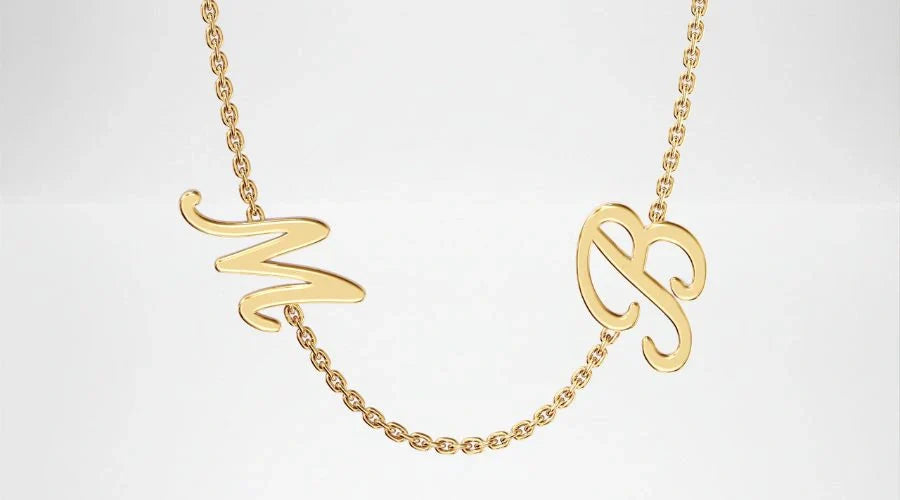
Two initials — yours and hers — is a more deliberate choice. It places both of you in the piece. She wears it; it carries something of both of you. The message is clear without needing to be explained: this relationship is real, and I wanted to mark it with something she can keep.
When you give her a solid gold letter necklace with both initials, you're telling her something specific: you mean a great deal to me, and I want you to carry a small part of that with you. Generic gifts bought off the shelf don't do that. This does.

Three Initials: The Family Piece
Three initials bring a third person into the story — most often a child. For married couples or families with children, this version of the piece works particularly well as a gift: it acknowledges that the family unit now includes more than two people, and gives the wearer something that represents all of it in one piece. It also works as a natural evolution of an existing initial necklace. Start with two initials; add a child's initial when the time is right.
Also read: How to style an initial necklace like a pro
The Best Occasions to Give One
Anniversaries: Marking What You've Built
A first anniversary, a fifth, a tenth — whatever the number, an anniversary is the clearest moment to give a piece that acknowledges time spent together. A two-initial necklace in solid gold says: I've thought about what we've built, and I wanted to give you something that reflects it. That's a different register entirely from a bunch of flowers or a dinner out, even a very good dinner.
Valentine's Day: Something She'll Actually Keep
Valentine's gifts have a reputation for being either too generic (flowers, chocolate) or too much (a ring, a holiday). A double initial necklace sits neatly in the middle: it's romantic without being excessive, personal without being pressuring, and wearable every day long after the 14th of February. The piece earns its place in the long run, which is more than most Valentine's gifts manage.
Birthdays and Milestones: The Specific Moments
Birthdays are the obvious moment, but they're also where generic gifts tend to land. A two-initial necklace made in solid gold changes the register of a birthday gift considerably — it's something she'll look at and remember exactly when she got it and why.
Milestones work equally well: moving in together, a first significant trip, the birth of a child. These are moments that feel worth marking with something tangible — and a personalised piece in solid gold does that in a way that a dinner out or a bottle of something doesn't. If the moment is a new family member, consider a three-initial necklace to bring all of you into the piece.
A Keepsake for Life: Why Material Matters
A two-initial necklace is only a keepsake if it's made to last. Choose solid gold — 14ct or 18ct — and you're giving something that holds its quality for decades without needing to be replaced or re-plated. It can be worn every day, in the shower, on a run, to a wedding, without losing what it is. That durability is part of the meaning of the gift — the piece lasts as long as the sentiment behind it.
Rose gold is an equally enduring option — warmer in tone than yellow gold, and particularly striking with initial lettering. The choice between gold colours is personal, but the principle is the same: solid metal, properly made, properly kept.

Everything Else Worth Knowing
Is a two-initial necklace too serious a gift?
It depends entirely on the relationship. In a committed relationship, it's a considered and proportionate gift. In the early stages, it can feel like more of a statement than either of you is ready for. Read the room — or go with a single initial if you're unsure.
Whose initials go on a two-initial necklace?
Usually yours and hers — the couple's initials together. Some people choose to put her initial first, some put them in order of first names alphabetically, some place them in the order they met. There's no fixed rule; what matters is that the choice means something to you both.
What's the best material for an initial necklace gift?
Solid gold — 14ct or 18ct. It lasts, it doesn't need replating, it's comfortable to wear daily, and it holds its appearance over time. For a keepsake gift, the material is as important as the design.
Can I add a third initial later?
In most cases, a new piece would be commissioned rather than adding to an existing one — though that depends on the design. Many people choose to buy a separate three-initial piece when a child arrives, so both versions are kept and worn. It's a nice way to mark the transition.
How do I style a two-initial necklace?
It works as a solo pendant — particularly if the lettering has some visual weight. It also layers well with a plain gold chain at a different length, or with a fine diamond pendant sitting higher on the neck. The key is that the initial necklace does the talking; anything else should be quieter. Read our guide on how to style an initial necklace like a pro for more.
Should You Give Her Your Initials?
If the relationship has reached the point where this feels right rather than risky, yes. A two-initial necklace in solid gold is a considered, personal, lasting gift — the kind she'll wear for years and still know exactly when she got it and why. Whether it's an anniversary, a birthday, or just a moment you want to mark, it says something more specific than most gifts manage.
Start with two. Add a third when the time is right. The piece grows with you.
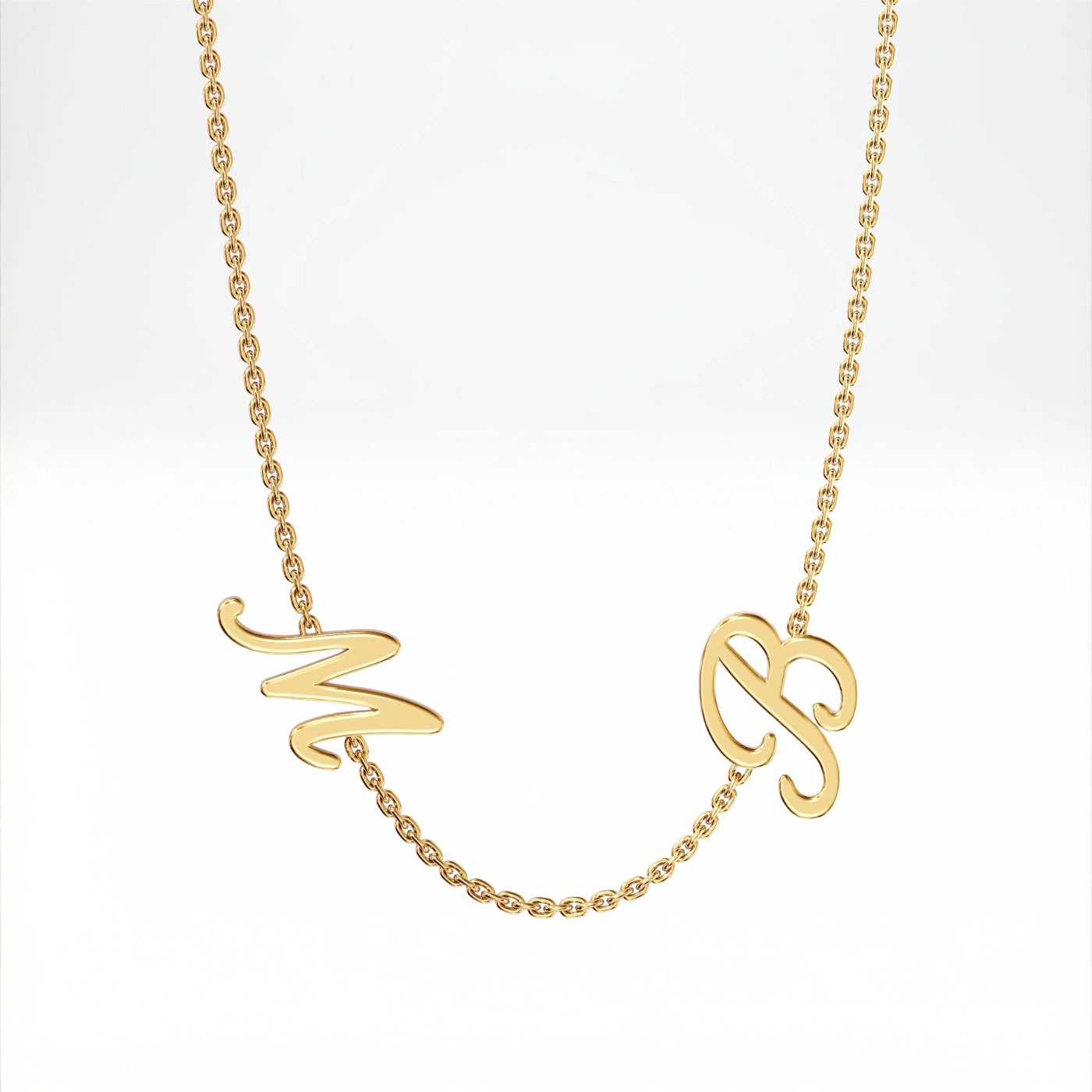
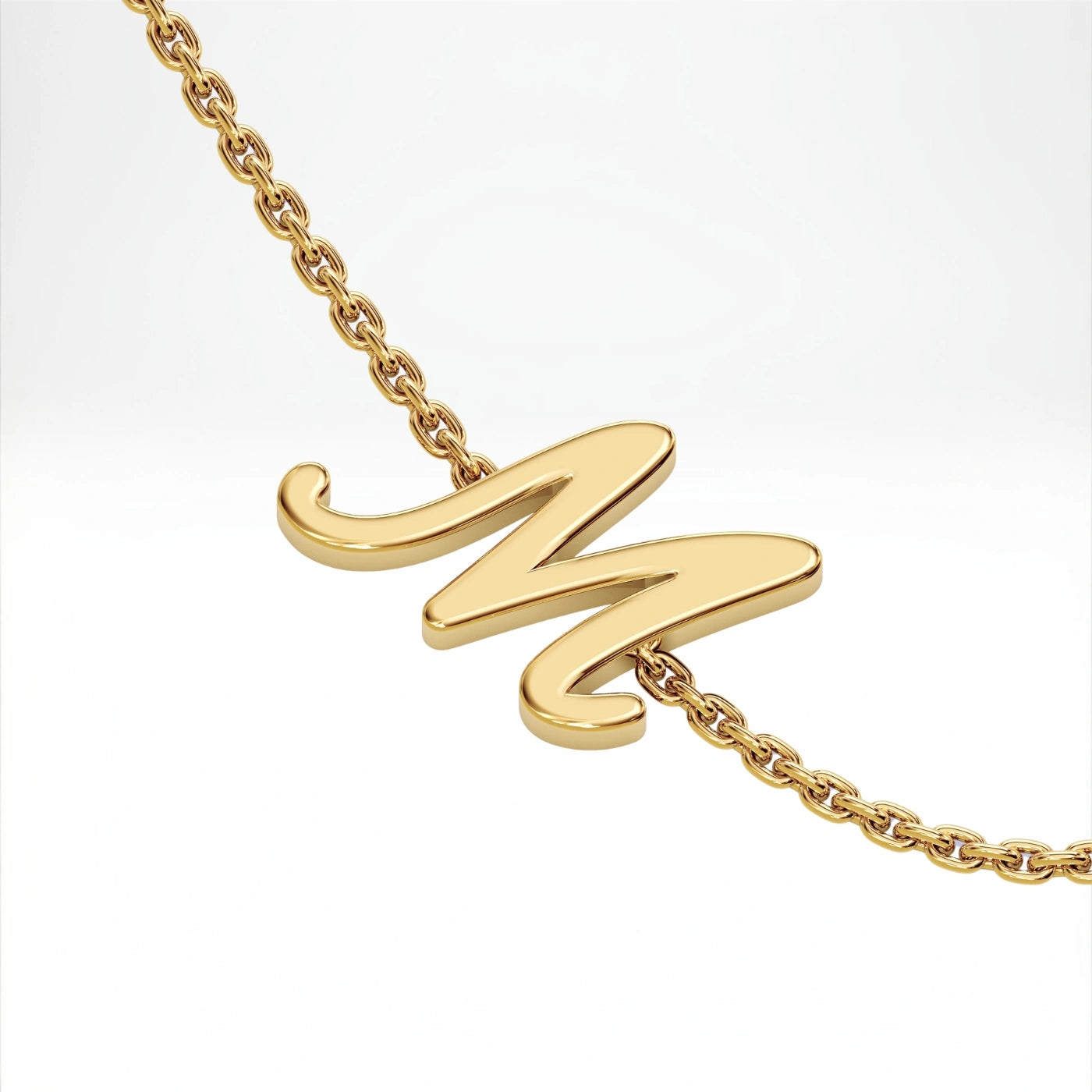
Double Initial Necklace
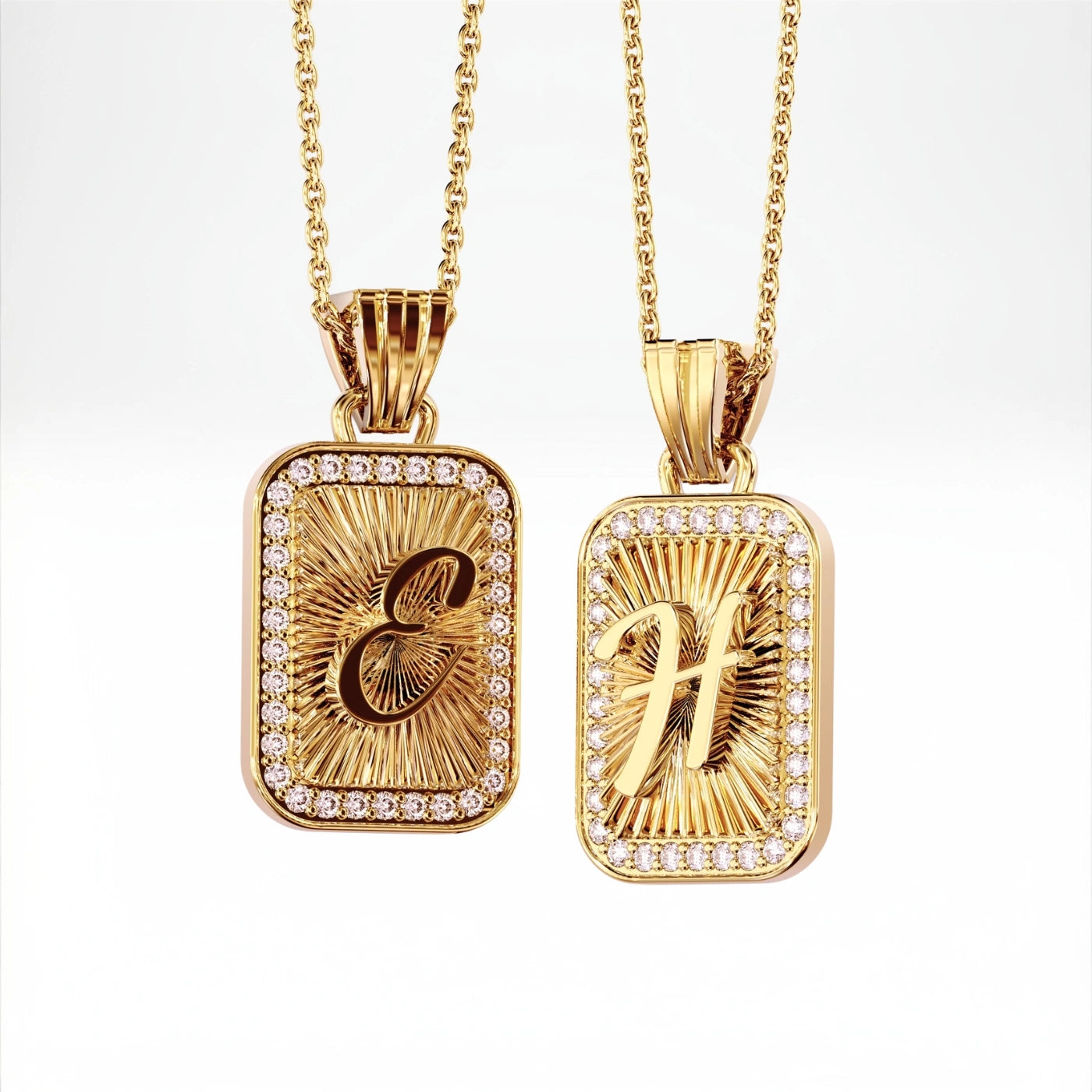
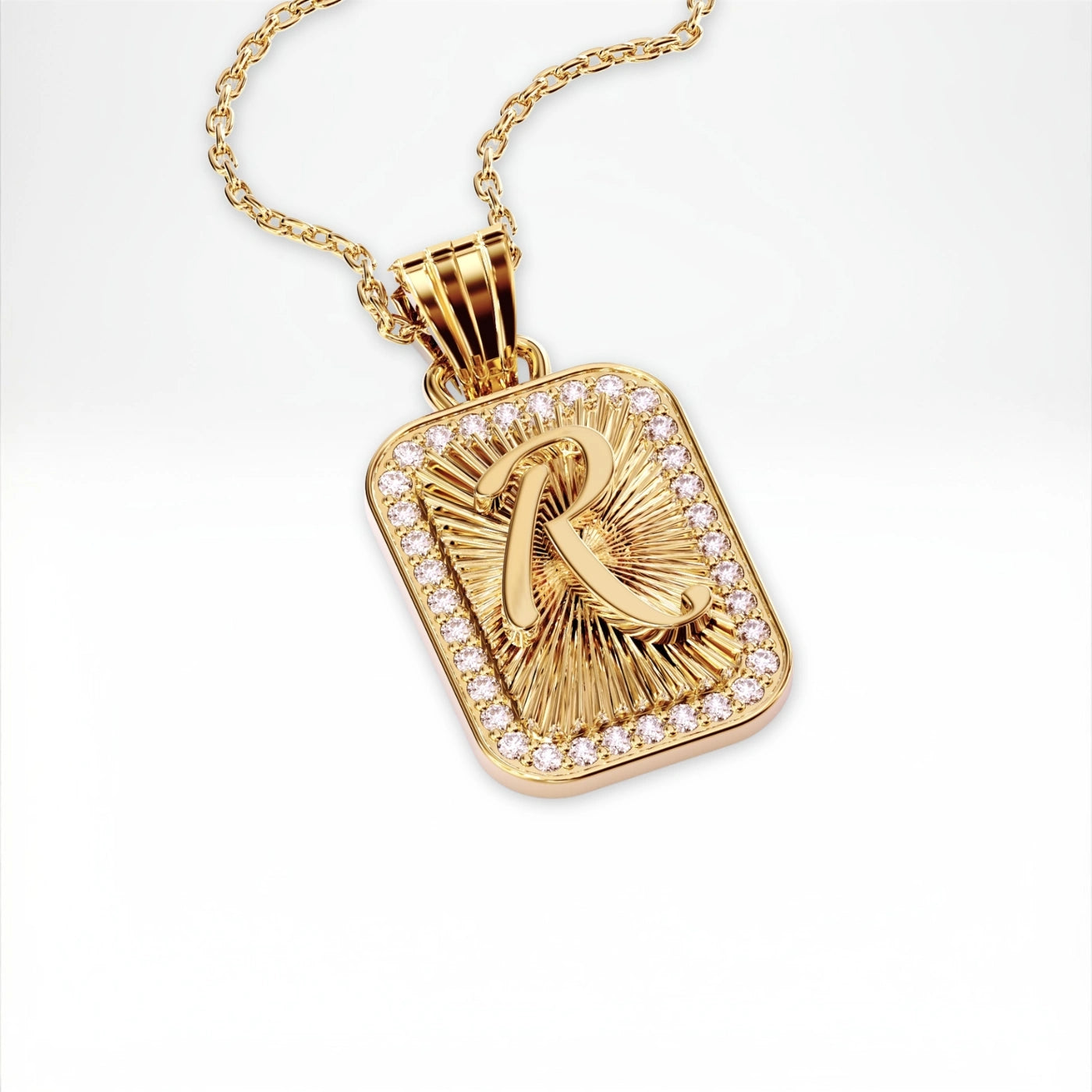
Diamond Framed Initial Pendant Necklace
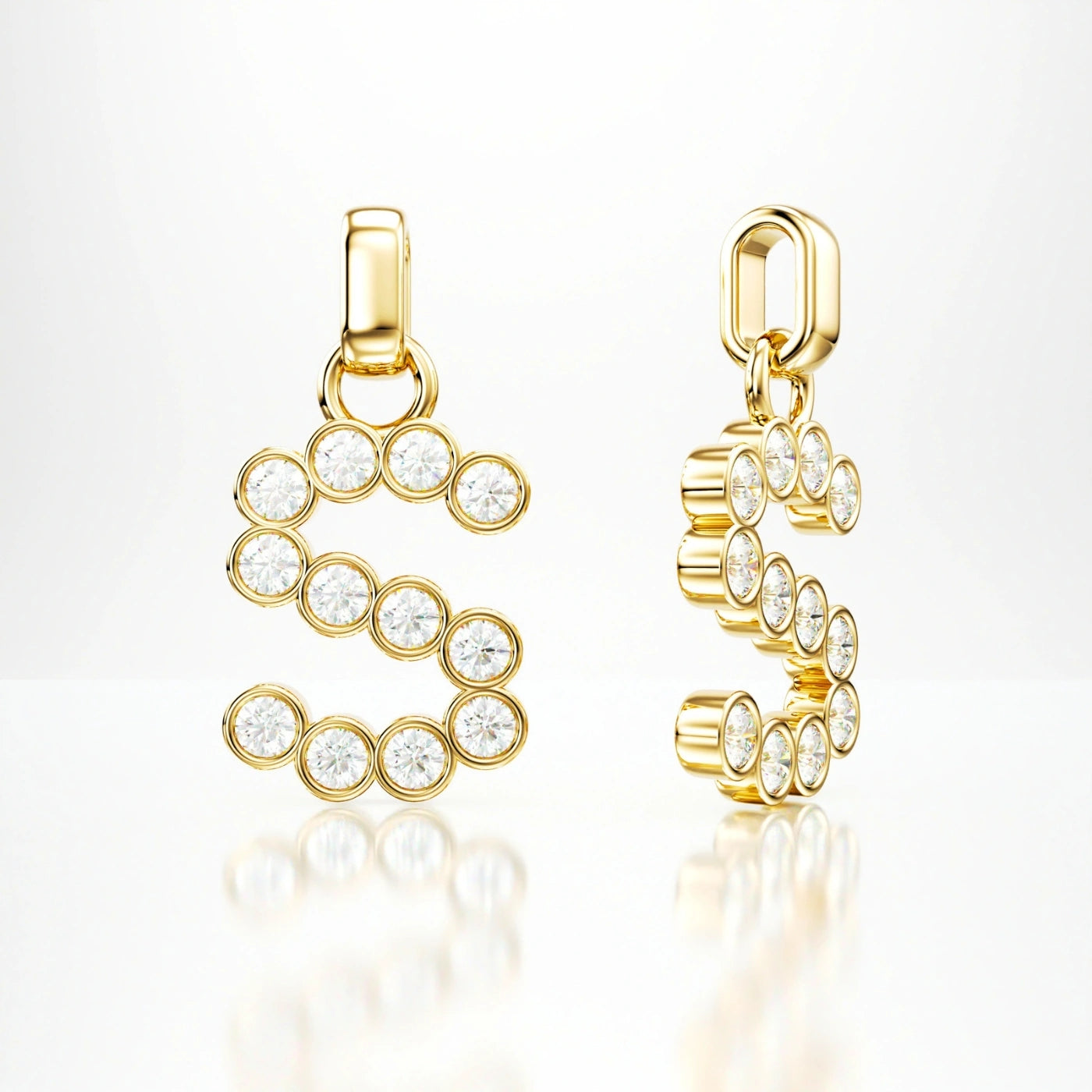
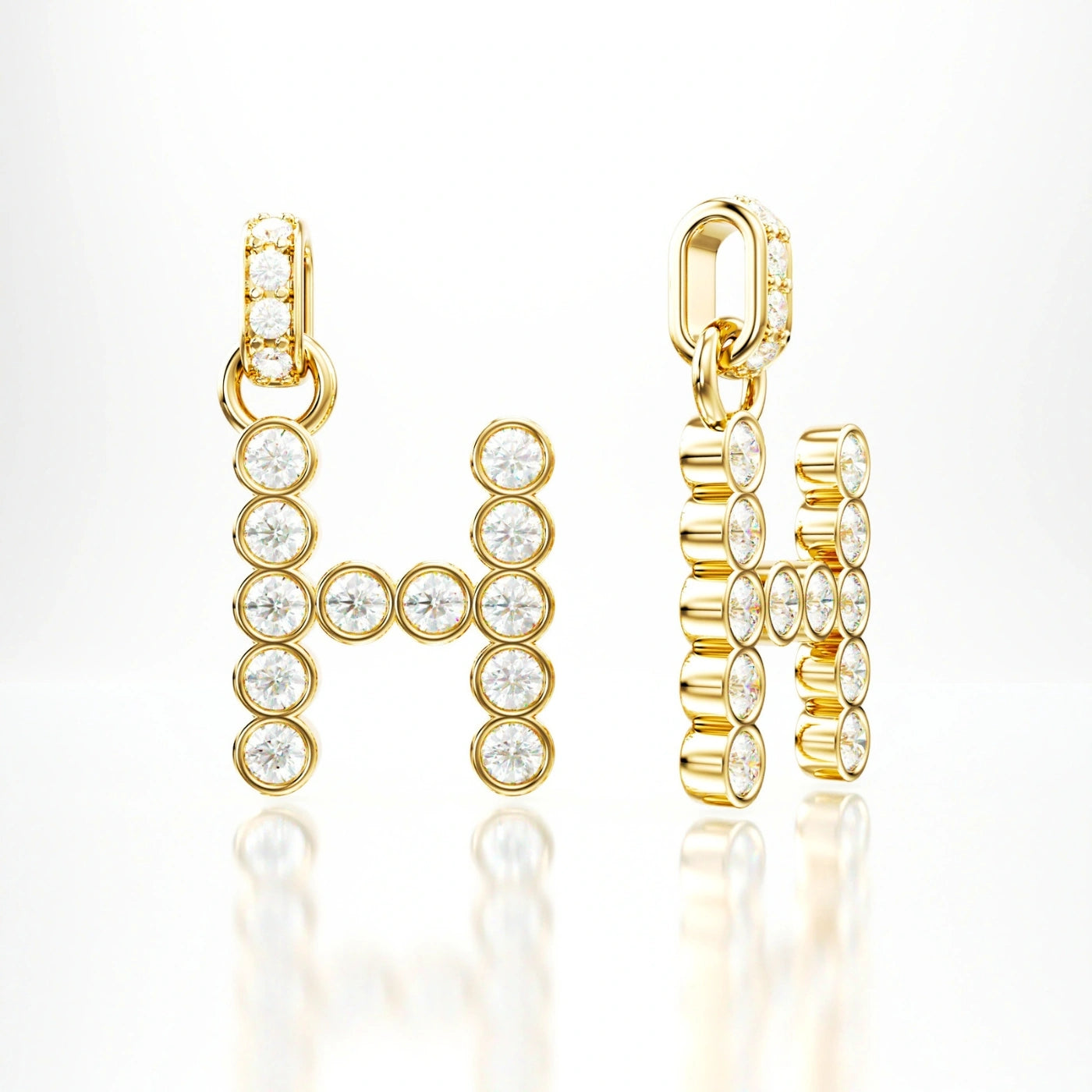
Diamond Initial Pendant
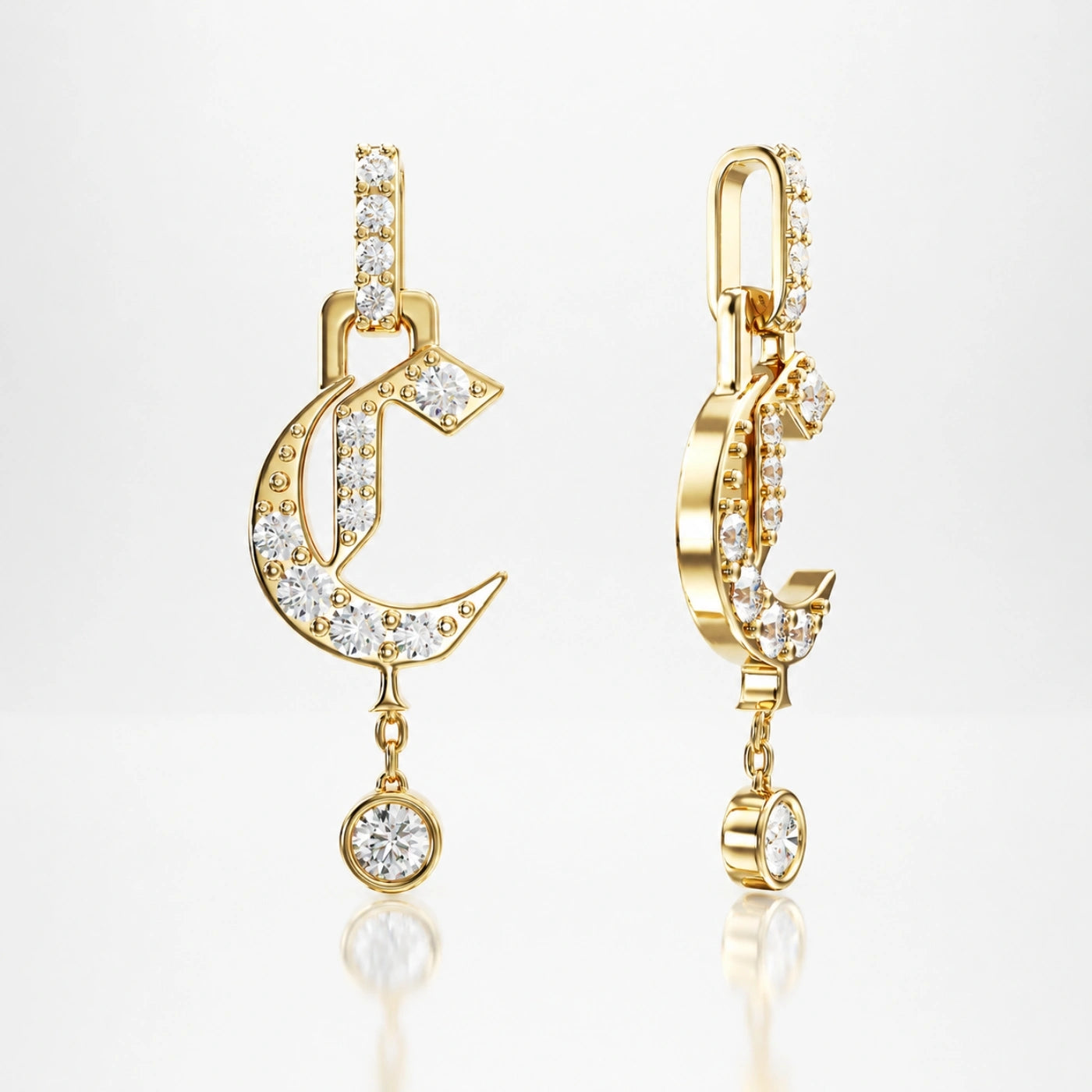
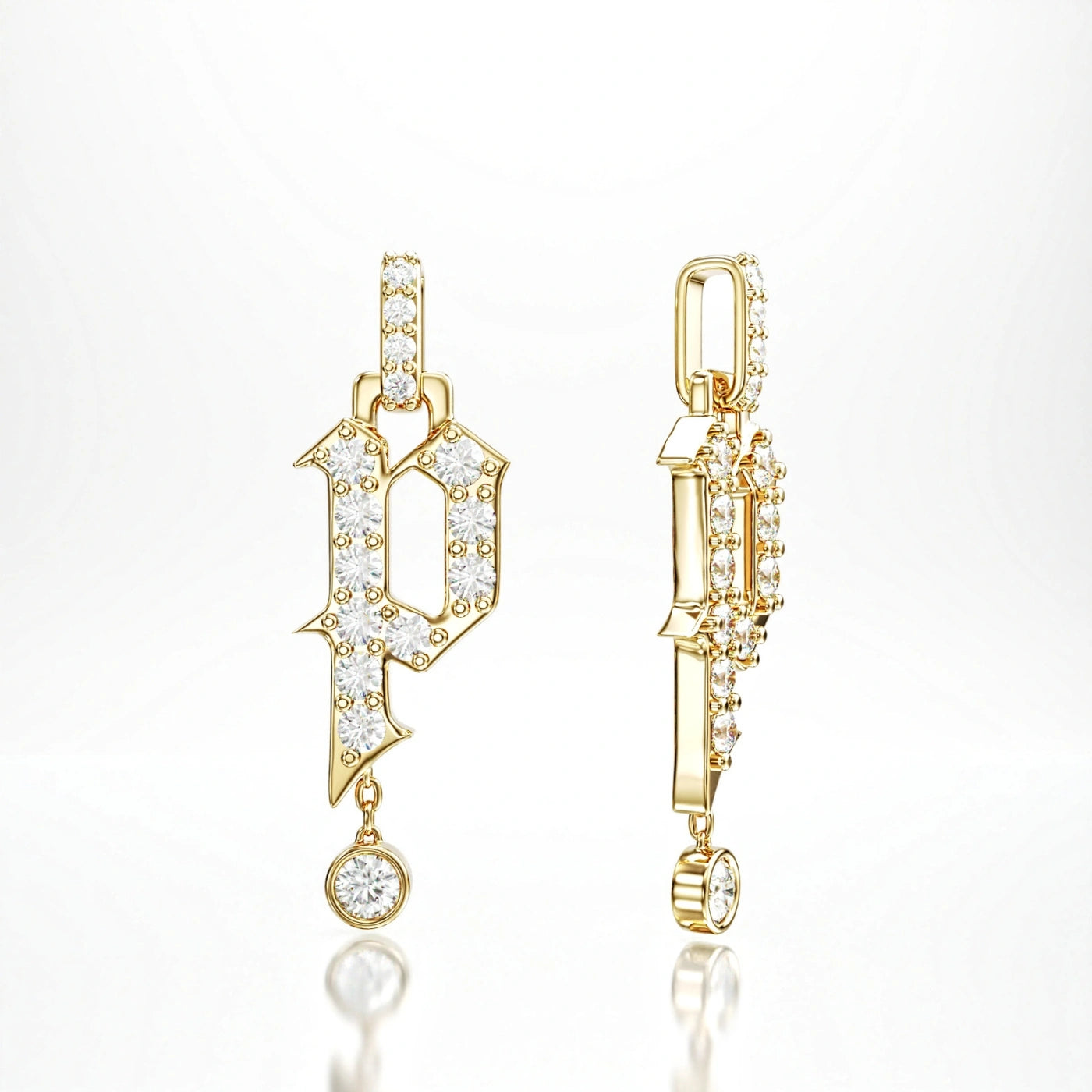
Diamond Gothic Initial Pendant

Written by Katie Silver