What is a blue gemstone called is one of the most searched questions I see and it usually means you’re trying to find a blue stone that looks right in real life, not just in photos.
W hat makes “blue” tricky is that it isn’t one colour, it’s a spectrum. A pale, watery aquamarine reads completely differently to an inky sapphire, and turquoise doesn’t behave like a faceted stone at all because it’s about colour and presence, not sparkle. If you’re choosing gemstone jewellery you’ll wear for years, the real decision isn’t the gemstone name, it’s the exact tone of blue, how it sits next to gold, and how it holds once it’s set and worn.
In this guide, I’ll break down the most common “blue gemstone” names people mean (sapphire, turquoise, topaz and more), how each one actually looks once set, what changes depending on white vs yellow vs rose gold, and where people tend to go wrong when shopping online. I’ll also share the design approach we use at Argent + Asher when sourcing stones for bespoke pieces, including why mixing blue tones can be more interesting than choosing just one stone.
If you want the full library and definitions (including what “semi-precious” means online and why it’s not a helpful label), start here: Gemstones and Semi-Precious Stones: The Complete Guide.
Blue Gemstones at a Glance
| Gemstone |
Colour Tone |
Best For |
Value Perception |
Design Insight |
| Sapphire |
Deep, rich blue |
Rings, everyday wear |
High (fine jewellery classic) |
Best when colour holds in natural light |
| Turquoise |
Opaque blue to blue-green |
Statement, identity pieces |
Medium (design-led value) |
Colour matters more than size or polish |
| Aquamarine |
Soft, pale blue |
Refined, tonal jewellery |
Medium |
Too pale can lose impact once set |
| Topaz (Blue) |
Bright or icy blue |
Affordable colour |
Lower–Medium |
Often treated — disclosure matters |
| Tourmaline (Blue/Teal) |
Blue-green / teal |
Modern, bespoke jewellery |
Medium–High |
Teal tones feel more considered than traditional blue |
| Lapis Lazuli |
Deep ultramarine blue |
Bold gold jewellery |
Medium |
Best when colour is strong and saturated |
| Tanzanite |
Blue-violet shifting tone |
Occasion / standout pieces |
Medium–High |
Colour shifts depending on light — part of the appeal |
Use this as a quick filter, then we’ll go stone-by-stone underneath.
What People Mean When They Search “Blue Gemstone”
Most searches for “what is a blue gemstone called” fall into three buckets:
-
A classic, durable blue stone (usually sapphire)
-
A bold, opaque blue (usually turquoise or lapis)
-
A bright, affordable blue (often blue topaz but the details matter)
That’s why I don’t start with “the answer”, I start with the tone you’re trying to achieve and the role the piece needs to play. A ring needs different stone behaviour than a necklace, and a soft everyday blue behaves differently to a high-contrast, statement blue.
Blue Gemstones at a Glance
Use this as a quick filter, then we’ll go stone-by-stone underneath.
| Blue gemstone name |
What it looks like |
Best for |
My advice when choosing |
| Sapphire |
Deep blue with light return (quality varies hugely) |
Rings + long-term pieces |
Prioritise colour that holds in natural light, not showroom lighting |
| Turquoise |
Opaque blue/blue-green with strong presence |
Identity pieces + statement colour |
Quality varies massively, avoid chalky, flat-looking stones |
| Blue topaz |
Bright, clean blue (often very even) |
Affordable colour + sparkle |
Ask about treatment and aim for a tone that doesn’t feel “neon” in your metal choice |
| Aquamarine |
Soft, watery blue with a refined feel |
Understated jewellery |
Look for presence, overly pale stones can disappear once set |
| Lapis lazuli |
Deep ultramarine blue (often with pyrite flecks) |
Strong contrast in gold |
Go for rich, saturated blue that looks confident next to yellow gold |
| Tanzanite |
Blue-violet that shifts with lighting |
Moodier, distinctive blue |
Choose based on how it looks in natural light, the shift is the point |
Why Metal Choice Changes Blue Gemstones
The same blue gemstone can read completely differently in white gold vs yellow gold vs rose gold and in my experience, this is where people get disappointed online. Certain blues look incredible with white gold (clean, modern, crisp). Others need yellow gold to bring warmth and contrast. Rose gold can be beautiful, but it depends on the specific shade of blue and your budget.
I also love mixing blues layering tones so the colour story feels intentional. It doesn’t have to be one gemstone. If the tones work together, combining stones can look more considered than trying to force one “perfect” blue.
Blue Sapphire: The Classic Choice for Fine Jewellery
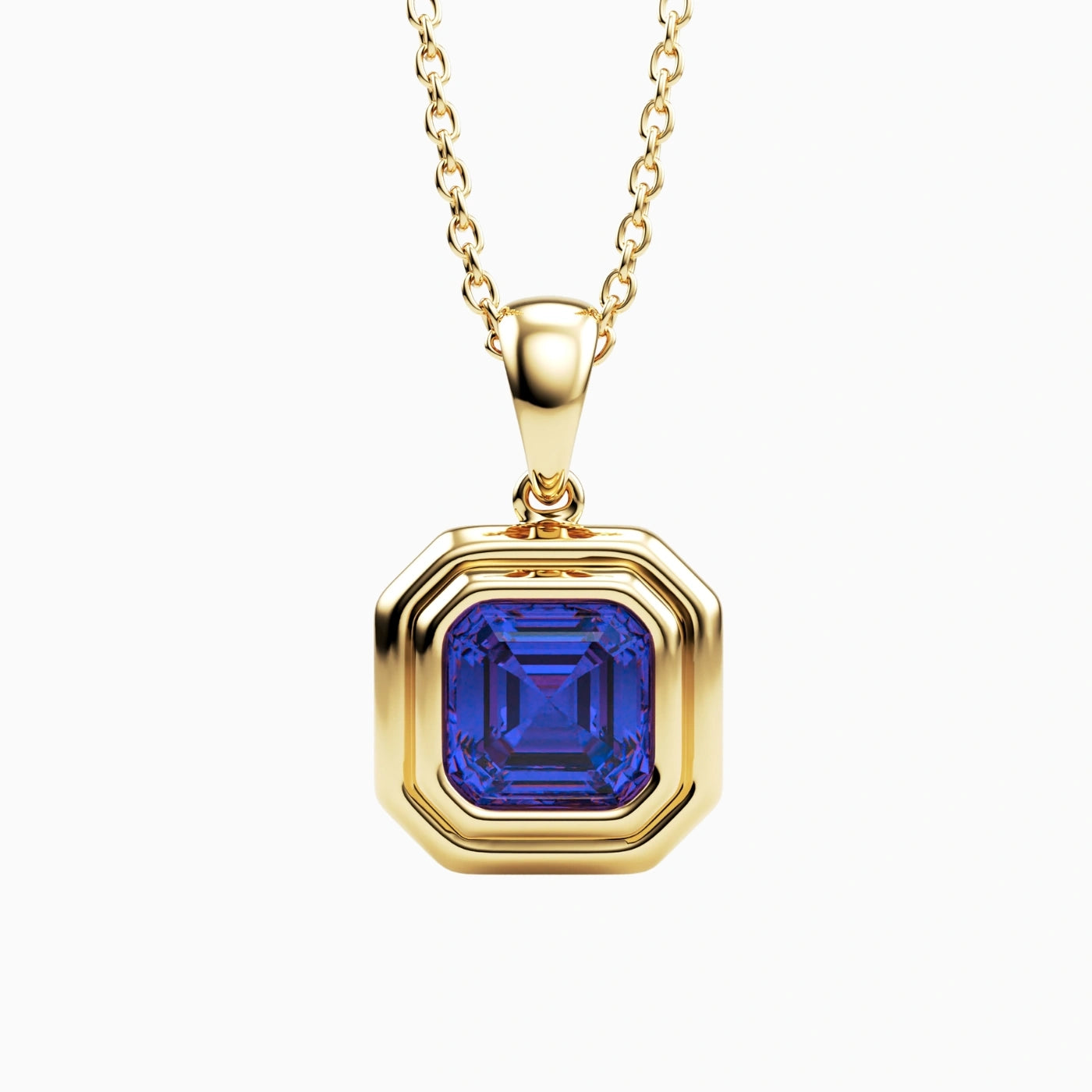
When people search for a blue gemstone for a ring or necklace, sapphire is usually what they mean. It’s one of the most reliable stones for jewellery because it balances colour, durability, and light performance.
One of the biggest misconceptions is that all sapphires look the same. In reality, the difference between a flat, inky blue and a stone with real depth is huge, and it completely changes how the piece feels when worn.
When sourcing sapphires for bespoke gemstone jewellery, I’m always looking for colour that holds in natural light, not just under showroom lighting. That’s where you really see the difference between average and exceptional stones.
-
Best for: engagement rings, everyday jewellery
-
Works well in: white gold, yellow gold, platinum
-
Current design trend: bezel-set sapphires and vintage-style prong settings
Turquoise: The Blue Gemstone That Defines a Piece
If you’re searching for a blue gemstone necklace that feels personal, turquoise is one of the strongest choices. It doesn’t rely on sparkle, it’s entirely about colour and presence.
It’s also a stone where quality varies massively. Poor turquoise can look chalky or flat, whereas a well-chosen stone has depth and richness that holds beautifully against gold.
It’s a stone I come back to constantly when designing bespoke turquoise jewellery because it gives a piece identity straight away. You don’t need to over-design around it, it carries itself.
-
Best for: statement necklaces, signet-style rings
-
Works best in: yellow gold (contrast is key)
-
Design note: bezel settings protect the stone and keep it clean and modern
Blue Topaz: Bright, Clean and Accessible
Blue topaz is often what people are shown when searching for an affordable blue gemstone ring or necklace. It has a very clean, even colour and tends to be more accessible than sapphire.
The key thing to understand is that most blue topaz on the market is treated to achieve that bright tone. That’s not necessarily a problem, but it should always be disclosed.
What matters more is how the colour works with your chosen metal. Some shades can feel overly bright or slightly artificial if the tone isn’t balanced within the design.
-
Best for: lighter, brighter jewellery looks
-
Works well in: white gold and rhodium-plated settings
-
Buying tip: prioritise tone over size
Aquamarine: Soft Blue with a Refined Finish
Aquamarine is usually chosen for a subtle blue gemstone necklace or ring. It’s softer in tone than sapphire or topaz, which gives it a more understated feel.
The challenge with aquamarine is that it can disappear if the colour is too pale. Once set, especially in larger pieces, weaker stones lose presence very quickly.
When chosen well, though, it creates a very clean, refined look, particularly in minimalist settings.
-
Best for: understated jewellery
-
Works well in: white gold, platinum
-
Design trend: larger stones in simple bezel or claw settings
Lapis Lazuli: Deep Blue with Contrast
Lapis is often searched when people want a deep blue gemstone with a strong gold contrast. It’s completely different from faceted stones, it’s opaque, rich, and visual rather than reflective.
The best lapis has a strong, saturated ultramarine tone. Once set in gold, that contrast becomes the defining feature of the piece.
It’s also one of the easiest stones to style if you want something bold but still wearable, it doesn’t rely on light performance, so what you see is what you get.
-
Best for: bold necklaces, signet rings
-
Works best in: yellow gold
-
Design note: works beautifully alongside turquoise in mixed-stone pieces
Tanzanite: A Blue Gemstone with Depth and Shift
Tanzanite is often described as blue, but it sits between blue and violet, which is exactly what makes it interesting. If you’re looking for a unique blue gemstone for jewellery, this is where things start to feel less predictable.
The colour shifts depending on lighting, which means the stone feels different throughout the day. That movement is the appeal, but it also means you need to view it properly before choosing.
It works particularly well in pieces where the gemstone is the focal point, rather than something supporting a design.
-
Best for: distinctive, one-off pieces
-
Works well in: white gold, platinum
-
Buying tip: always assess in natural light
Current Jewellery Trends for Blue Gemstones
The way blue gemstones are set is changing just as much as the stones people choose.
-
Georgian-style settings: larger prongs, slightly more exposed stones
-
Bezel settings: cleaner, more modern and protective
-
Rhodium-plated finishes: especially with blue stones to keep the look crisp
-
Vintage-inspired designs: coloured gemstones work particularly well here
Blue gemstones sit particularly well within vintage-style jewellery because colour naturally softens the structure of the piece. It stops it feeling too rigid or overly formal.
What People Get Wrong When Choosing a Blue Gemstone
- Focusing on the gemstone name instead of the exact tone of blue
- Choosing based on photos rather than how the stone looks in real light
- Not considering the metal the stone will be set in
- Assuming one gemstone is always “better” than another
In reality, a slightly better colour match will always outperform a “better” stone on paper. The final piece is what matters.
Creating a Bespoke Blue Gemstone Piece
Choosing a blue gemstone becomes much more interesting when you’re designing something bespoke rather than selecting from a fixed piece.
At Argent + Asher, we source gemstones specifically for each design — whether that’s a particular sapphire tone, a piece of turquoise with the right depth, or a bi-colour stone that gives the piece something completely individual.
Mixing blue tones is something I always come back to. It doesn’t have to be one gemstone. Combining stones, for example turquoise with lapis, or different tones of blue tourmaline, often creates a piece that feels far more considered than a single-stone design.
Which Blue Gemstone Should You Choose?
Choosing a blue gemstone isn’t about finding the “best” one, it’s about choosing the right tone, presence, and role for how you’ll actually wear the piece.
If you want something timeless and durable
Sapphire is the most reliable choice. It holds its colour, wears well over time, and works across rings, necklaces and everyday pieces.
If you want colour that feels like identity
Turquoise and lapis stand out immediately. They don’t rely on sparkle, they’re about presence and character.
If you want something softer and more understated
Aquamarine works well when you want a clean, refined look that doesn’t dominate.
If you’re working within a lower budget
Blue topaz can give you brightness and colour at a more accessible price point — just make sure the tone works with your metal choice.
If you want something more unique
Tanzanite or blue/teal tourmaline feel less expected and more design-led. These are often the stones that make a piece feel more individual.
If you’re unsure, this is where bespoke makes the difference. At Argent + Asher, we source stones based on the exact tone and feel you’re trying to achieve, not just the gemstone name, so the final piece feels considered, not compromised.
Frequently Asked Questions About Blue Gemstones
What is a blue gemstone called?
A blue gemstone can refer to several stones depending on the tone and look you want. The most common are sapphire, turquoise, aquamarine, blue topaz and lapis lazuli. The right choice depends on colour, durability and how the gemstone will be worn.
Which blue gemstone is best for jewellery?
There isn’t one “best” blue gemstone, it depends on the piece. Sapphire is one of the most durable for everyday wear, while turquoise and lapis are chosen for their bold colour and presence. At Argent + Asher, we help clients choose based on how the piece will actually be worn, not just the gemstone name.
What is the most expensive blue gemstone?
Fine-quality blue sapphire is typically the most valuable blue gemstone, especially when the colour is rich and consistent. However, value varies significantly depending on quality, rarity and treatment, rather than just the type of stone.
Is turquoise considered a blue gemstone?
Yes, turquoise is one of the most recognisable blue gemstones. Unlike faceted stones, it is opaque and valued for its colour and presence rather than sparkle. High-quality turquoise has depth and richness that holds strongly against gold.
What blue gemstone looks most like sapphire?
Tanzanite and blue topaz are often compared to sapphire. Tanzanite has a blue-violet shift, while topaz tends to be brighter and more uniform. The difference becomes more obvious once the stone is set and worn.
Can you mix blue gemstones in one piece of jewellery?
Yes, and it’s often a more interesting approach. Mixing tones, for example turquoise with lapis or different shades of blue tourmaline, creates depth and makes the piece feel more considered. At Argent + Asher, we regularly design bespoke pieces using multiple gemstone tones rather than limiting a design to one stone.
How do I choose the right blue gemstone for a ring or necklace?
Start with how the piece will be worn. Rings usually need more durable stones like sapphire, while necklaces allow for more flexibility. Then focus on tone, how the gemstone looks in natural light, and how it works with your chosen metal.