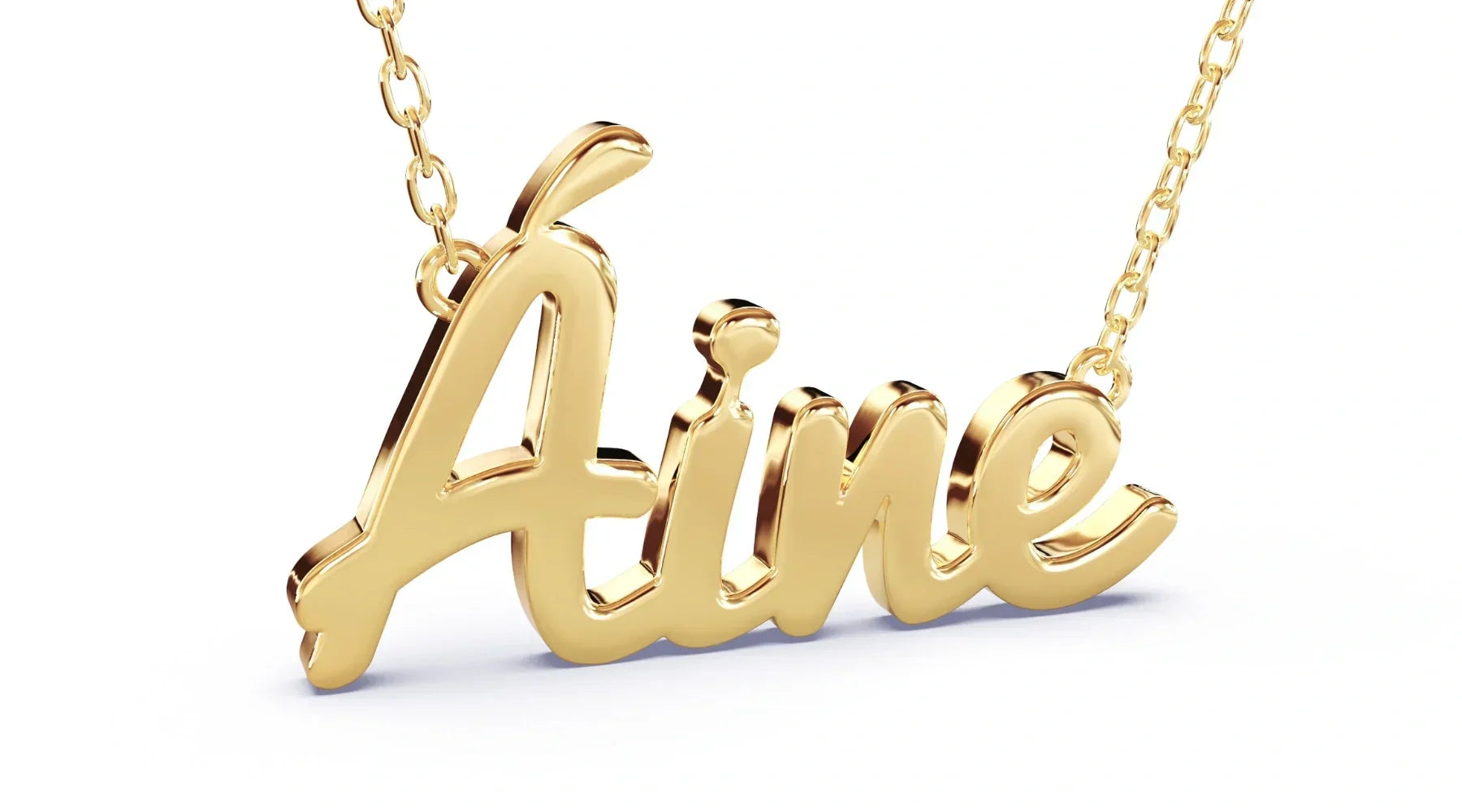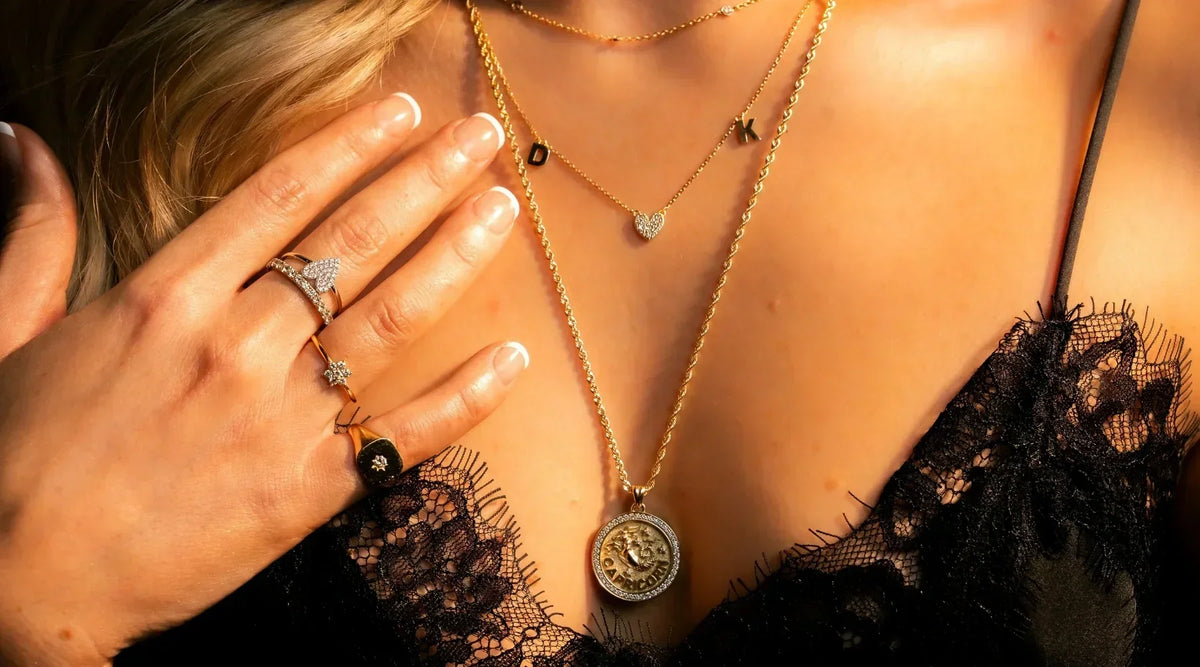
Most people assume purer gold means better gold. For a name necklace, it's almost the opposite, and knowing why could save you from a necklace that won't survive the year.
Gold Purity for Name Necklaces: 9ct, 14ct or 18ct
A beginner's guide to what gold purity actually means, how it is measured, and which carat suits a name necklace you intend to wear every single day.
Key Takeaways
- Purity is a ratio Gold purity simply measures how much of the metal is real gold against how much is alloy.
- 24ct is too soft for daily wear It is the purest form of gold, but it bends and scratches easily, which is unkind to fine lettering.
- 9ct and 14ct suit everyday wear Both are strong enough for a piece that goes everywhere with you, and both keep a name necklace affordable.
- 18ct gives you the deepest colour More gold content means a warmer, richer yellow, a higher price, and a slightly softer metal.
- Allergies come from the alloy Most sensitivity is a reaction to the other metals in the mix, not to gold itself.
- Always check the hallmark Look for 375 (9ct), 585 (14ct) or 750 (18ct) alongside a UK Assay Office mark before you buy.
In This Guide
- Chapter I What Gold Purity Means · the basics, explained plainly
- Chapter II 9ct vs 14ct vs 18ct vs 24ct · how to choose
- Chapter III Price, Skin and Colour · what purity really affects
- Chapter IV Care, Verification and Where to Buy · keeping it genuine
This guide breaks down everything worth knowing, from 24ct gold at its purest through to the 9ct and 14ct pieces most people actually wear day to day, how purity is measured, and which carat suits your lifestyle and your name necklace best.
It sits alongside our hub guide, The Ultimate Guide to Confidently Buying Fine Jewellery Online, so you can understand both gold purity and how to buy safely.
What Gold Purity Means
What Does Purity Actually Mean?
"Gold purity" is simply the amount of real gold in the metal. Pure gold on its own is soft, so jewellers blend it with other metals, such as copper, silver or zinc, to make it tougher and more wearable. The small letters and joints of a name necklace need that added strength, otherwise they lose their shape quickly.
A gold name necklace with fine script or Arabic lettering needs a metal strong enough to keep every curve neat and in place, which is exactly why purity is the first decision worth understanding, before font or chain length.

How Purity Is Measured
Gold purity is measured in carats, which state the gold content out of 24 total parts:
- 9ct gold → 9 parts gold, 15 parts alloy (37.5% pure)
- 14ct gold → 14 parts gold, 10 parts alloy (58.3% pure)
- 18ct gold → 18 parts gold, 6 parts alloy (75% pure)
- 24ct gold → 24 parts gold, no alloy (99.9% pure)
Two other labels are worth knowing. Gold-plated pieces carry only a thin layer of gold over a base metal, which looks the part but contains very little actual gold and will wear through. Gold alloy simply means gold blended with other metals to build durability and shift colour, which describes every wearable carat from 9ct upward. Read our full breakdown in Solid Gold vs Gold Plated, Gold Filled & Gold Vermeil.
9ct vs 14ct vs 18ct vs 24ct
Why Pure Gold Is Rarely Used in Names
Although 24ct gold is the purest form available, it is simply too soft for everyday jewellery, especially a necklace carrying a delicate script name or Arabic lettering. Left in 24ct, a name necklace can bend out of shape, scratch easily, wear thin over time, and lose definition in its letters and curves.
That is why jewellers favour 9ct, 14ct and 18ct gold for name necklaces. Each strikes a different balance between beauty, durability and price, which is what the table below sets out.
| Carat | Gold Content | Durability | Colour | Best For |
|---|---|---|---|---|
| 9ct Gold | 37.5% pure | Excellent | Pale, muted yellow | First name necklaces, everyday budgets |
| 14ct Gold | 58.3% pure | Very strong | Lighter yellow | Daily wear, active lifestyles |
| 18ct Gold | 75% pure | Moderately strong | Deep, warm yellow | Luxury daily wear, milestone gifts |
| 24ct Gold | 99.9% pure | Very soft | Deepest yellow | Collectors, ceremonial pieces |

Price, Skin and Colour
Which Carat Suits Daily Wear?
For a necklace you never take off, most people settle on 9ct or 14ct gold. Both are strong enough for a busy lifestyle, and both keep the price sensible. 18ct gold is a step up in richness and cost, a beautiful choice for a piece you want to feel a little more luxurious, such as a milestone gift.
If you want your gold name necklace to stay beautiful for years without constant worry, 9ct, 14ct or 18ct gold is the safest range to choose from. Leave 24ct for coins and bars.
Price, Allergies and Colour
The more pure gold used in the alloy, the higher the price. An 18ct name necklace will cost more than a comparable 14ct design because it simply contains more gold, and a 9ct piece will sit at the more affordable end of the range.
Allergic reactions usually come from the other metals in the alloy, not from the gold itself. If your skin is sensitive, 18ct gold contains fewer alloy metals and is often the safer choice; 14ct and 9ct gold can still be hypoallergenic, especially nickel-free.
Purity also shapes colour. Additional metals in the mix change the tone too: more copper creates rose gold, while white metals and rhodium plating create white gold. If you love a deep yellow tone, 18ct feels the most luxurious; if you prefer something more subtle, 9ct or 14ct is perfect. Not sure which shade flatters you? Read Which Gold Colour Matches Your Skin Tone.

Care, Verification and Where to Buy
How Purity Affects Maintenance
Higher gold purity means a softer metal, and usually, more careful handling. Here is how care changes across the range:
| Carat | Cleaning | Storage |
|---|---|---|
| 9ct / 14ct Gold | Mild soap and warm water | Soft pouch, away from chemicals and rough surfaces |
| 18ct Gold | Gentle polishing cloth, occasional professional clean | Store separately to prevent scratches |
| 24ct Gold | Very gentle cleaning only | Store individually, avoid friction and knocks |
Regardless of purity, keep perfume, chlorine and harsh chemicals away from your name necklace, and avoid rough handling to keep it looking its best. For durability specifics, see How Durable Is Solid Gold Jewellery?

How to Verify Purity and Where to Buy
There are a few ways to check whether your necklace is genuinely the carat advertised. Look for a hallmark, stamps such as 375 (9ct), 585 (14ct) or 750 (18ct) alongside a UK Assay Office symbol. A jeweller can also run professional testing to confirm gold content, and reputable jewellers always state metal purity clearly in their paperwork and product descriptions.
For a deeper explanation of UK hallmarks, read What Does a Gold Hallmark Really Mean?
Wherever you choose to buy, look for clear carat information, solid gold rather than gold-plated if you want a long-term piece, visible hallmarks, and transparent detail on alloys and nickel-free options. Argent & Asher makes every 9ct, 14ct and 18ct name necklace to order in solid gold, with aftercare built in for the long term.

Everything Else Worth Knowing
What's the difference between 9ct, 14ct and 18ct gold for a name necklace?
The difference is the ratio of pure gold to alloy. 9ct gold is 37.5% pure, 14ct is 58.3% pure, and 18ct is 75% pure. As purity rises, so does colour depth and price, while durability moves slightly the other way.
Is 18ct gold too soft for an everyday name necklace?
No. 18ct gold is moderately strong and well suited to daily wear, it is simply a little softer than 9ct or 14ct. With normal care it holds its shape and lettering beautifully for years.
Does 14ct gold tarnish or fade over time?
Solid 14ct gold does not tarnish the way plated jewellery does, because the gold runs through the whole piece rather than sitting as a thin surface layer. Occasional cleaning keeps it looking its best.
Which gold purity is best for sensitive skin?
18ct gold contains the fewest alloy metals, so it is often the most comfortable choice for sensitive skin. 9ct and 14ct gold can still be hypoallergenic when nickel-free, so check with the jeweller before buying.
Why don't jewellers make name necklaces in 24ct gold?
24ct gold is too soft to hold fine detail. A name necklace in 24ct would bend, scratch and lose definition quickly, so jewellers reserve it for coins, bars and ceremonial pieces instead.
How can I tell if my gold name necklace is genuinely the carat stated?
Check for a hallmark, such as 375, 585 or 750, alongside a UK Assay Office mark. Reputable jewellers also state carat clearly in their product description and paperwork, and can arrange professional testing if you want extra reassurance.
Is 9ct gold a good choice for a first name necklace?
Yes. 9ct gold is the most durable of the three everyday carats and the most affordable entry point into solid gold, which makes it a popular first choice, especially for a piece you plan to wear constantly.
Choosing the Right Carat for Your Necklace
When you are choosing a gold necklace with a name, purity is the decision that shapes everything else. 24ct is pure gold, but far too soft for a piece you will wear daily. 9ct, 14ct and 18ct are stronger and better suited to everyday life, while still giving you that unmistakable gold glow.
Match the carat to how often you will wear the piece, how sensitive your skin is, and what you would like to spend, and you will end up with a name necklace that looks beautiful for years rather than months.


Birthstone Bracelet
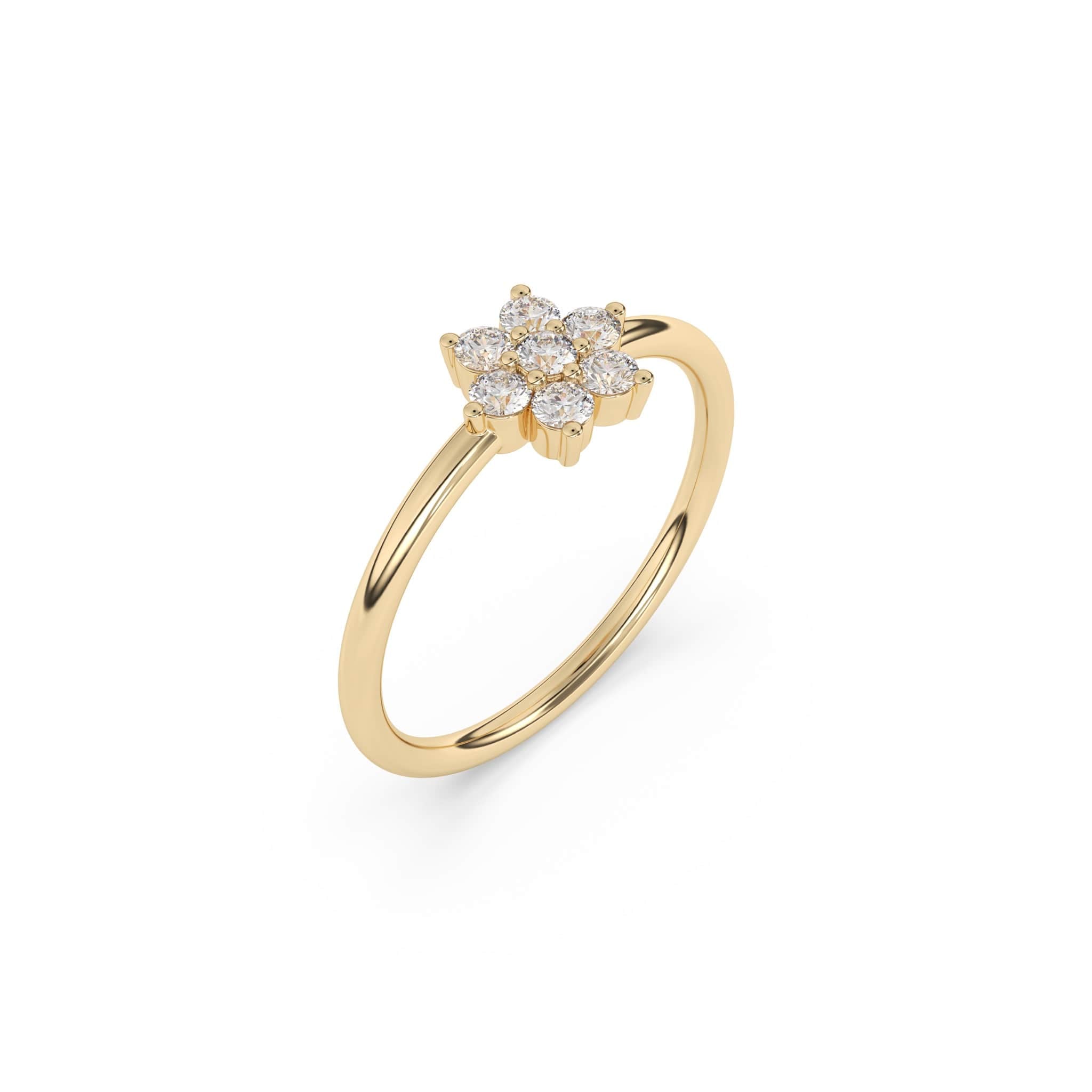

Chelsea Flower Rings

Written by Katie Silver