Choosing the carat for your gold earrings affects a lot more than you'd think, especially when it comes to durability, weight, and cost. Deciding between 9ct, 14ct, 18ct, and 24ct gold can be a bit tricky since they all offer completely different benefits.
What Carat Gold Is Best for Earrings?
Choosing the carat for your gold earrings affects a lot more than you'd think, especially when it comes to durability, weight, and cost.
Key Takeaways
- 9ct gold earrings Ideal for budget-friendly daily pieces. Because it's mixed with tougher metals, it's highly durable and perfect for hardworking styles like plain hoops or sleepers.
- 14ct gold earrings This gives you an amazing balance. You get more pure gold and a richer look, but it's still tough enough for regular use.
- 18ct gold earrings Pure everyday luxury. It looks stunningly rich and contains fewer base metals, making it much kinder to sensitive ears.
- 24ct gold earrings Maximum purity, but a bit useless for jewellery. It is simply too malleable for earrings and better suited for standard bullions.
In This Guide
- Which carat of gold is best for earrings?
- What Does Gold Carat Mean?
- Why Carat Matters More for Earrings Than Many People Think
- 9ct Gold Earrings: Pros, Cons and Best Uses
- 14ct Gold Earrings: Pros, Cons and Best Uses
- 18ct Gold Earrings: Pros, Cons and Best Uses
- 24ct Gold Earrings: Pros, Cons and Best Uses
- 9ct vs 14ct vs 18ct vs 24ct Gold Earrings
- Which Gold Carat Is Best for Sensitive Ears?
- Which Gold Carat Is Best for Everyday Earrings?
- How UK Hallmarking Helps You Buy Gold Earrings Safely
- Solid Gold, Gold Plated, Gold Vermeil and Gold Filled
- Does Gold Colour Change the Best Carat for Earrings?
- Price, Value and Resale
- Best Gold Carat by Earring Style
- Common Mistakes to Avoid When Buying Gold Earrings in the UK
- How to Look After Your Gold Earrings
- Final Verdict: Which Carat Gold Should You Choose for Earrings?
- FAQs

Understanding Carat
Which carat of gold is best for earrings?
Wondering what carat gold is best for earrings? Honestly, 9ct and 14ct are your best practical bets. 18ct is perfect if other metals bother your ears, but 24ct is far too soft for jewellery. So, finding the perfect carat for your earrings depends entirely on your lifestyle. You need to balance budget and skin sensitivity against how often you will actually wear them.
- 9ct gold earrings: Ideal for budget-friendly daily pieces. Because it's mixed with tougher metals, it's highly durable and perfect for hardworking styles like plain hoops or sleepers.
- 14ct gold earrings: This gives you an amazing balance. You get more pure gold and a richer look, but it's still tough enough for regular use.
- 18ct gold earrings: Pure everyday luxury. It looks stunningly rich and contains fewer base metals, making it much kinder to sensitive ears.
- 24ct gold earrings: Maximum purity, but a bit useless for jewellery. It is simply too malleable for earrings and better suited for standard bullions.
What Does Gold Carat Mean?
Carat is purely about how much actual gold is in your jewellery. 24ct gold is completely pure, but it's too soft for daily wear. That is why jewellers mix it with extra bits like silver or copper to make a tough alloy that won't scratch easily.
Even 9ct gold is still completely real gold, provided it meets legal checks. In the UK, you will often spot numbers like 375 or 750 stamped inside instead of a "ct" mark to show the purity, which we will discuss in detail below.
Why Carat Matters More for Earrings Than Many People Think
Since gold earrings sit inside a piercing, the purity dictates how your skin reacts. Lower carats give you brilliant scratch resistance but contain alloys that might make your ears itch and swell. If you go too high, the gold gets soft, meaning hooks and hoops can bend out of line when you take them off.
Instead of just looking at the carat number, focus on practical wearability:
- For studs: It is all about post quality, security, and general comfort.
- For hoops or huggies: Focus heavily on hinge strength and shape retention.
- For drop earrings: Keep weight in mind so you don't stretch your lobes.
- For sleepers: Stick to skin-safe metals with a completely smooth finish.
The Four Carats Compared
9ct Gold Earrings: Pros, Cons and Best Uses
9ct gold contains 37.5% pure gold, usually stamped "375". It's popular in the UK because it's affordable, strong, and practical.

- Main strengthAffordable, durable, highly resistant to bending
- Main drawbackLower gold purity and less rich colour
- Best earring stylesStuds, hoops, everyday lightweight designs
- Best buyer typeBudget-conscious, everyday wearers
- Sensitive ear suitabilityMay irritate very sensitive ears
- Value/resale considerationLower intrinsic and resale value than higher carat gold
14ct Gold Earrings: Pros, Cons and Best Uses
Commonly hallmarked as 585, 14ct gold features 58.5% pure gold. Sitting neatly between 9ct and 18ct, it is a fantastic option that perfectly balances wearability, colour, and overall cost.
- Main drawbackNot as high purity as 18ct or 24ct gold
- Main strengthStrong, durable, and comfortable for daily wear
- Best earring stylesStuds, huggies, small hoops
- Best buyer typeEveryday wearers seeking a balance of quality and price
- Sensitive ear suitabilityGood for most, especially nickel-free alloys
- Value/resale considerationSolid mid-tier value with stable resale demand
18ct Gold Earrings: Pros, Cons and Best Uses
Stamped with the number 750, 18ct gold is 75% percent pure. It is basically the ultimate premium, classic option when you're shopping for fine jewellery.
- Main strengthHigh gold purity with rich colour and premium feel
- Main drawbackSofter and more expensive than lower carats
- Best earring stylesDiamond studs, gemstone earrings, bridal pieces
- Best buyer typeLuxury buyers, bridal shoppers, gifting occasions
- Sensitive ear suitabilityGenerally very good, especially high-purity alloys
- Value/resale considerationStrong intrinsic gold value and generally good long-term resale demand
24ct Gold Earrings: Pros, Cons and Best Uses
Typically stamped 999, 24ct gold is considered pure or near-pure. It is the maximum gold content that has a highly distinct appearance and unmatched intrinsic value.
- Main strengthHighest purity with rich, deep yellow tone
- Main drawbackSoft metal, not ideal for daily wear
- Best earring stylesSimple studs, traditional designs
- Best buyer typeCultural, ceremonial, or investment-focused buyers
- Sensitive ear suitabilityGenerally good, but not practical for constant wear
- Value considerationHigh intrinsic gold value, strong long-term holding appeal

9ct vs 14ct vs 18ct vs 24ct Gold Earrings
Here is a simple breakdown of gold purities to help you find the right balance of strength and colour.
| Factor | 9ct Gold | 14ct Gold | 18ct Gold | 24ct Gold |
|---|---|---|---|---|
| Gold purity | 37.5% | 58.5% | 75% | 99.9% |
| UK fineness mark | 375 | 585 | 750 | 999 |
| Durability | Very high | High | Medium | Low |
| Scratch resistance | Very high | High | Medium | Very low |
| Colour richness | Pale yellow | Warm yellow | Rich, deep gold | Very intense yellow |
| Price level | Lowest | Mid-range | High | Highest |
| Everyday wear suitability | Excellent | Excellent | Good (care needed) | Not practical for daily wear |
Choosing What Suits You
Which Gold Carat Is Best for Sensitive Ears?
Ear sensitivity is down to alloy metals, not the gold itself. Nickel is the main offender here. Earrings carry a massive risk of irritation because the metal sits directly in contact with raw skin tissue. To combat this, we recommend going for a higher carat. Solid 18ct gold or above contains a much higher percentage of pure gold and significantly fewer base alloys.
Stick to solid gold over cheap plating, and always check they are nickel-free. Be careful with white gold too, as the rhodium plating can mask nasty alloys beneath. If your ears start swelling or weeping, take the hint and remove them. Titanium, surgical steel, or platinum are your safest alternatives.
Which Gold Carat Is Best for Everyday Earrings?
When buying everyday earrings, you need a mix of comfort and strength.
9ct gold earrings are brilliant for basic work studs because they are tough, cheap, and handle daily bashing well. 14ct gold earrings are the most balanced option out there, keeping a rich quality while staying properly durable. 18ct gold earrings are fine for a luxury daily look, but they are noticeably softer, and pure gold is an absolute no-go for regular wear.
Your daily routine should guide your choice, but don't ignore the engineering of the earring itself. Thick posts are much stronger, good hinges keep hoops secure, and hollow styles are just bound to dent. Save your earlobes the trouble and avoid heavy designs for longer days.
How UK Hallmarking Helps You Buy Gold Earrings Safely
Don't buy gold earrings blindly. A proper UK hallmark is an official stamp showing the metal has been tested for genuine purity. It completely protects you from misleading descriptions online. The full mark includes the maker's stamp, the gold fineness, and the testing office location.
Super light pairs under one gram do not legally require one, so keep that in mind. Look for clear numbers like 375 or 750 on the post. Stick to proper independent jewellers, track your receipts, and avoid anything described as gold tone.
Solid Gold, Gold Plated, Gold Vermeil and Gold Filled: Do They Matter for Earrings?
Many shoppers confuse solid gold with plated or layered alternatives.
| What It Means | Good For | Watch Out For | |
|---|---|---|---|
| Solid gold | 9-24ct throughout | Fine jewellery for daily wear | Higher cost |
| Gold plated | Thin gold layer on base metal | Fashion pieces | The coating wears off |
| Gold vermeil | Sterling silver plus a thick gold layer | Affordable luxury | Can fade over time |
| Gold-filled / rolled gold | Mechanically bonded thick layer | Durable budget option | Not solid gold |
Does Gold Colour Change the Best Carat for Earrings?
Don't confuse carats with colour! Carat tells you the actual gold purity, while the colour is down to the metal alloys mixed into the blend.
- Yellow Gold: For that traditional luxury look.
- White Gold: Mixed with white metals and usually rhodium-plated for a crisp, silvery finish.
- Rose Gold: Copper gives this its distinct pink blush, though it's no good if you have a copper sensitivity.
Pick your favourite colour, but keep an eye on the metals for comfort.
Price, Value and Resale: Which Carat Gives the Best Long-Term Value?
You can't just look at gold purity when you're figuring out long-term value. Yes, high carats hold more intrinsic worth, but craftsmanship, brand name, and design dictate the final price tag massively.
Most people pick 9ct because it's affordable and handles daily bashes well. 14ct works as a nice compromise, and 18ct feels incredibly premium due to that deep golden tone. Pure 24ct gold isn't practical for normal wear at all; it scratches instantly.
If you are comparing prices online, looking at the cost per gram only makes sense if the styles are identical. Otherwise, you're missing the bigger picture.
Best Gold Carat by Earring Style
Different earring styles need different types of gold to balance weight, strength, and daily comfort properly.
| Earring Style | Best Carat Options | Why | What to Check |
|---|---|---|---|
| Studs | 9ct, 14ct, 18ct | Posts need strength to avoid bending with daily wear | Secure butterfly backs, solid post thickness |
| Hoops | 9ct, 14ct | Thin shapes need durability and resistance to warping | Seam strength, clasp security |
| Huggies | 9ct, 14ct, 18ct | Hinges need strong, long-lasting construction | Hinge quality, click closure durability |
| Drops | 9ct, hollow 18ct | Heavier styles benefit from a lighter build for comfort | Weight balance, secure hooks |
| Statement earrings | 9ct, 14ct | Larger designs need strength without excessive weight | Reinforced joints, balanced design |
| Sleepers | 9ct, 14ct | Constant wear requires durability and light comfort | Smooth edges, secure closure |
| Children's earrings | 9ct | Strong, affordable, and more impact-resistant | Safety backs, smooth finish |
Care, Mistakes & The Verdict
Common Mistakes to Avoid When Buying Gold Earrings in the UK
Avoid these silly mistakes and instead follow some expert advice.
-
Avoid: Picking carats purely by numbers without considering the actual weight.
Instead: Match the design to how often you'll wear them so your ear lobes don't ache. -
Avoid: Confusing cheap gold-plated earrings with proper solid gold.
Instead: Double-check the description; a thin coating over base metal won't last. -
Avoid: Skipping the hallmark check on heavier items.
Instead: Look for official UK hallmarks to ensure you are getting the real deal. -
Avoid: Buying white gold blindly if you have sensitive skin.
Instead: Confirm it won't trigger allergies and check if the rhodium finish needs top-ups. -
Avoid: Heading to the local swimming pool or gym with your earrings on.
Instead: Stow them safely in a pouch to prevent chemical discoloration or physical stress. -
Avoid: Ignoring comfort just to get a higher carat.
Instead: Prioritise wearability over investment metrics.
How to Look After Your Gold Earrings
Keeping your earrings sparkling is easy once you know what they are made of.
Daily Habits
- Keep them separate in a lined box to prevent scratches.
- Avoid wearing them in the shower, pool, or gym.
- Let perfumes dry before putting on jewellery.
- Wash with basic soap and warm water, then dry thoroughly, once in a while.
Carat Care
- 9ct gold earrings are sturdy but tarnish from sweat, so polish them regularly.
- 14ct gold earrings handle daily life well but keep them away from chemicals.
- Store 18ct gold earrings with care to protect the finish.
- Don't forget to replate rhodium white gold when the bright finish dulls.
Final Verdict: Which Carat Gold Should You Choose for Earrings?
Picking the right gold for earrings isn't that complicated when you look at your lifestyle.
9ct gold earrings are your default for a tight budget and running errands because they are tough as nails. Move up to 14ct or 18ct if you want a deeper gold tone or if cheap metals irritate your ears. 18ct gold earrings are especially great for sensitive skin. Pure 24ct is a lovely sentiment, but it's too soft to survive a hectic week.
Most British buyers are best off choosing 9ct and 14ct gold earrings for daily wear, leaving 18ct gold earrings for those special milestone investments.
FAQs
Is 9ct gold good for earrings?
Perfect if you want something strong and affordable. It's a proper UK staple.
Is 14ct or 18ct gold better for earrings?
14ct is the practical workhorse. 18ct is more of a luxury choice with less risk of skin irritation.
Is 24ct gold too soft for earrings?
Yes, it's far too malleable for regular earrings.
What do the 375 and 750 stamps mean?
They show the gold percentage. 375 means it's 9ct, while 750 means it's high-purity 18ct.
Are gold-plated earrings good for sensitive ears?
Avoid it if you struggle with allergies. Solid gold is always the best way to keep your skin happy.
What carat gold is best for sensitive ears?
Stick to solid 18ct or higher. Plated stuff is risky because once that thin coating wears away, your skin reacts to the cheap metal underneath.
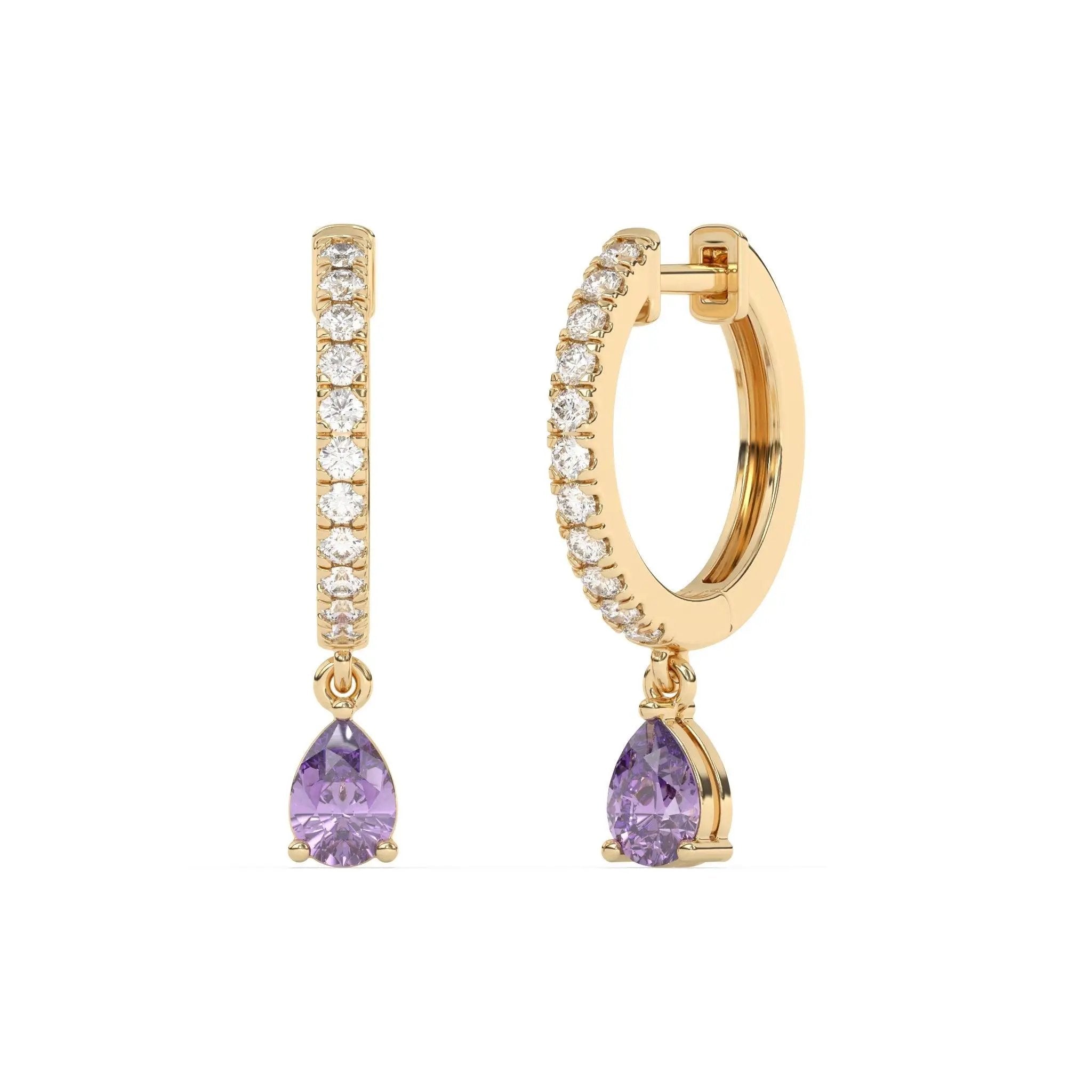
Amethyst Pear Drop Diamond Huggies


Huggie Drop Earrings

Written by Katie Silver