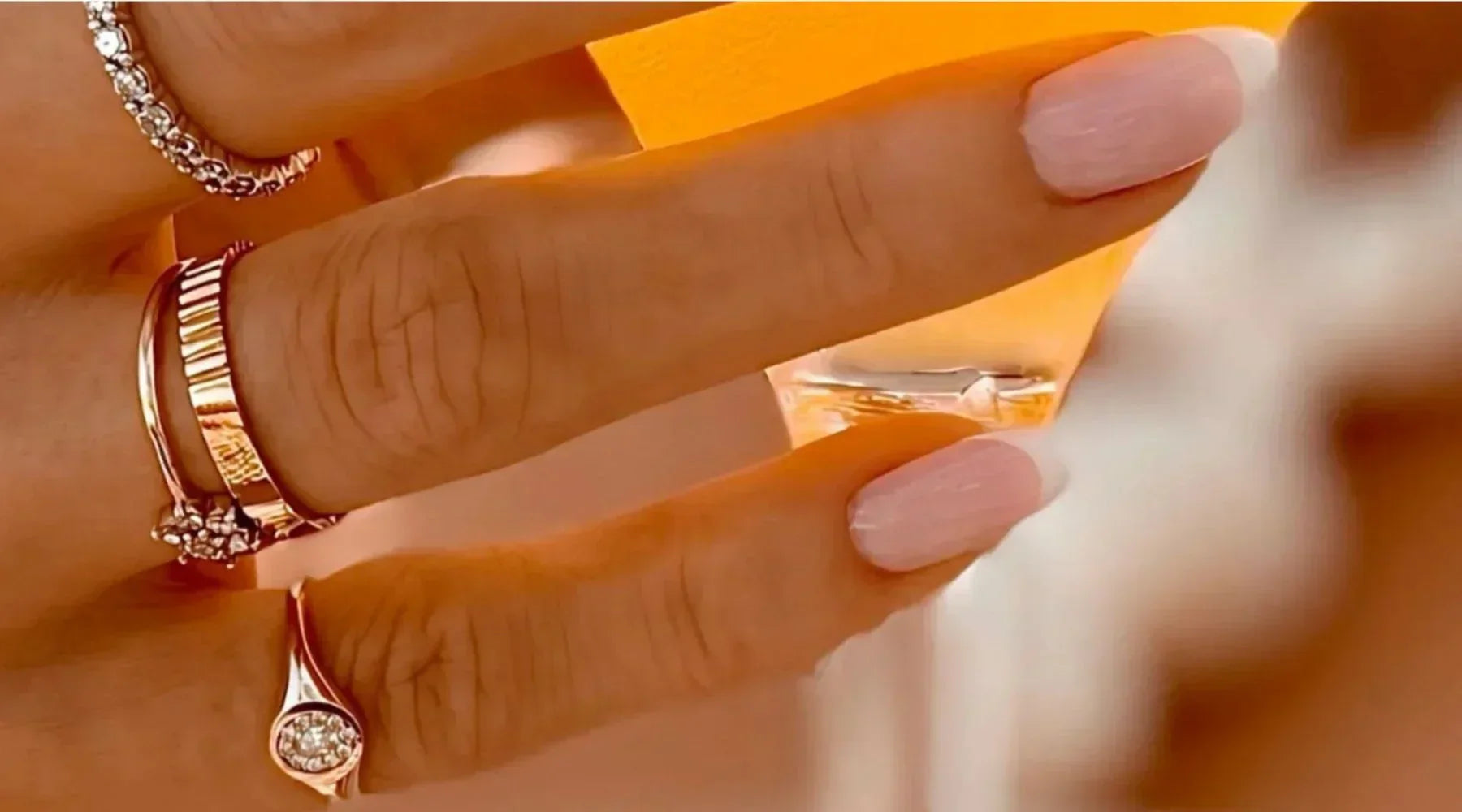
What should you look for when buying initial jewellery? From materials and pricing to design styles and gifting ideas, this guide answers everything you need to know before choosing a piece that truly means something.
Your Complete Guide to Initial Jewellery
From the single handwritten letter that makes a chain feel like yours, to Arabic script and diamond-set pendants — everything worth knowing before you buy.
Key Takeaways
- Initial Jewellery Has Roots Monogram jewellery dates back centuries — what looks like a recent trend is actually one of the oldest forms of personal adornment still in production.
- There Are More Styles Than You Think Handwritten, script, gothic, Arabic, diamond-set — the letter is just the starting point. The style you choose changes the whole character of the piece.
- It's the Easiest Personal Gift to Get Right One letter, one decision. The personalisation does the heavy lifting so you don't have to guess at taste, size, or style in the way you might with other fine jewellery.
- Gold Lasts Longest Solid 14ct or 18ct gold is the right choice for anything worn every day. Vermeil and plated pieces lose their colour. For a piece that travels with you for years, the metal matters.
- Font Changes Everything The same letter in a handwritten script and in Old English gothic reads as two entirely different pieces. Choose the style before you choose the metal.
- Multiple Initials Tell a Bigger Story Once you add a second or third letter — a child's, a partner's, a parent's — the piece shifts from self-expression to something closer to a portrait of who matters to you.
In This Guide
- Chapter I The Enduring Appeal — why initial jewellery persists, its history, and how to read the different styles
- Chapter II Pendants & Necklaces — the 8 best initial necklaces and pendants, from petite everyday to diamond-set
- Chapter III Rings, Bracelets & Earrings — initial jewellery beyond the necklace, including signet rings and initial bracelets
- Chapter IV How to Choose, Buy & Care — materials, sizing, occasions, pricing, and how to look after it
That sounds simple. It is simple. The more interesting question is which letter, which style, which metal — and what the piece actually communicates about the person wearing it, or the person who gave it. A petite handwritten pendant layered at the collarbone reads nothing like the same letter cut in gothic gold and worn alone. The letterform is a design decision as much as a personal one.
This guide covers the full range of initial jewellery from Argent & Asher: pendant necklaces in handwritten, script, gothic, and Arabic styles; diamond-set versions of the pendants; initial bracelets; a diamond signet ring; and an initial earring. We've included a style comparison, an occasions and pricing guide, and straight answers to every question we're regularly asked about personalised gold jewellery.
The Enduring Appeal
Monogram jewellery is not a new idea. It was standard practice in ancient Rome — rings and seals engraved with a personal cipher used to mark documents and authenticate correspondence. By the Victorian era the monogram had migrated fully onto jewellery: lockets, brooches, cufflinks, and rings were all common carriers. The difference between then and now is that the Victorian monogram was typically a matter of social signalling — it announced a name, a lineage, a family crest. The modern initial pendant is doing something quieter. It's less announcement, more reminder.
What's driven the current wave is personalisation more broadly — the same impulse that makes people want their trainers customised and their stationery monogrammed. Fine jewellery happened to be a natural home for it. A gold initial pendant is expensive enough to feel like a proper keepsake, specific enough to feel like a proper gift, and subtle enough to wear every day without looking like you're making a statement. Those three things rarely coexist in the same piece.
The style question matters more than most buyers initially expect. The table below shows how differently the same letter reads depending on the typeface. A petite handwritten "A" looks personal and layerable. A gothic "A" looks architectural and deliberate. A script "A" looks formal. An Arabic letterform is a category of its own — both more graphic and more culturally specific. Before you choose a metal or a price point, it's worth deciding which visual register you're working in.
Style ComparisonInitial Jewellery Styles at a Glance
| Style | Character | Best worn | Pairs with |
|---|---|---|---|
| Handwritten | Loose, personal, like a note someone wrote you | Every day, layered | Delicate chains, collarbone stacks |
| Script / Calligraphic | Formal, considered, closer to calligraphy than handwriting | Solo, as a statement piece | Clean necklines, eveningwear |
| Gothic / Old English | Architectural, graphic, intentionally bold | Solo on a fine chain, against plain tops | Minimal, pared-back dressing |
| Arabic Script | Architectural letterform that is a design in its own right | Solo, as a cultural touchstone | Fine gold chains, simple outfits |
| Diamond-set | Elevated, luminous — the initial in any style, set with stones | Milestone occasions, special gifts | Clean necklines, evening and occasion dressing |
Pendants & Necklaces
Petite Handwritten Initial Necklace

This is the one most people end up coming back to. There's something about the handwritten letter — not block capital, not a typewriter font, not anything that came out of a drop-down menu — that reads as genuinely personal. It looks like someone wrote it for you specifically. Which is close to the truth: each letterform is drawn by hand, then cast in solid 18ct gold so the line quality is preserved.
The pendant sits at the collarbone on a fine chain and layers well with anything else you're already wearing. It's not trying to be the focal point of an outfit — it's trying to be the piece you put on without thinking and forget you're wearing. That's the best version of an everyday necklace.
Multiple Initial Necklace

Three initials instead of one. The question people always ask when they see it is whose — which is exactly the point. The multiple initial necklace is less about self-expression than it is about relationship: children, a family, the people you carry around with you regardless of the occasion. The letters sit together on a single chain without touching, each one in the same handwritten style so they read as a set.
It's a particularly good Mother's Day gift, but it doesn't have to be. A woman who has recently had a second child, or who has lost a parent and wants to carry their initial — this is the format for those moments as much as any formal occasion. The handwritten style keeps it personal rather than monogram-formal.
Double Initial Necklace

Two letters, one chain. The options for meaning are obvious — partners, best friends, mother and daughter, your own first and middle initial — and no one else needs to know which reading applies. That ambiguity is not a design flaw; it's what makes the double initial necklace work as both a personal purchase and a gift. The wearer decides the meaning, and the wearer decides whether to share it.
The two letters sit close together in the same handwritten script, sized so they balance without one overwhelming the other. In 18ct gold it's a piece that evolves with circumstances — the meaning you gave it when you ordered it may not be the meaning it carries five years later, and that's fine. Gold is patient.
Handwritten Diamond Initial Necklace

The same handwritten letterform as the petite necklace, set with diamonds. The stones follow the precise line of the script — not scattered randomly but placed along the curve and stroke of the character so the letter reads clearly and the diamonds feel like illumination rather than decoration. In direct light it catches. In low light it simply glows.
This is the right version of the petite initial necklace for milestone occasions — a significant birthday, a new baby, a graduation, a thank-you that needs to land properly. It's personal in all the ways the plain gold version is, but the diamond setting places it clearly in the fine-jewellery category rather than the everyday one. If you're already wearing the plain initial and want to upgrade, this is the logical next step.
Script Initial Necklace

Script is not the same as handwritten. Handwriting is personal and slightly imperfect. Script is calligraphic — more deliberate, more formal, closer to the letterforms you'd find in Victorian correspondence. The diamond initial necklace in script style sits in that tradition: it looks considered. The letter is larger and more present than the petite pendant, set with diamonds along the calligraphic strokes.
Worn solo against a plain top or an open-neck shirt, it reads as a real piece of jewellery rather than an accessory. It's the initial necklace for someone who has already worn the petite version for three years and is ready to make slightly more of a statement — or for a gift that needs to feel genuinely special.
Arabic Letter Necklace

Arabic script initial jewellery is a different proposition to the Latin letter pieces. The Arabic letterform is architecturally complex in a way that Latin letters are not — the same character can look dramatically different depending on its position in a word, and isolated letters have their own distinct visual logic. In gold, the result is something that reads simultaneously as jewellery and as a piece of graphic design.
The demand for Arabic initial jewellery in the UK has grown steadily over the past few years — not just among Arab customers but among anyone whose name, or whose family's name, is better represented in Arabic script. The Argent & Asher Arabic letter necklace is made in London in 18ct gold to the same standard as every other piece in the collection.
Diamond Arabic Initial Pendant

The diamond-set version of the Arabic letter pendant. Diamonds are set along the architectural strokes of the character — which in Arabic script tend to be more varied in weight and direction than in Latin letters, making the stone-setting technically more complex and the resulting piece noticeably more dramatic. This is the version for someone who already wears or owns the plain gold Arabic letter and wants something for occasions that call for it.
It also works well as a significant gift — an Eid gift, a wedding gift, a milestone birthday. The diamond setting places it squarely in fine jewellery territory without losing the personal meaning that comes from the letter itself.
Gothic Gold Initial Pendant

Gothic lettering on jewellery reads differently depending on the context. Heavy, on a thick chain, it has associations that aren't always what someone shopping for initial jewellery is looking for. On a fine 18ct gold chain, worn at the collarbone against clean, minimal clothing, something different happens: the Old English letterform loses its subcultural associations and becomes purely a piece of graphic design. It's architectural and interesting in a way that script letters simply aren't.
The key is restraint in everything else you're wearing. The gothic initial pendant works because it's deliberate — one strong letterform, one fine chain, nothing competing with it. It's the right choice for someone who finds the handwritten initial too delicate or too expected, and wants their initial jewellery to make a clear design statement.
Rings, Bracelets & Earrings
Customised Initial Bracelet

The initial bracelet is the quieter option — personal jewellery that lives at the wrist rather than at the neckline, less visible in most outfit contexts and therefore, for some people, more meaningful. It's the piece you glance down at during a long day rather than the piece other people notice. That's not a consolation; it's actually the whole appeal.
A single initial is set on a delicate chain that fits close to the wrist — fine enough to layer with other bracelets but present enough to notice on its own. In 18ct gold it sits alongside a watch, a stack of plain chains, or on a completely bare wrist with equal confidence. The customisation comes in the initial: one letter, your choice.
Initially Yours Bracelet

The Initially Yours bracelet sits in a different register to the customised initial bracelet — slightly more present, slightly more of a piece in its own right rather than a personalisation of a plain chain. The letter is integrated into the bracelet's design so the initial feels like the point of the piece rather than an addition to it.
It layers well but also works as a solo wrist piece — the kind of bracelet you wear consistently enough that it eventually starts to feel like part of your hand. In 18ct gold it develops a character as it wears that a plated piece never achieves. The initial ages into the bracelet rather than fading off it.
Diamond Initial Signet Ring

The signet ring is already a personal piece — its whole history is tied to identity and ownership. A signet ring with your initial set in diamonds doubles down on that without changing the fundamental logic of the form. The face is proportioned for a little finger or an index finger, the band is slimmer than a traditional signet, and the diamond-set initial is the focal point rather than a monogram cut in relief.
For women who want a signet that looks genuinely current rather than inherited, this is the version. It's clearly fine jewellery — the diamonds make sure of that — while remaining wearable across contexts from a Tuesday morning to a wedding. The initial does the personal work; the setting does the rest.
Gold Initial Earring

The initial earring is a less expected format — most people think pendant necklace when they think initial jewellery, so wearing the letter at the ear reads as a considered choice rather than the obvious one. It works particularly well for those who already wear a necklace they love and don't want to change, but still want the personalisation somewhere in the picture.
In gold, worn alone or alongside a simple stud or small hoop in the other ear, the initial earring is intentional without being loud. It's the kind of piece that gets noticed at close range — in a meeting, over a dinner table — which is precisely where you want a detail like this to land.
How to Choose, Buy & Care
Materials, Size & Font
Metal: Solid 18ct gold is the correct answer for anything worn every day. It holds its colour indefinitely, doesn't tarnish against skin, and doesn't cause irritation for the vast majority of wearers. 9ct gold looks slightly less warm and wears faster. Gold vermeil — sterling silver with a thin gold layer — is fine for occasional wear, but daily wear strips the plating within months. If you're investing in a piece that carries meaning, spend the extra on solid 18ct.
Size: For pendants, 10–16mm reads as petite and layerable; 16–25mm reads as a considered solo piece; above 25mm makes a deliberate statement. Most everyday initial necklaces sit in the 12–18mm range. If you're buying for someone else and don't know their preference, go smaller — a petite initial always reads well and is harder to get wrong than an oversized one.
Font: Choose this before you choose anything else. A handwritten letter is personal and informal. Script is formal and calligraphic. Gothic is architectural and deliberate. Arabic is a different design category entirely. The same letter in different styles can look like entirely different pieces — which is the most underestimated variable in buying initial jewellery.
Also read: How to order personalised gold jewellery online
By OccasionWhich Piece for Which Moment
| Occasion | Recommended piece | Why it works |
|---|---|---|
| New baby | Petite handwritten initial necklace | Personal, wearable immediately, doesn't require a size |
| Mother's Day | Multiple initial necklace | Represents children and/or family in a single piece |
| Significant birthday | Diamond initial necklace | Personal and clearly fine jewellery — the combination that makes a milestone land |
| Graduation | Diamond initial signet ring | Marks the transition into adulthood with a piece that looks forward |
| Self-purchase | Initial bracelet or petite necklace | Wearable every day, not dependent on anyone else's taste |
| Eid / cultural milestone | Diamond Arabic initial pendant | Culturally resonant, elevated, and genuinely fine jewellery |
What to Expect to Spend
Initial jewellery spans a wide price range depending on metal, style, and whether the piece includes stones. The table below gives a realistic sense of what different formats cost in solid 18ct gold — the metal we'd recommend for anything meant to last.
| Piece type | Plain 18ct gold | Diamond-set |
|---|---|---|
| Petite initial pendant | £150–£280 | £350–£600 |
| Multiple / double initial necklace | £200–£350 | — |
| Initial bracelet | £200–£350 | — |
| Signet ring (initial) | £300–£500 | £450–£700 |
| Initial earring | £150–£250 | — |
Looking After Your Piece
Solid 18ct gold requires very little maintenance. The main rule is to keep it away from prolonged chlorine exposure — swimming pools and hot tubs will eventually dull the metal, so take delicate pieces off before getting in. Perfume and body lotion applied directly at the neckline can build up on the pendant over time, so it's worth applying fragrance before putting your necklace on rather than after.
To clean: warm water, a small amount of washing-up liquid, and a soft baby toothbrush. Gentle circular motion, rinse, pat dry with a soft cloth. For diamond-set pieces, the same method applies — the brush helps dislodge anything that's built up around the stones. Store pieces separately to avoid scratching; a small pouch or the original box works well. Polish with a soft cloth when needed.
Everything Else Worth Knowing
What's the difference between an initial necklace and a name necklace?
An initial necklace carries one letter — typically a first, middle, or someone else's initial entirely. A name necklace spells out a full word or name. Initial jewellery tends to read cleaner and more abstract; name jewellery is more literal. Both are personal, but an initial leaves a little more room for interpretation — which is often the point.
What's the best material for an initial necklace?
Solid 18ct gold is the right answer for anything worn regularly. It holds its colour, doesn't tarnish, and sits well against skin. 9ct gold is a lower entry point but noticeably less warm and wears faster. Gold vermeil — sterling silver with a thin gold layer — is fine for occasional wear but not daily: the plating lifts with sweat and friction over time. For something that genuinely lasts, 18ct is worth the difference in price.
Can I wear initial jewellery every day?
Yes, in solid gold. A fine 18ct initial pendant can go on in the morning and stay there for months — showers, sleep, and light exercise included. Take it off before swimming in chlorinated water and before applying perfume directly at the neckline. Otherwise, daily wear is not only fine but actively good for the piece — body oils provide a gentle polish that keeps the gold looking its best.
What does a double initial necklace mean?
Whatever you want it to mean — which is part of the appeal. Most commonly: first and last initial for yourself, or the initials of two people — a couple, a parent and child, two siblings, two close friends. There's no single reading, and most wearers find that the ambiguity is a feature rather than a bug. People ask, you get to choose how much to tell them.
How do I choose the right size for an initial pendant?
A pendant between 10mm and 16mm reads as delicate and layerable. Between 16mm and 25mm reads as a considered solo piece, visible without being loud. Above 25mm makes a statement — which is the intention for gothic or oversized styles. For everyday wear, most people end up at the smaller end. If you're buying for someone else and genuinely unsure, go smaller: a petite initial is harder to get wrong.
Is initial jewellery a good gift?
It's one of the more reliable fine jewellery gifts precisely because it requires a small amount of personal information — a letter — and not much guesswork about taste or size. The main risk is getting the letter wrong: gifting someone their partner's initial when they'd prefer their own, for example. If in doubt, their first initial is the safe default. Everything else is relatively hard to get wrong.
What occasions suit initial jewellery?
New baby gifts — the baby's initial or the parent's — birthdays, Mother's Day (especially multiple-initial pieces representing children), graduations, and any milestone that calls for something personal. It also works well as a self-purchase: a way of marking something without announcing it. The appeal of initial jewellery is that the occasion doesn't need to be major. The letter makes it specific regardless.
Does Argent & Asher initial jewellery come gift-packaged?
Yes. All orders come in the atelier's signature packaging — box, ribbon, ready to give. If you're ordering for someone else and want a personal message included, you can add one at checkout. The packaging is designed to work as-is; you don't need to re-wrap it.
The Right Letter
Initial jewellery endures because it does something most fine jewellery can't: it's specific to a person without needing to be explained. A diamond earring is beautiful. An initial pendant set with diamonds that carries a letter with a meaning known only to the wearer — that's something different. The letter does the work that a hundred pounds' worth of additional gold couldn't.
Whether you're buying for yourself, for a new mother, for a graduate, or for someone you want to give something genuinely personal to — the Argent & Asher initial collection covers the full range. Petite and everyday to diamond-set and milestone-worthy. Handwritten and approachable to gothic and graphic. Latin alphabet and Arabic script. There's a version of the right letter for everyone who needs one.
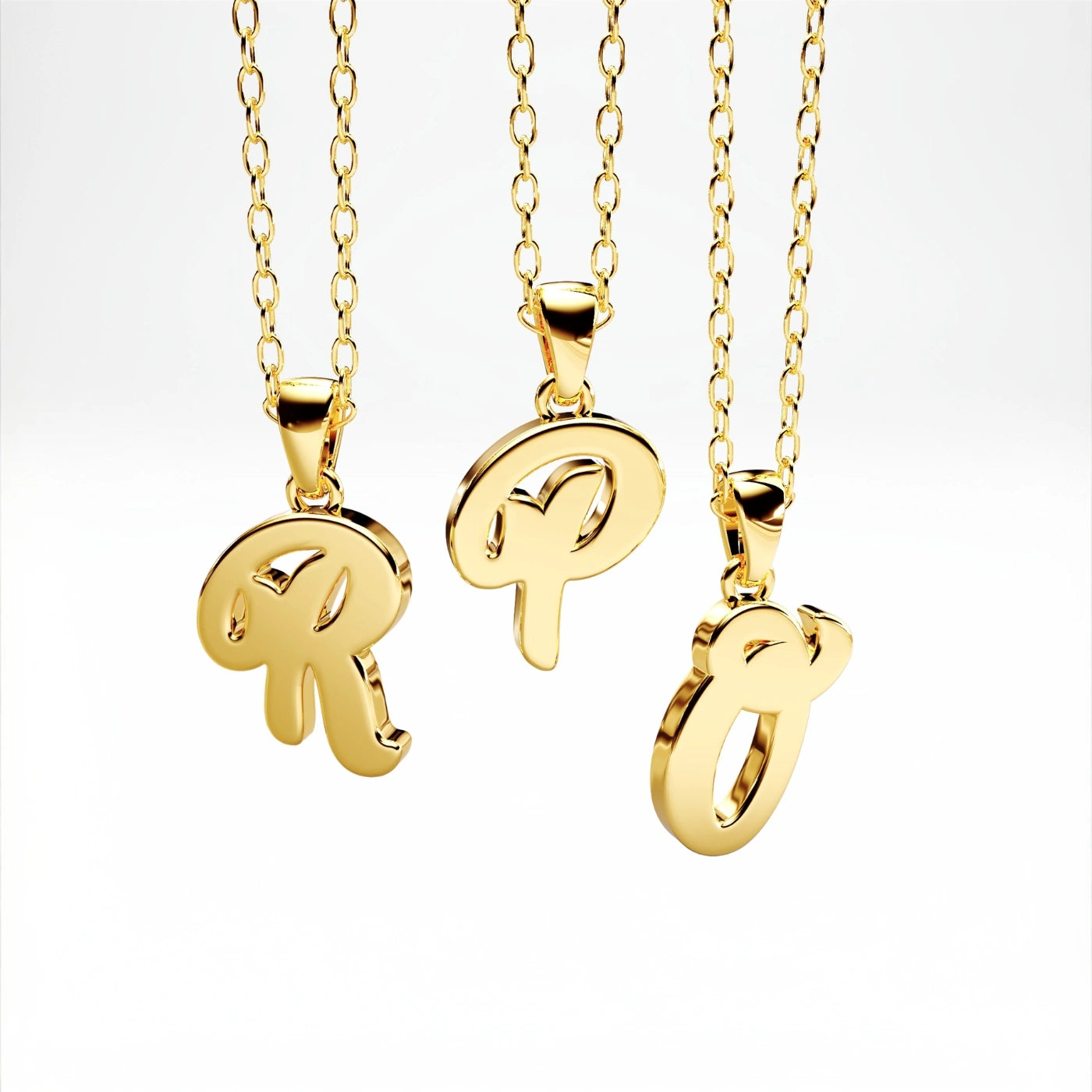

Handwritten Initial Necklace Gold
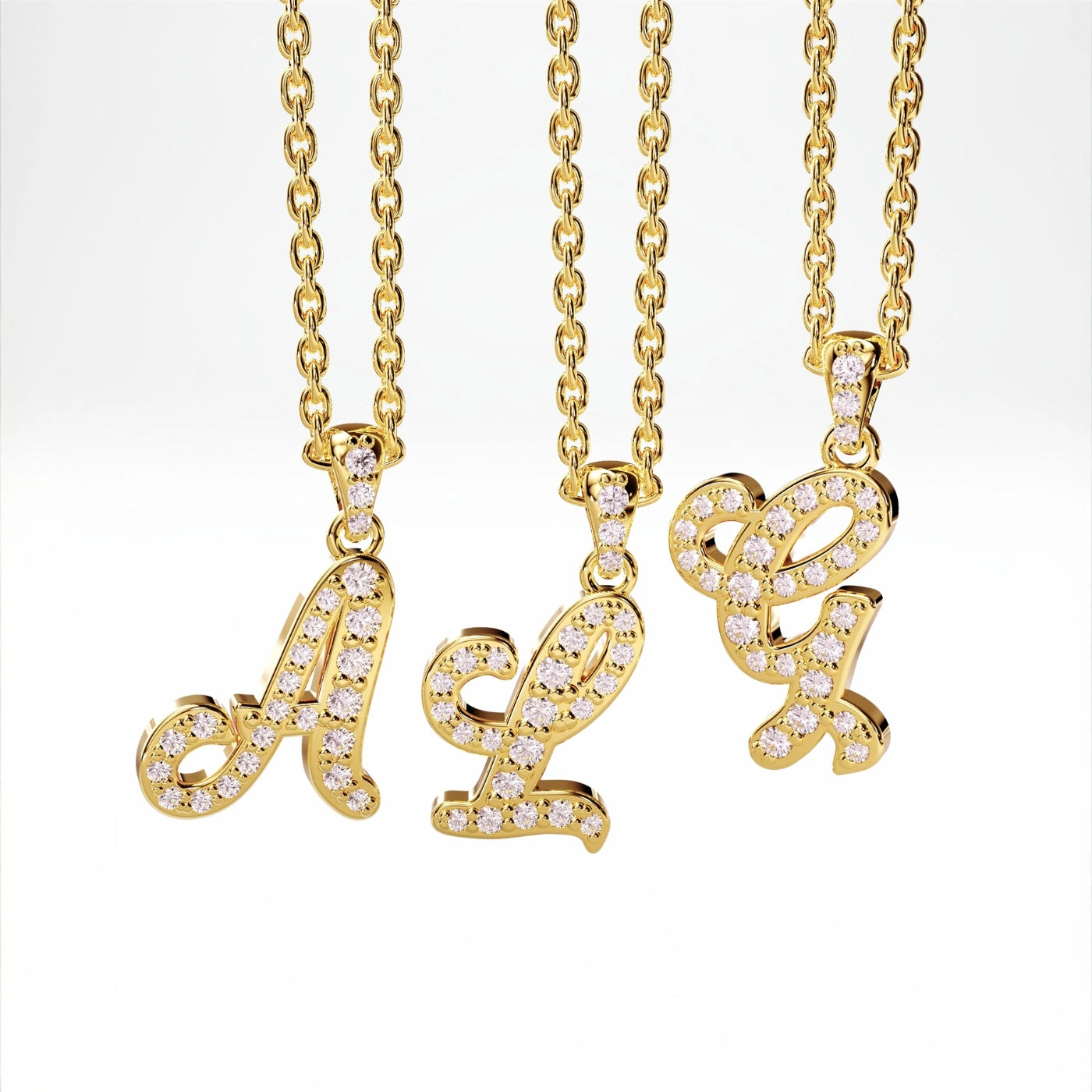

Handwritten Diamond Letter Pendant

Written by Katie Silver