Confused by gemstones and semi-precious stones? This beginner’s guide explains definitions, durability, treatments, and how to choose coloured gemstone jewellery that feels considered and lasting.
Gemstones and Semi-Precious Stones: A Complete Guide
From what "semi-precious" actually means to how treatments work and which stones suit everyday wear — everything you need to choose gemstone jewellery with confidence.
Key Takeaways
- "Semi-Precious" Is a Label, Not a Quality Marker The term is a 19th-century trade classification. It doesn't map to value, beauty, or rarity — a top-quality tourmaline can rival a mediocre ruby at any price point.
- Treatments Are Normal — Undisclosed Ones Aren't Most gemstones are treated in some way. What matters is that a reputable jeweller tells you clearly and specifically what's been done before you buy.
- Colour Is the First Quality Test Saturation, tone, and how a stone reads in natural light matter more than size or the category name. A stone that looks vivid in a studio and flat on your hand is a problem before it's a purchase.
- Durability Is Three Things, Not One Hardness (scratch resistance), toughness (chip resistance), and stability (response to heat and chemicals) all matter. Mohs hardness alone doesn't tell you whether a stone is safe for a ring worn daily.
- The Setting Changes the Equation A well-designed bezel or low-profile setting can extend the life of a moderately durable stone considerably. Design and stone choice work together — neither decides durability alone.
- Solid Gold Holds Detail That Plating Can't Plating wears at the edges first — which is exactly where stone cuts and prong tips live. 14ct or 18ct solid gold is the benchmark for anything intended to last.
- Ask About Treatment in Writing Before You Buy If a seller won't tell you specifically what's been done to a stone — or can't — that's the answer you needed.
In This Guide
- Chapter I The Language of Gemstones — Definitions, the "semi-precious" label, diamond, and the 4 quality factors.
- Chapter II Treatments & Transparency — What gets done to gemstones, why, and the questions to ask before buying.
- Chapter III Durability & Design — What "safe for everyday wear" actually means, and how settings change the equation.
- Chapter IV Stone by Stone — Ten stones, what quality looks like in each, and what to watch for when buying.
This guide is. It covers what gemstones actually are, why the "semi-precious" label is more confusing than helpful, how treatments work and why disclosure matters, what durability really means for a piece you'll wear regularly, and a stone-by-stone breakdown of the ten stones people ask about most. The goal is simple: by the end of this, you'll know what to look for, what to ask, and which stones suit the piece — and the life — you're buying for.
If you want to see how different stones work in finished jewellery, you can browse the full coloured gemstone collection alongside this guide.
The Language of Gemstones
What a Gemstone Actually Is
A gemstone is a mineral — and occasionally an organic material — that's been cut and polished for use in jewellery. What earns something that label is a combination of beauty, durability, rarity, and demand. None of those factors require the stone to be expensive, or traditionally "precious."
What the name doesn't tell you is how good the stone is. A sapphire and a sapphire can be wildly different objects: one might be a clear, saturated blue that holds its colour in every light condition; another might be a milky, over-treated stone that reads well in a studio photo and underwhelming in a restaurant. The category tells you what you're looking at. The quality tells you whether it's worth having.
The "Semi-Precious" Myth
"Semi-precious" is a trade term that dates to the 19th century. It was created to separate diamond, ruby, sapphire, and emerald from everything else — the implication being that anything outside that list was somehow lesser. That was always a simplification, and it remains one now. It's not a scientific classification, and it doesn't map neatly to value, beauty, or rarity.
A top-quality tourmaline can trade at prices that rival commercial rubies. A fine tanzanite with strong blue-violet saturation can feel significantly more distinctive than a dull, over-treated sapphire at the same price point. The label doesn't travel with the value. If you're shopping by category name rather than by colour integrity, cut quality, and treatment transparency, you're using the wrong filter.
Also read: What Are Semi-Precious Stones? Meaning, Examples, and Value Explained
Is Diamond a Gemstone?
Yes. Diamond is a gemstone — one of the hardest naturally occurring materials on earth (Mohs 10), which is a large part of why it became culturally associated with permanence. But its reputation doesn't remove it from the normal rules of gemstone assessment.
A diamond's value still depends on cut quality, colour grade, clarity, and whether the stone is natural or laboratory-grown. Two diamonds of identical carat weight can look and perform very differently depending on how well they were cut. The category is a starting point, not a final answer.
Read more: Is a Diamond a Gemstone? Understanding How Gemstones Are Classified
The 4 Factors That Decide Gemstone Quality
Whatever the stone, these four factors determine whether it's genuinely fine or just adequately described. The stone name is only the starting point.
Colour is the most important factor in a coloured stone — not just the category ("it's blue") but the specific tone, saturation, and how it reads in natural light versus a carefully lit product photo. A stone that looks vivid in a studio and flat on your actual hand is a problem before it's a purchase.
Cut determines whether the stone's best qualities are visible. A brilliant cut that maximises sparkle isn't always right for a coloured stone; some benefit from cuts that deepen saturation rather than create dispersion. Symmetry and proportion also affect how the piece wears over time.
Clarity expectations vary by stone. Inclusions in an emerald are expected and normal — they're part of how the stone is identified. The same level of inclusions in a sapphire would indicate a lower grade. Understanding what's typical for a specific stone is part of assessing it fairly.
Treatment — what's been done to the stone, and whether it's been disclosed — shapes both the long-term behaviour and the value. This matters enough that it gets its own chapter.
Treatments & Transparency
Why Treatments Are Normal — and Why Disclosure Isn't Optional
Most gemstones are treated. That's not a scandal — it's a description of how the industry works. Heat treatment, oiling, irradiation, and stabilisation are all standard processes, and several of them are widely accepted practice in fine jewellery. The problem isn't treatment itself. It's undisclosed treatment.
Two stones can look almost identical online but behave very differently long-term depending on what's been done to them. An oiled emerald requires more careful handling than an untreated one. An irradiated topaz colour may fade if exposed to sustained heat. A stabilised turquoise has different structural properties than a natural one. These things affect care, value, and long-term appearance — you need to know them before you buy, not after.
| Treatment | Common Stones | What It Changes | Ask Before Buying |
|---|---|---|---|
| Heat | Sapphire, Ruby | Colour depth, clarity | Is it heated? Is treatment confirmed in writing? |
| Oiling / Filling | Emerald | Apparent clarity, care requirements | Degree of oiling? Any care limitations? |
| Irradiation | Blue Topaz | Colour vividness and permanence | Is the colour natural or treated? Is it stable long-term? |
| Clarity Enhancement | Emerald | Visible inclusions, apparent quality | Degree of enhancement? Ultrasonic cleaning safe? |
| Stabilisation | Turquoise | Structural strength, colour consistency | Is it stabilised? What's the quality standard applied? |
Durability & Design
What "Safe for Everyday Wear" Actually Means
Durability isn't one thing — it's three things working together. Hardness measures scratch resistance (the Mohs scale). Toughness describes how resistant a stone is to chipping or fracturing on impact. Stability covers how a stone responds to heat, chemicals, light exposure, and the general friction of everyday life. A Mohs 8 stone that's brittle along cleavage planes can chip more easily than a Mohs 7 stone that's genuinely tough.
This is why a ring worn daily needs different thinking than a pendant or earring. A ring takes constant knocks, brushes against fabric, gets cleaned. The same stone that's beautiful in a pendant could be miserable in a ring if the setting doesn't protect it. Setting design isn't an afterthought — it's part of how durability actually works.
| Category | Stones | Where They Work Best | Design Note |
|---|---|---|---|
| High durability | Diamond, Sapphire, Ruby | Rings, stacked pieces, long-term daily wear | Excellent everyday choice; choose tone carefully regardless. |
| Moderate durability | Tourmaline, Aquamarine, Topaz, Amethyst, Zircon | Protected rings, pendants, earrings | Bezel or low-profile settings extend life considerably. |
| Colour-led, design-dependent | Tanzanite, Turquoise, Lapis Lazuli | Pendants, statement pieces, occasional-wear rings | The colour is the point. Setting choice and care make the difference. |
Also read: Gemstone Jewellery: How to Choose the Right Stone, Setting, and Quality
Stone by Stone
What follows is a stone-by-stone snapshot of the ten gemstones people ask about most — what each one is, what quality looks like in practice, what to watch for, and how it tends to behave once it's set in gold and worn in real light. Read it as a buyer's reference, not a technical manual.
Explore what these look like in finished jewellery: Coloured Gemstone Jewellery
Sapphire & Ruby Gemstones: The Hardwearing Classics
Sapphire Mohs 9
Sapphire is corundum, which puts it at Mohs 9 — genuinely hard, genuinely durable, and one of the few coloured stones you can confidently wear in a ring every day without anxiety. The real quality question is always colour. The best sapphires hold their saturation across lighting conditions without going inky indoors; that balance is what you're actually paying for at the upper end of the market. Heat treatment is standard practice and is accepted across the industry when disclosed. Undisclosed treatment is a different conversation.
- Quality cues: even colour distribution, good saturation in natural light, clean faceting that doesn't flatten the stone.
- Watch for: stones that look rich under artificial light and flatten noticeably in daylight.
- Design note: a sapphire that reads as deep rather than theatrical is almost always the better long-term choice. The most wearable stones are usually not the most obviously impressive ones.
Ruby Mohs 9
Ruby is red corundum — same hardness, same durability, different colour conversation. The most desirable rubies have a quality sometimes described as pigeon blood: a pure, saturated red with a lively internal glow. In practice, many commercial rubies skew darker or browner than buyers expect, and heat treatment is common. A strong pink tourmaline can feel just as visually impactful, and often comes with considerably more treatment transparency.
- Quality cues: saturation, brightness, a balanced red tone that reads well in natural light — neither too dark nor veering into pink.
- Watch for: browning or dulling in natural light, and undisclosed heat or fracture-filling treatments.
- Design note: don't discount strong pink tourmaline as an alternative — the colour can be just as striking, and it's a more transparent market.
Also read: What Are the Most Popular Gemstones? Colours, Value and Why They're Chosen
Emerald & Aquamarine: Beryl's Two Faces
Emerald Mohs 7.5–8
Emerald is beryl, and inclusions are expected — they're so characteristic of the stone that they're given their own name: jardin, meaning garden. A completely clean emerald at anything below the very top end of the fine jewellery market should raise questions, not excitement. Clarity enhancement through oiling or resin filling is common and widely accepted when disclosed; the degree matters because it affects care requirements and long-term stability.
- Quality cues: depth and evenness of green, a lit-from-within quality that makes the stone feel alive rather than flat.
- Watch for: yellowy or bluish greens that undermine the richness, and undisclosed clarity enhancement.
- Design note: emerald is about mood and richness, not perfection. Its character comes from the inclusions, not in spite of them.
Aquamarine Mohs 7.5–8
Aquamarine is beryl too, but where emerald is rich and dramatic, aquamarine is cool and restrained. It's valued for exceptional clarity and a clean, blue tone — the kind of stone that looks effortlessly composed rather than shouty. Quietly elevated when the tone is pure and the cut is crisp; considerably less so when grey undertones creep in and flatten the colour.
- Quality cues: high transparency, even blue tone, brightness that reads as clean rather than icy.
- Watch for: grey undertones that make the stone look washed out — especially obvious once it's set and photographed in natural light.
- Design note: reads most refined in minimal gold settings where the clarity can do its work without distraction.
Also read: What Is a Blue Gemstone Called? A Guide to Sapphire, Turquoise, Topaz and More
Tourmaline & Tanzanite: For the Colour Lover
Tourmaline Mohs 7–7.5
Tourmaline is one of the most colour-diverse gemstones in existence — green, pink, red, teal, bi-colour, watermelon, deep indicolite, and everything in between. It's a colour lover's stone in the best possible sense: when it's well chosen, it reads modern and intentional in a way that the more "classic" precious stones can't always manage. Teal tourmaline in particular has a quiet, saturated depth that feels distinctly current.
- Quality cues: clean tone with minimal grey, strong saturation, a cut that supports the colour rather than just maximising carat weight.
- Watch for: tones that are too dark and lose their glow in low light — a stone that only looks good at midday isn't really doing its job.
- Design note: teal tourmaline alongside solid gold has a contemporary confidence that feels genuinely considered. It's one of the more underrated choices in gemstone jewellery right now.
Tanzanite Mohs 6–7
Tanzanite is a variety of zoisite known for its blue-violet depth and a quality called pleochroism — the ability to shift colour depending on the angle of light and your viewing direction. At its best, it has a velvety, almost liquid depth that few other stones can replicate. It's softer than sapphire (Mohs 6–7), so setting choice matters considerably, particularly for rings.
- Quality cues: saturated blue-violet tone, clarity that supports an internal glow, and good light performance across different conditions.
- Treatment: heat treatment for colour enhancement is common and should be disclosed.
- Design note: excellent in pendants and earrings; rings benefit from bezel settings or low-profile designs that protect the stone from knocks.
Turquoise & Lapis Lazuli: Colour as Authority
Turquoise Mohs 5–6
Turquoise is an opaque stone that doesn't compete with transparent gems on sparkle or light play — it doesn't try to. It anchors a piece through colour saturation and a kind of quiet graphic confidence. Framed in gold, turquoise looks architectural: bold and considered at the same time. Stabilisation (strengthening the porous material with resin) is common and standard; it should be explained clearly, and the quality of the process varies significantly between suppliers.
- Quality cues: strong, even saturation, stable surface, and intentional matrix (the natural veining that adds character rather than chaos).
- Watch for: pale, washed-out stones that haven't been stabilised well, or matrix that's so heavy it overwhelms the colour.
- Design note: in 18ct gold, turquoise looks bold and intentional. It's a statement made through restraint, not volume.
Lapis Lazuli Mohs 5–5.5
Lapis is valued for its deep ultramarine colour — one of the most historically significant blues in the world, used in everything from Renaissance painting to Egyptian ornamentation. The best lapis feels velvety and deep, with flecks of pyrite that add contrast rather than clutter. The main quality concern is chalky or pale stones that look flat once set; the blue should feel weighted and authoritative.
- Quality cues: deep, even blue tone, minimal white calcite patches, a good polish that brings out the richness.
- Watch for: pale or chalky stones that photograph well but lose their presence once set and worn in real light.
- Design note: lapis is graphic, confident, and genuinely dramatic set in gold. It has nothing subtle about it — which is exactly the point.
Topaz, Amethyst & Zircon: Worth Knowing Properly
Topaz Mohs 8
Topaz at Mohs 8 is hard, but it has a cleavage plane that means it can chip along a specific axis if struck in the wrong direction. Blue topaz in particular is almost universally irradiated from colourless material — that's standard and accepted, but it should be disclosed. What matters in the stone is a tone that feels purposeful rather than trend-driven, and a cut that shows off the stone's natural brightness without creating harshness.
- Quality cues: crisp cut, clean tone, brightness that reads as considered rather than aggressive.
- Treatment: irradiation is the norm for blue; it should be explicitly disclosed by any reputable seller.
- Design note: topaz works best when the setting and design are doing something specific with the stone's light quality — not just filling a colour brief.
Amethyst Mohs 7
Amethyst is quartz, and its value comes almost entirely from colour quality. The best stones have a strong, clear violet tone — no muddy brown undertones, no greyish cast that flattens the look. It's widely available, which means quality varies enormously; it's worth being more selective with amethyst than the price point might suggest. Next to turquoise in a considered design, it has a combination of warmth and cool that reads surprisingly contemporary.
- Quality cues: even saturation, clear violet tone, good transparency throughout the stone.
- Watch for: brown undertones or grey cast that make the stone feel flat — particularly visible once set and photographed in daylight.
- Design note: widely available doesn't mean easy to choose well. Treat the colour selection as seriously as you would for a more expensive stone.
Zircon Mohs 6–7.5
Zircon is a natural gemstone and is frequently confused with cubic zirconia, which is a synthetic material. They are not related — zircon has been used in jewellery for centuries. When well cut, it shows exceptional brilliance and fire; blue and champagne are the most common colours used in fine jewellery. Any reputable seller should name it explicitly as natural zircon and distinguish it clearly from CZ.
- Quality cues: lively light return, clean facet pattern, good polish that shows the stone's natural optical performance.
- Watch for: sellers who don't distinguish it clearly from cubic zirconia — if the naming is vague, assume the worst.
- Design note: best chosen for what it actually does — exceptional light performance — not as a comparison stone to anything else.
Stone Comparison & Quick Reference
A quick reference summary of each stone — hardness, character, best use, and what quality really looks like in practice.
| Stone | Mohs | Best Piece Type | Treatment Common? | Key Quality Marker |
|---|---|---|---|---|
| Sapphire | 9 | Rings, daily wear | Yes (heat) — disclose | Saturation holds across light conditions |
| Ruby | 9 | Rings, heirloom pieces | Yes (heat) — disclose | True red tone, no browning in natural light |
| Emerald | 7.5–8 | Pendants, protected rings | Yes (oiling) — degree matters | Depth of green, lit-from-within quality |
| Aquamarine | 7.5–8 | Pendants, minimal-setting rings | Usually none | Clean, even blue — no grey flatness |
| Tourmaline | 7–7.5 | Protected rings, pendants, earrings | Occasionally — check | Strong saturation without grey cast |
| Tanzanite | 6–7 | Pendants, earrings, bezel rings | Yes (heat) — disclose | Blue-violet depth, pleochroic glow |
| Turquoise | 5–6 | Pendants, statement pieces | Yes (stabilisation) — quality varies | Strong, stable colour — no chalky wash |
| Lapis Lazuli | 5–5.5 | Pendants, statement earrings | Sometimes — ask | Deep ultramarine, minimal calcite, good polish |
| Topaz | 8 | Protected rings, pendants | Yes for blue (irradiation) — disclose | Clean tone, brightness without harshness |
| Amethyst | 7 | Protected rings, pendants, earrings | Occasionally — check | Clear violet, no brown or grey undertone |
| Zircon | 6–7.5 | Pendants, earrings | Sometimes — ask | Lively light return, clean faceting — not CZ |
Frequently Asked Questions About Gemstones & Semi-Precious Stones
Where are the best places to buy gemstones and semi-precious stones online in the UK?
The right place depends on how much transparency you get. Look for treatment disclosure, specific stone descriptions, solid 14ct or 18ct gold settings, and pricing that feels realistic rather than suspiciously low. At Argent & Asher, we explain how tone, treatment, and setting design affect how a gemstone performs once it's worn — not just how it looks in a product photo.
How do you identify genuine semi-precious stones from synthetic ones?
Start with what the seller tells you. A reputable jeweller should state clearly whether a stone is natural, treated, or laboratory-created. Pricing that feels unrealistic is usually a warning sign. At Argent & Asher, we're transparent about every material we use and will explain what a stone is, how it's set, and what that means for long-term wear.
Where can I get custom gemstone jewellery made in London?
Choose a designer who understands gemstone behaviour and builds with structural setting in mind. A proper process includes transparent sourcing, treatment clarity, design previews (sketch or CAD), solid gold options, and genuine guidance on which stones suit what you're trying to wear. Argent & Asher is London-based and we design every piece so the stone choice matches how it will actually be worn.
Which UK jewellery brands specialise in gemstones and semi-precious stones?
The strongest brands prioritise colour integrity, setting quality, and material transparency — not just trend colour or category prestige. Look for solid gold settings, clear treatment disclosure, and consistent design standards. At Argent & Asher, we select stones for saturation and presence once set in gold — the way the piece looks in natural light is always the benchmark.
Can you get quality semi-precious stone rings at an affordable price in the UK?
Affordable can still mean high quality when colour and setting come first. Prioritise saturation over size, avoid plated metals, check that the setting actually secures the stone, and confirm any treatments. We often recommend choosing colour integrity and a secure, well-thought-out design over carat weight — particularly for stones like tourmaline and amethyst, where the colour is the point.
What should I check before buying gemstone jewellery online?
Check transparency on stone type, treatments, and metal quality. Look for photography in natural light, a specific description of colour and cut, and solid 14ct or 18ct gold wherever possible. Studio photography is flattering to almost every stone — what matters is how it reads outdoors and in real interiors, which is exactly what good-quality natural-light images will show you.
Do gemstones get treated, and does it matter?
Most gemstones are treated in some way — heat treatment in sapphire and ruby, clarity enhancement in emerald, irradiation in blue topaz. Treatment isn't automatically a problem, but undisclosed treatment is. It affects value, long-term stability, and sometimes care requirements. Any reputable jeweller should tell you what's been done to a stone before you buy, not after.
What's the difference between a gemstone and a semi-precious stone?
Technically, every semi-precious stone is a gemstone — "semi-precious" is a 19th-century trade category, not a scientific one. It was used to separate diamond, ruby, sapphire, and emerald from everything else. In practice, it's a poor guide to either quality or value: a top-quality tourmaline can cost more than a commercial-grade ruby. What matters is colour integrity, cut, treatment transparency, and durability — not the label.
Choosing Gemstone Jewellery with Confidence
There's no single right answer when it comes to choosing a gemstone — but there are better and worse questions to ask. Category names are a starting point. Colour quality, cut, treatment disclosure, and how a stone behaves once it's set in gold and worn in real light: those are the things that actually determine whether a piece is worth having.
Whether you're drawn to the structural confidence of a sapphire, the rich drama of an emerald, the contemporary depth of teal tourmaline, or the graphic authority of turquoise in gold — what you're really choosing is how a piece of jewellery will make you feel once it's yours and you're wearing it properly, in actual light, doing something ordinary. That's the test that matters.
Ready to explore? Browse the full coloured gemstone collection or read on with the guides below.
Where to Go Next
These guides build naturally from what you've read here — whether you want to go deeper on the semi-precious label, understand individual stone types, or make a more informed buying decision:
- What Are Semi-Precious Stones? Meaning, Examples, and Value Explained — the full story behind the label, and why it matters less than how the stone actually looks.
- What Are the Most Popular Gemstones? Colours, Value and Why They're Chosen — a look at which stones people actually choose and what drives those decisions.
- What Is a Blue Gemstone Called? A Guide to Sapphire, Turquoise, Topaz and More — for anyone drawn to blue stones but uncertain which one is right.
- Gemstone Jewellery: How to Choose the Right Stone, Setting, and Quality — how setting design and stone choice work together in finished pieces.
- Semi-Precious Stone Jewellery: What Impacts Price and Quality? — understanding what you're actually paying for when you buy a semi-precious stone piece.
- Semi-Precious Gemstone Necklaces: What to Look For Before You Buy — a practical pre-purchase guide for necklaces specifically.
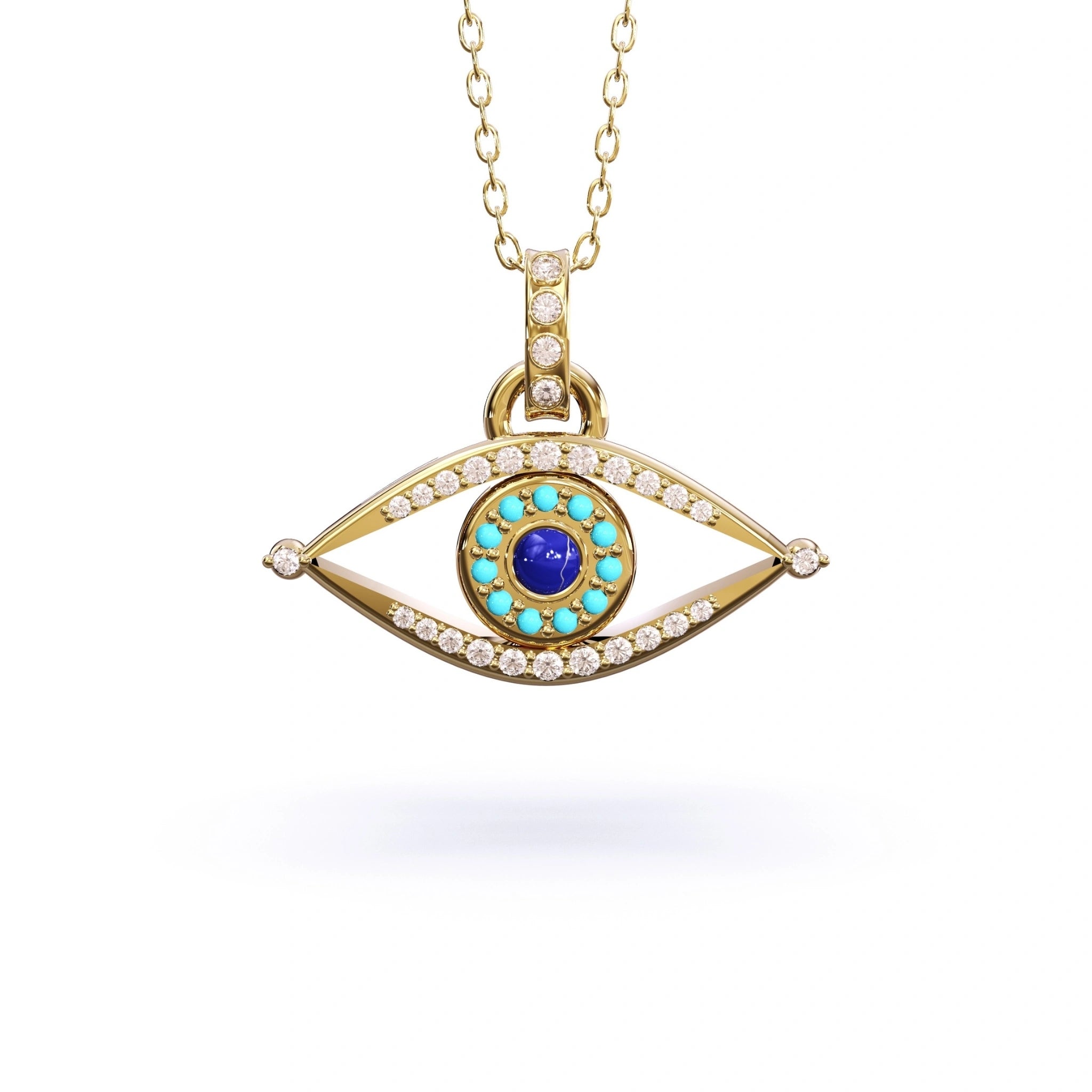
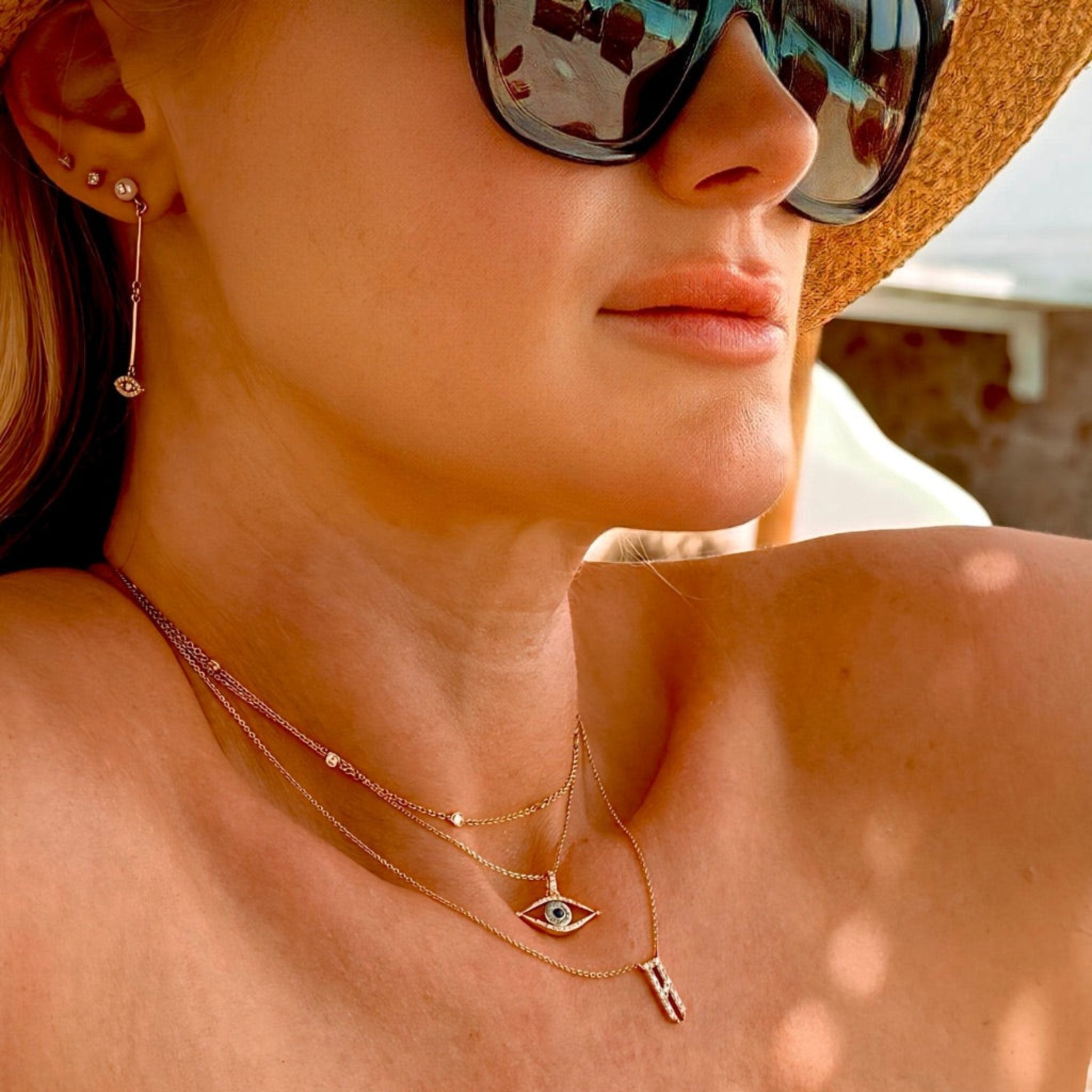
Evil Eye of Positive Energy
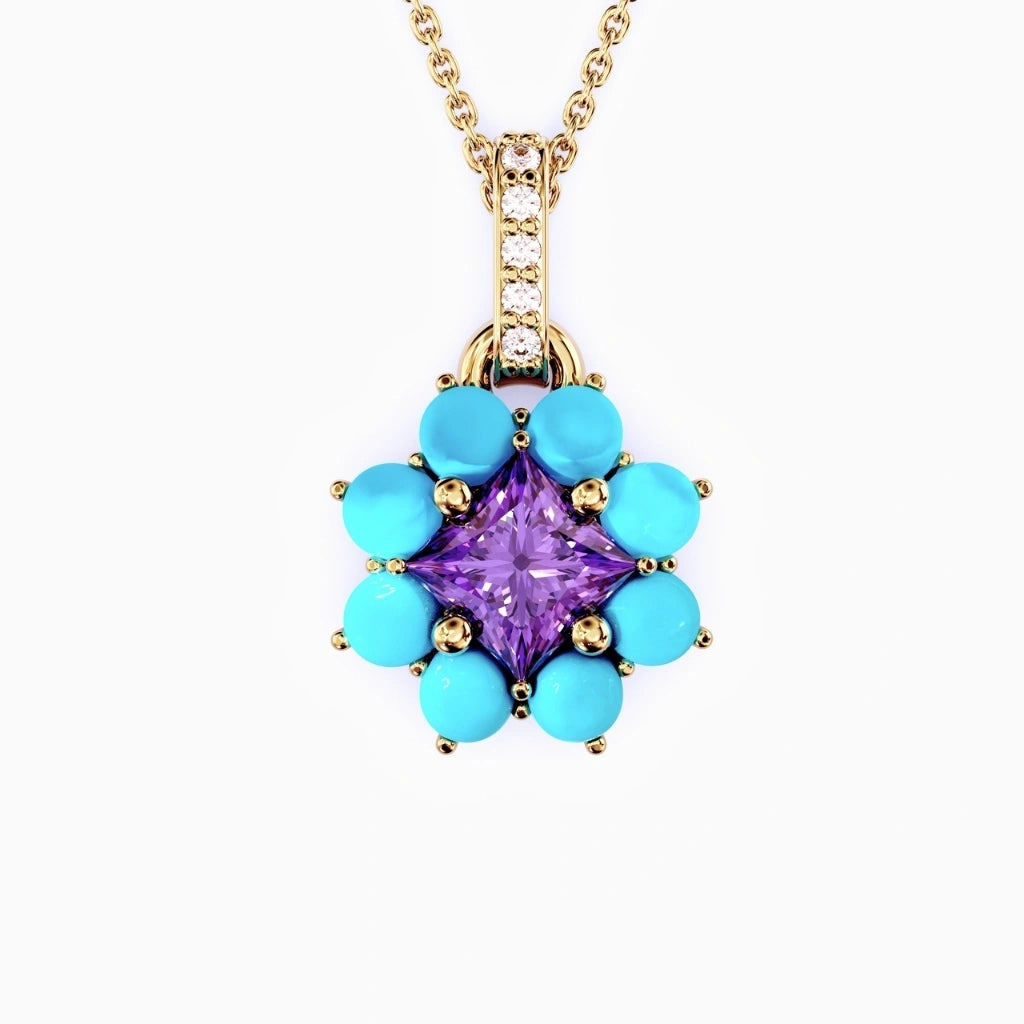
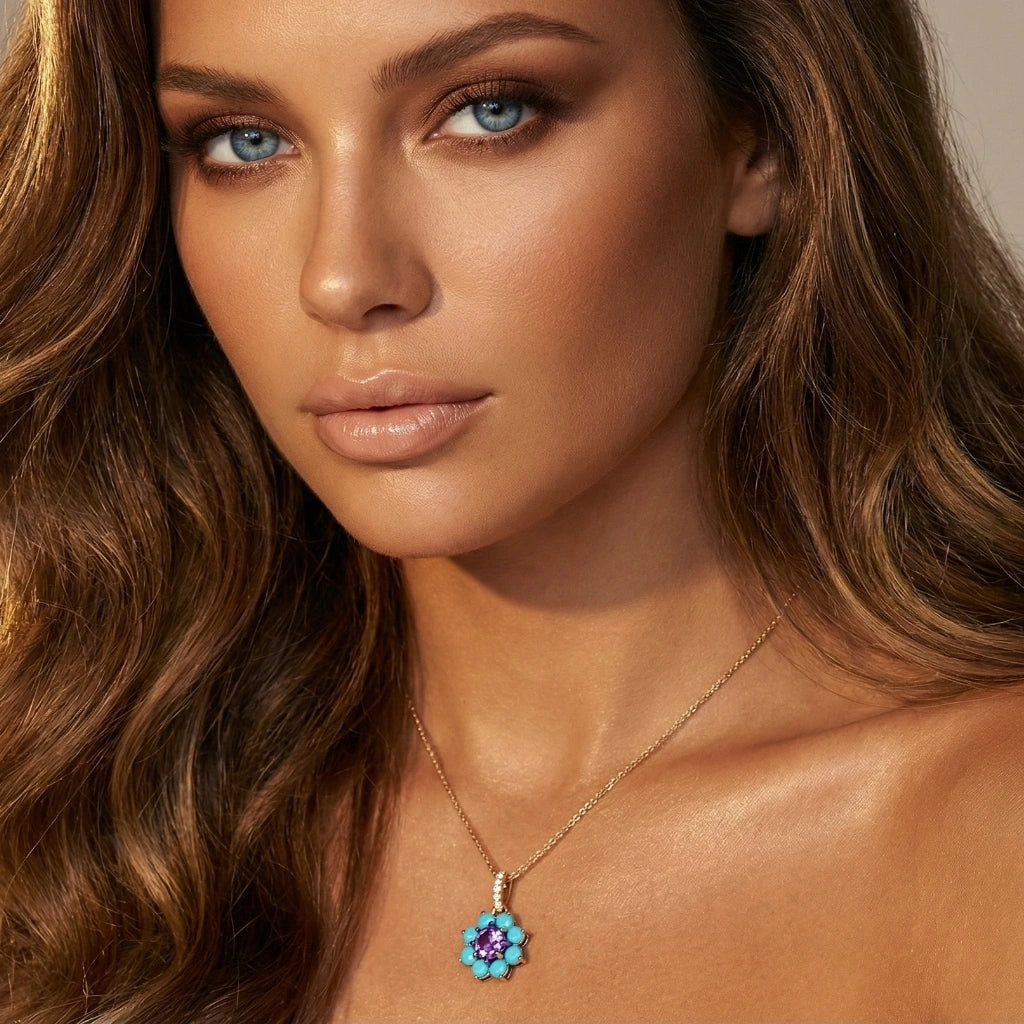
Gold and Turquoise Pendant

Written by Katie Silver