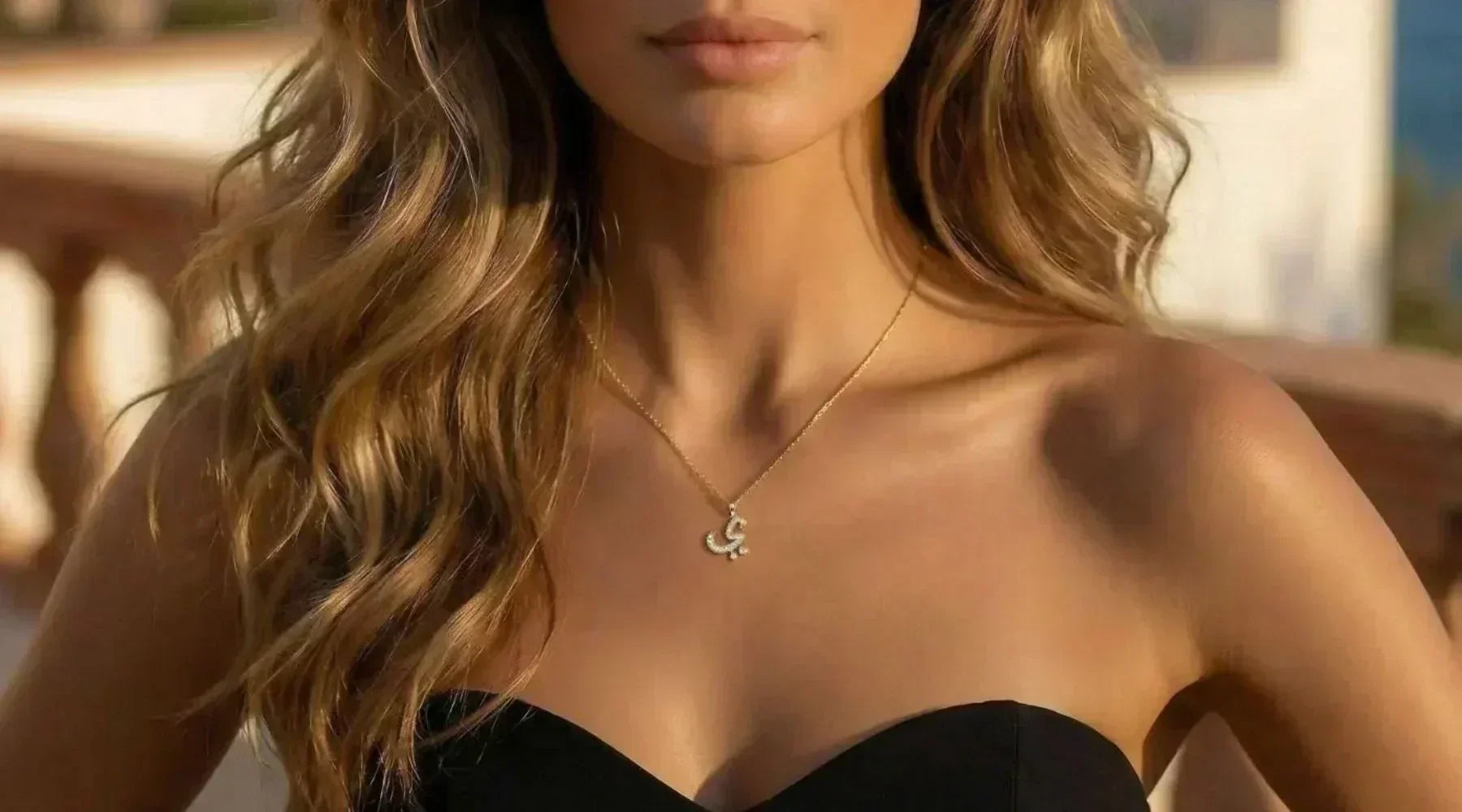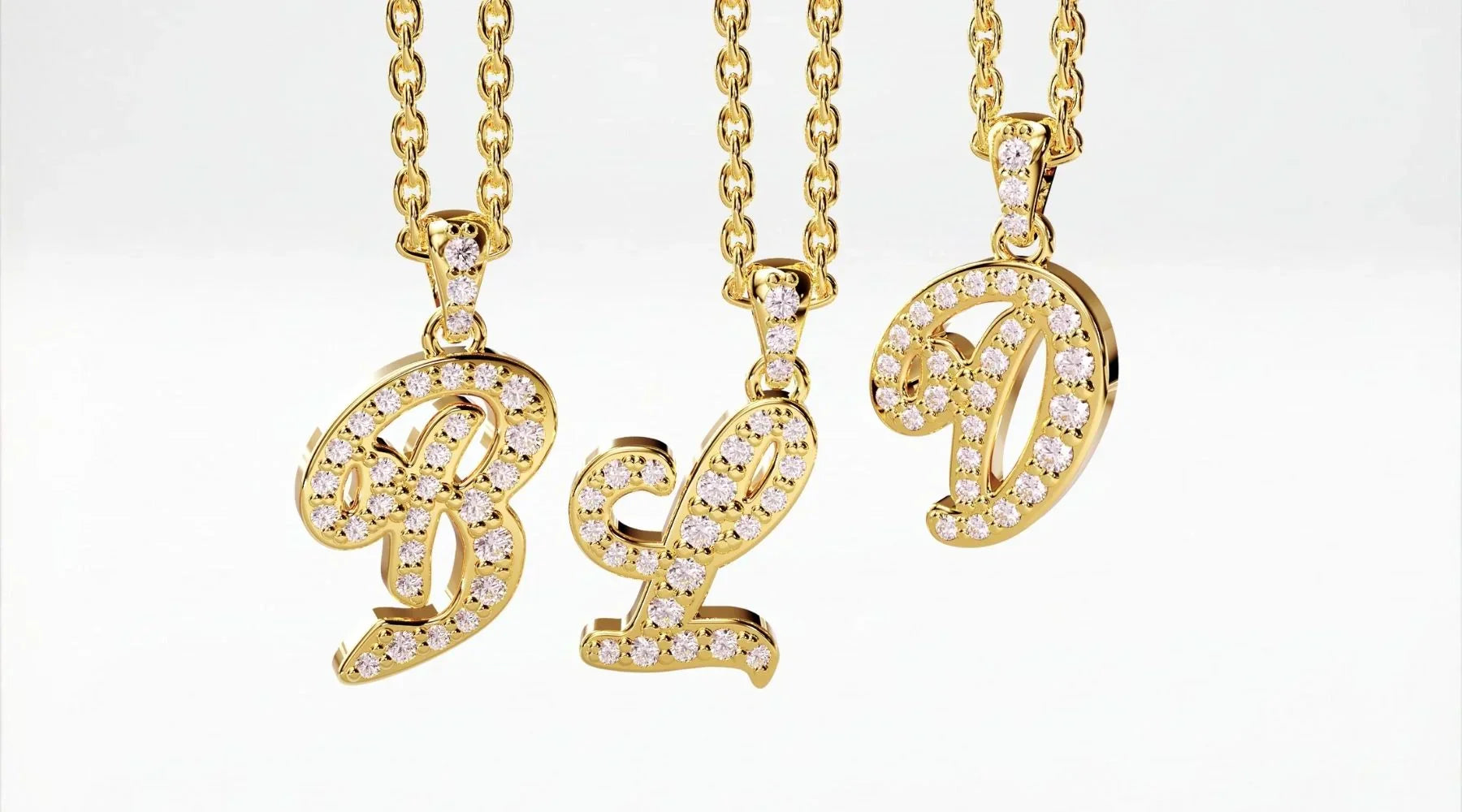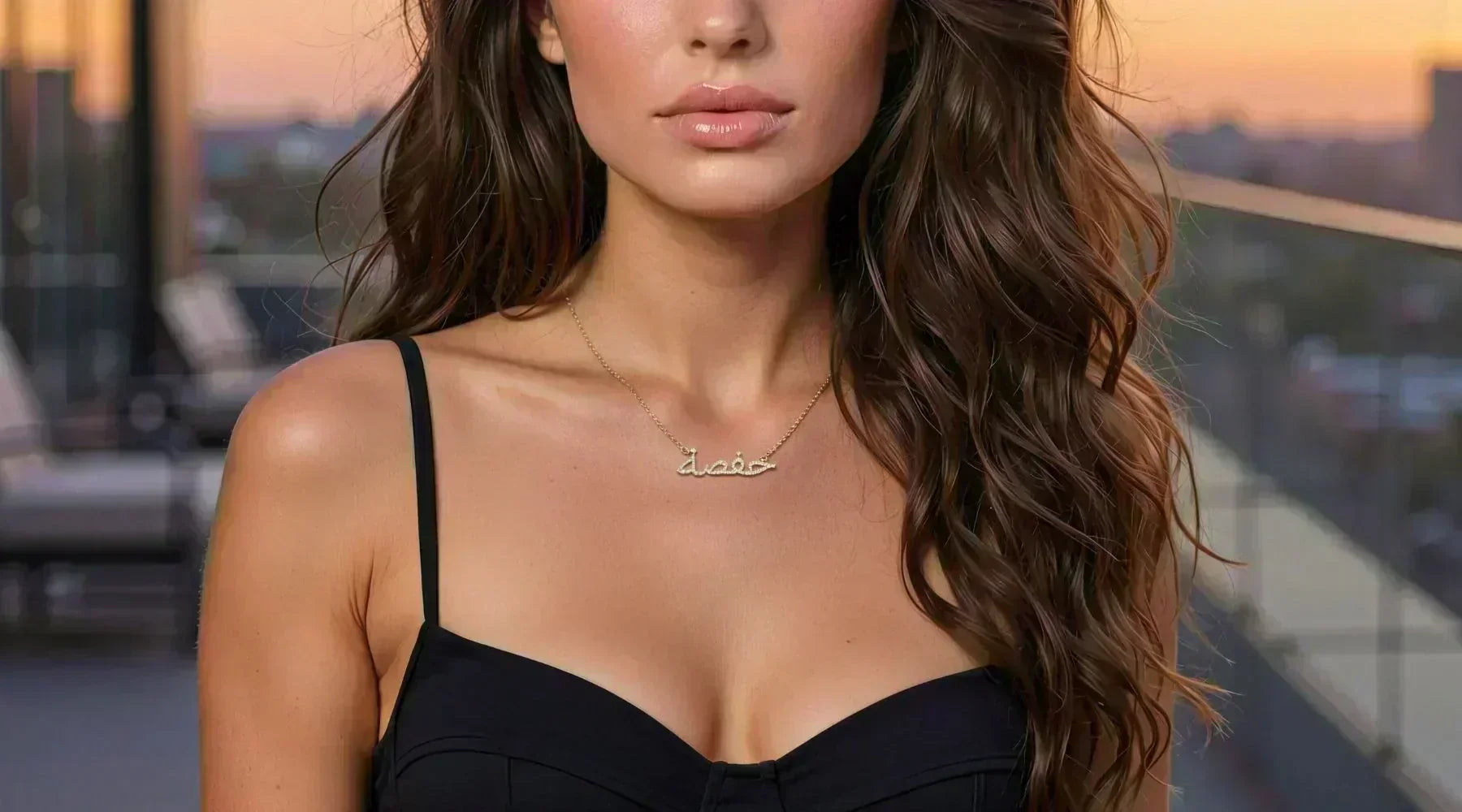
Design Your Arabic Name Necklace: Font Choices Explained explores the five most popular Arabic calligraphy styles used in fine jewellery, from timeless Naskh and elegant Diwani to contemporary Kufic and Fine Line Arabic. Discover how different scripts influence the look, feel, and personality of your necklace, and learn how to choose the right font, gold, and design details to create a piece that reflects your story. Whether you're ordering your first Arabic name necklace or designing a bespoke piece, this guide will help you make a confident choice.
Design Your Arabic Name Necklace: Font Choices Explained
From flowing Naskh to geometric Kufic, the script you choose for your Arabic name necklace shapes not just its appearance, but the story it tells.

Key Takeaways
- Font Is the Foundation The script you choose determines how your necklace catches light, reads on skin, and expresses your identity — it is the single most defining design decision you will make.
- Traditional Meets Contemporary From the ornamented sweeps of Thuluth to the clean geometry of Kufic, each of the five core Arabic scripts carries a distinct visual and cultural register.
- Gold Holds Detail Best Intricate Arabic calligraphy demands solid 14k or 18k gold. Plating wears down at the edges, blurring the fine strokes that give the script its character.
- Chain Weight Should Mirror Script Weight Bold Kufic letters pair with a slightly heavier chain; delicate Fine Line Arabic looks best on something minimal and refined.
- Transliteration Requires Expert Eyes A small error in Arabic spelling can change the meaning entirely. Always work with a professional or the atelier's design team — never rely solely on free translation tools.
- The Preview Stage Is Sacred Once production begins, changes are limited. Request a Custom Design Preview and approve every detail before the piece goes to casting.
- Fine Craft Takes Time Handcrafted in London using CAD, lost-wax casting, and hand finishing, each piece takes 3–5 weeks — and arrives UK hallmarked, worldwide tracked.
In This Guide
- Chapter I Why Font Choice Matters — The visual and cultural logic behind your most important design decision.
- Chapter II The Five Essential Scripts — Naskh, Thuluth, Diwani, Kufic, and Fine Line Arabic, each one explained.
- Chapter III Designing Your Piece — From choosing your gold to approving your Custom Design Preview.
- Chapter IV Personalisation & Care — Beyond the font: adding layers of meaning and keeping your piece pristine.
The script you choose changes how the metal catches the light. It determines whether your piece reads as a timeless heirloom or a bold contemporary statement. It decides the visual weight of the pendant, the intricacy of each stroke, and ultimately the emotional register of the thing you are choosing to wear every day.
Arabic calligraphy is a proper art form with centuries of heritage behind it. Choosing between a classical script and a minimal modern one is not simply an aesthetic preference — it is a way of placing yourself within a tradition, or knowingly stepping outside it. This guide takes you through the five scripts most suited to fine jewellery, and everything you need to make the decision that is right for you.
Why Font Choice Matters
The Font Is the Personality
Take one single name. Set it in a traditional, elegant script and it looks completely timeless — full of heritage, utterly wearable with anything. Swap that for a sharp, geometric style and the exact same name becomes modern and structured. The font is where the personality actually comes from, and it works at a level that most people only sense rather than consciously identify.
There is also readability to consider. Some Arabic scripts become so intricate at jewellery scale that the name itself gets lost in the ornament. That is a genuine problem when the whole point of a name necklace is that it says something specific. The goal is always a piece that is beautiful and legible — where the craft serves the meaning, not obscures it.

Calligraphy as Living Heritage
Arabic calligraphy is not simply a writing system — it is one of the world's great visual art forms, with a history stretching back over fourteen centuries. Choosing a traditional script for your name necklace means placing yourself within that lineage. The choice carries cultural weight, and for many wearers, that is precisely the point.
Opting for a sleek, contemporary adaptation is a way of saying something different — that your relationship to the script is personal rather than strictly traditional, modern rather than reverential. Neither approach is more correct. The question is simply which one tells your story best, and which one you will still love wearing in ten years' time.
Discover: name necklace trends for 2026
The Five Essential Scripts
Naskh: Clean, Balanced, Timeless
If you are starting from first principles, Naskh is your anchor point. It is the most widely read Arabic script in the world — the one used in printed books, newspapers, and digital interfaces — which gives it a natural legibility at every scale. In jewellery, that translates to a piece that is instantly readable, clean in its proportions, and quietly elegant rather than showy.
It does not date. A Naskh custom Arabic name necklace sits as naturally with jeans as it does with formal dress — it simply becomes part of how you move through the world. For anyone uncertain where to begin, this is the script that will never disappoint.

Thuluth & Diwani: Scripts for Statement Pieces
Thuluth is calligraphy at its most theatrical. The sweeping curves and ornamental flourishes that define it have made it the script of mosque inscriptions and royal manuscripts for centuries. In jewellery, its complexity demands scale, this is not a script for small, delicate pendants, but for larger statement pieces where there is room to breathe and the craftsmanship can be properly appreciated. Worn well, a Thuluth piece feels less like an accessory and more like wearable art.
Diwani works differently. Where Thuluth is grandly architectural, Diwani is soft and lyrical, heavily stylised, with a real sense of movement in the letters as they flow into one another. It reads almost like a signature in gold, which makes it a consistent favourite for bespoke gold Arabic name necklaces meant to feel genuinely personal. The curves catch light beautifully, and at the right scale the overall effect is quietly extraordinary.

Kufic & Fine Line: Arabic for the Modernist
Kufic is the script for the wearer who wants something emphatically contemporary. One of the oldest Arabic scripts, it was the original form used in early manuscripts — but its geometric, blocky structure feels startlingly modern to the eye today. It ditches the traditional curves for a clean, architectural approach that pairs exceptionally well with minimalist wardrobes. A solid gold Kufic name necklace is a confident, bold object. Because the letterforms are cleaner, it also remains legible when scaled down to smaller pendant sizes.
Fine Line Arabic is a more recent adaptation of traditional script, designed for the era of delicate jewellery. It focuses entirely on thin, elegant lines — the ornament stripped back, the essential shape of the letters preserved. It works beautifully on small pendants, particularly when worn layered with other chains. For anyone who wants to wear their name in Arabic but prefers restraint over grandeur, this is the natural choice.

Designing Your Piece
From Brief to Gold
Working with Argent & Asher is a collaborative process from the start. You begin by choosing your necklace style — selecting between solid 14k or 18k gold, with or without diamonds. Then you submit the name or word you want rendered, with as much detail as you can on the correct transliteration. Accuracy here is everything. If you are unsure of the Arabic characters, the design team is on hand to work through it with you.
The font selection and design preview come next — and this is the stage that warrants the most attention. You will decide whether you prefer traditional flowing calligraphy or a more contemporary geometric approach, and the atelier will prepare a Custom Design Preview so you can see exactly what you are getting before anything is committed to metal. The designers then refine the spacing and metal thickness to ensure the Arabic script functions beautifully as a piece of jewellery, not simply as flat text. Once you approve the final design, the piece is cast in solid gold using CAD, 3D printing, and traditional lost-wax methods — and will reach you UK hallmarked, in Argent & Asher signature packaging, within 3 to 5 weeks.
Metal & Font Compatibility
Not all metals hold intricate detail equally well, and Arabic calligraphy — with its fine curves and deliberate strokes — is particularly unforgiving of a material that cannot hold its shape. Solid 14k or 18k gold is the standard for a reason: it is durable enough for daily wear and hard enough to preserve the crisp edges that make fine script legible. Silver can manage detailed engraving but is softer and prone to wearing down over time. Gold-plated finishes should be avoided entirely for scripts with fine detail — the plating process inherently softens edges, and as it wears the definition is lost.
When you are dealing with fine curves or delicate strokes — as you are with Fine Line Arabic or the flourishes of Thuluth — the metal needs structural backbone to hold the form together. That is precisely why every Argent & Asher Arabic name necklace is made in solid gold, with no exceptions.

The Chain That Completes the Picture
The chain is as integral to the finished piece as the script itself. A bold Kufic font pairs naturally with a slightly heavier chain — the visual weight of the letterforms demands something that can carry them. Delicate scripts like Fine Line Arabic need something thinner and more refined; a thick chain would visually overwhelm the pendant and break the balance entirely.
Length is equally worth considering. A 16–18 inch chain sits closer to the collarbone and suits everyday wear with smaller script styles. At 20 inches and above, the pendant hangs more freely on the chest — which gives larger statement fonts like Thuluth room to move and be noticed. A longer chain also opens up layering possibilities, allowing your Arabic name necklace to sit as one element within a considered stack.
Personalisation & Care
Making It Entirely Yours
Font is only the beginning of the personalisation journey. A necklace with a name in Arabic can be developed in many other directions — adding birthstones for layered personal meaning, incorporating charms such as hearts or stars, or mixing Arabic script with English initials and significant dates. These small additions are the difference between a beautiful object and a genuinely irreplaceable one.
Some clients also commission pieces that combine multiple elements — a name alongside a symbolic word, or a date rendered in numerals beneath the script. As long as the overall composition is considered during the design stage, the atelier can almost always find a way to bring several layers of meaning into a single, coherent piece.
The Art of Accurate Transliteration
The biggest practical hurdle in ordering an Arabic name necklace is the translation itself — and it is one that is very easy to get wrong if you rely solely on free online tools. Arabic is a language with significant regional variation, and the transliteration of a non-Arabic name involves genuine judgement calls about phonetics that an algorithm is not well-placed to make. A professional eye — whether that is a language expert or the atelier's design team — is not optional. It is essential.
If you are looking at the Arabic characters and feeling uncertain, reach out to the team directly. A good jeweller will walk you through the options, explain any regional variations, and ensure that what ends up cast in solid gold actually means what it is supposed to. This conversation is part of the service — do not skip it.

Script Comparison & Styling Details
A quick reference guide to the five scripts and their ideal applications in fine gold jewellery.
| Script | Style | Best For | Metal |
|---|---|---|---|
| Naskh | Classical & balanced | Everyday wear, any pendant size | 14k or 18k solid gold |
| Thuluth | Ornate & sweeping | Statement pieces, larger formats | 18k solid gold |
| Diwani | Soft & lyrical | Bespoke & gifted pieces | 18k solid gold |
| Kufic | Geometric & modern | Minimalist wardrobes, any size | 14k or 18k solid gold |
| Fine Line Arabic | Delicate & contemporary | Small pendants, layering | 18k solid gold |
Everything Else Worth Knowing
Can I change the font after ordering?
Once production begins, changes become limited — and in most cases, not possible without starting the process again. The design preview stage is specifically there to give you the opportunity to get everything exactly right before anything is committed. Review it carefully, ask questions, and only approve when you are genuinely satisfied.
Are all fonts suitable for small pendants?
No. Intricate scripts like Thuluth and Diwani demand space — at small scale, the flourishes become cluttered and the name can be difficult to read. Cleaner styles like Naskh, Kufic, and Fine Line Arabic hold up far better at smaller pendant sizes and will look considerably sharper as a result.
Do gold-plated necklaces affect font clarity?
Over time, yes. Plating wears away at the edges first — which is exactly where the fine detail of Arabic script lives. The result is a gradual softening and loss of the crisp letterforms that define the piece. For any script with fine detail, solid gold is the only metal that will hold its quality through years of daily wear.
Can I combine multiple fonts on a single piece?
Technically possible, depending on the layout — but generally not recommended. Mixing scripts within a single name rarely improves things; the visual cohesion of a single font almost always produces a cleaner, more beautiful result. If you want to incorporate multiple elements, it is usually better to keep the script consistent and vary other details instead.
How do I care for a script-heavy Arabic name necklace?
Gently, and consistently. Clean with warm water and mild soap, dry with a soft cloth, and avoid applying perfume or lotion directly to the piece. Store it separately in a soft pouch to prevent scratches, and remove it before swimming or sleeping. Fine calligraphy depends on preserved detail — a little care goes a long way to maintaining the clarity and shine over years of wear.
Your Story, in Gold
Choosing the right font for your Arabic name necklace is more than an aesthetic decision. It is the moment where a piece of jewellery becomes a piece of your story — where the metal starts to carry something that belongs specifically to you. Whether you are drawn to the classical legibility of Naskh, the ornate grandeur of Thuluth, the lyrical flow of Diwani, the architectural confidence of Kufic, or the quiet restraint of Fine Line Arabic, each script is a different way of saying the same thing: this is who I am.
Get the material right. Get the translation right. Get the font right. Do those three things, and what you end up with is not just jewellery — it is identity, memory, and craft, worn together in solid gold.
Ready to begin? Explore our Arabic name necklace collection and design a piece that is entirely your own.
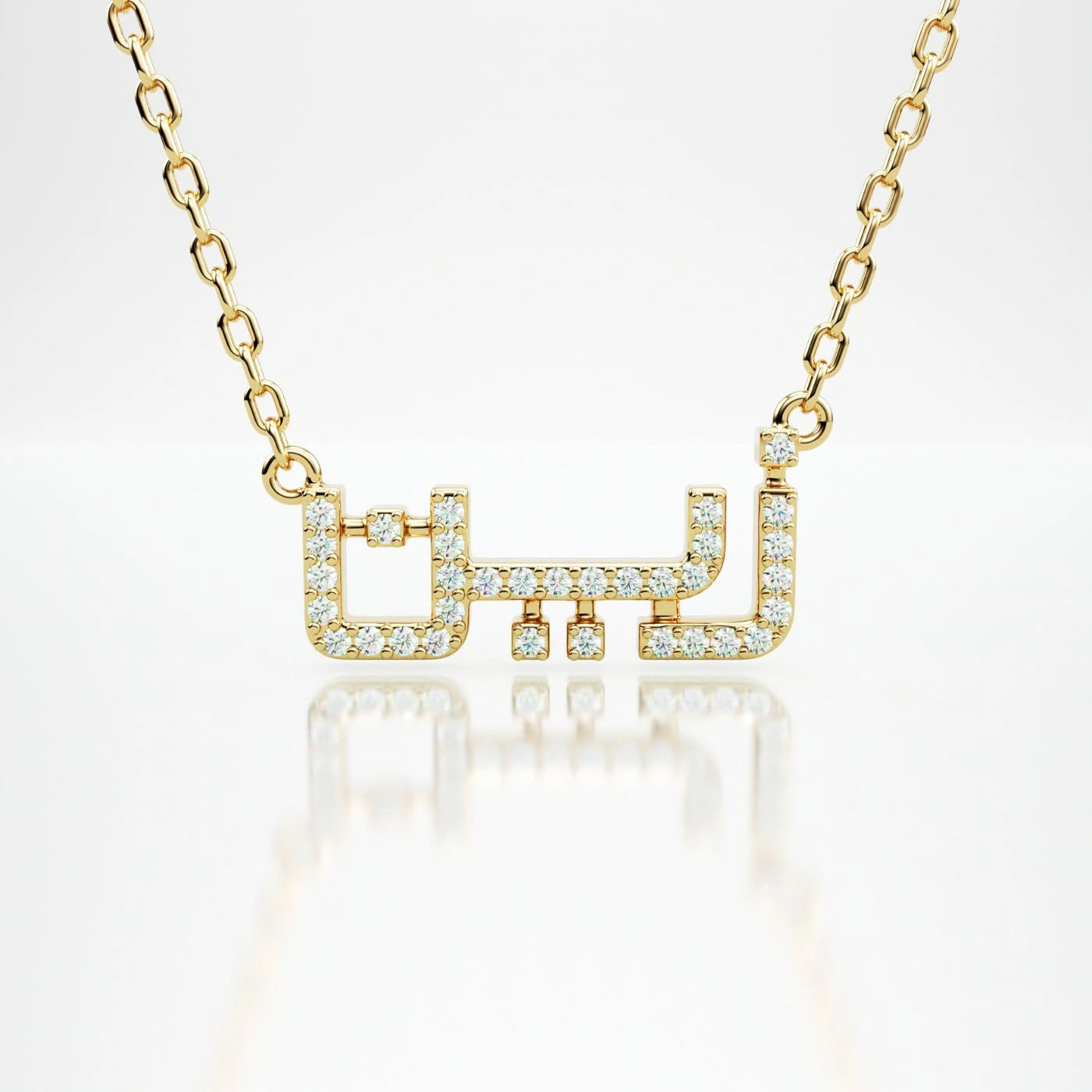
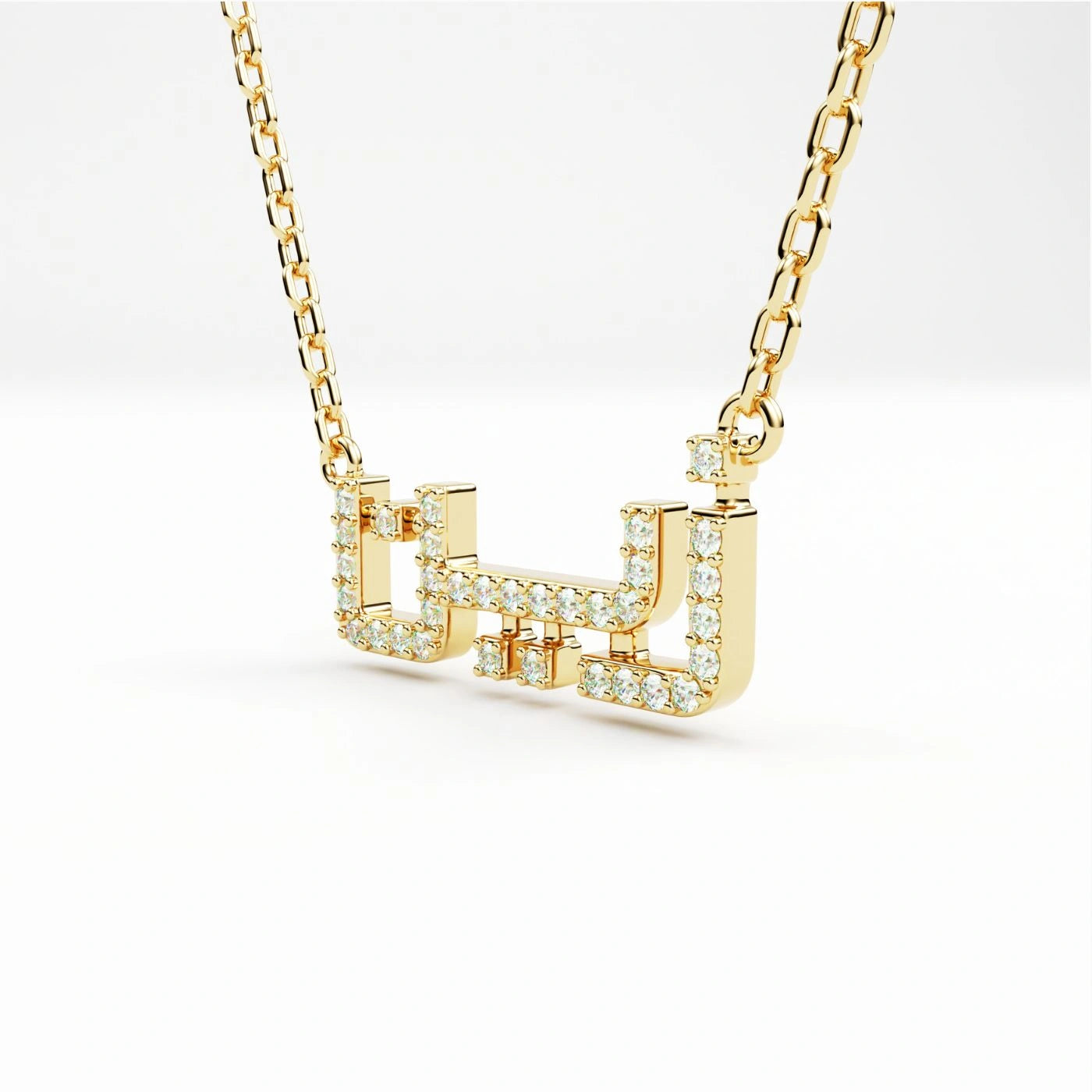
Kufic Diamond Arabic Name Necklace
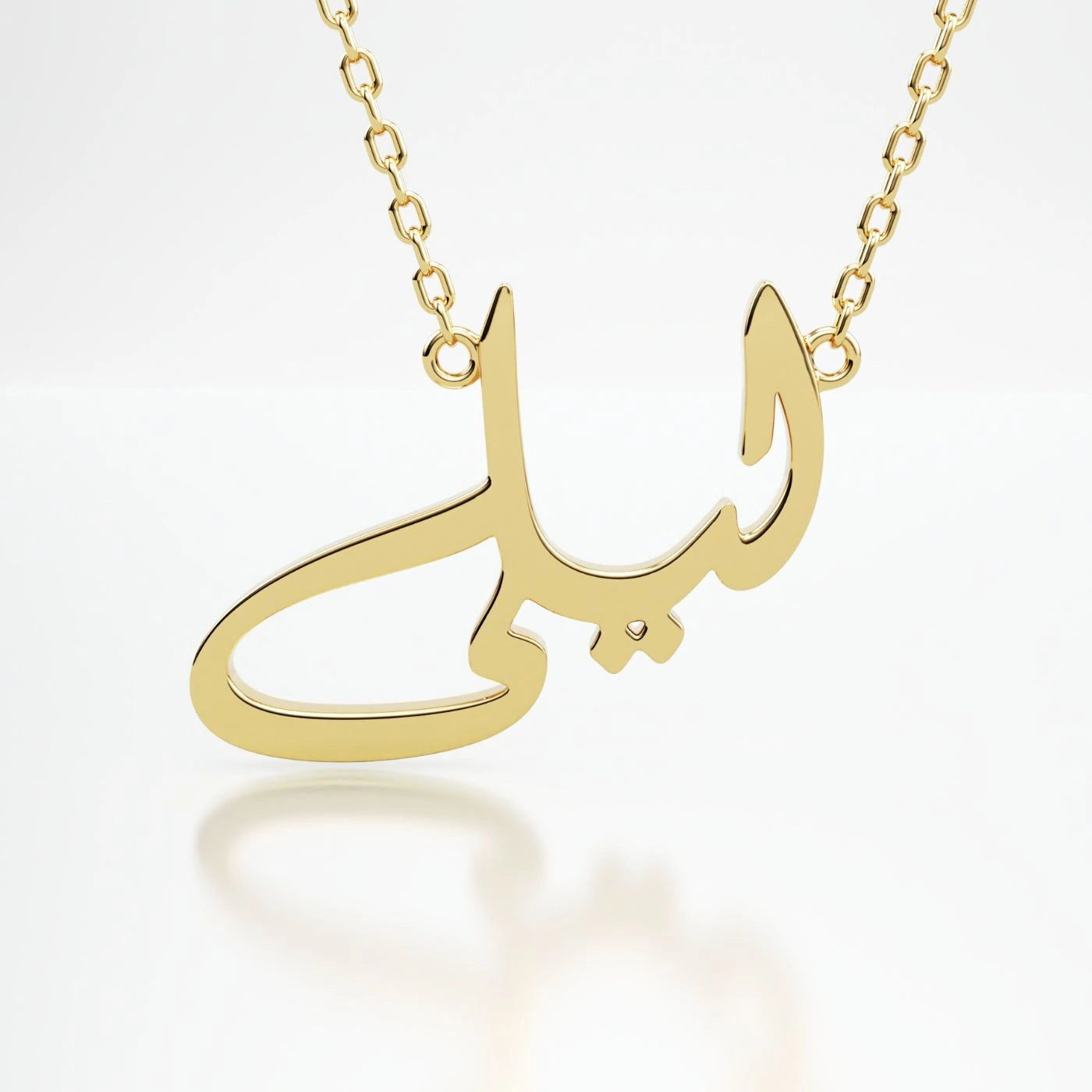
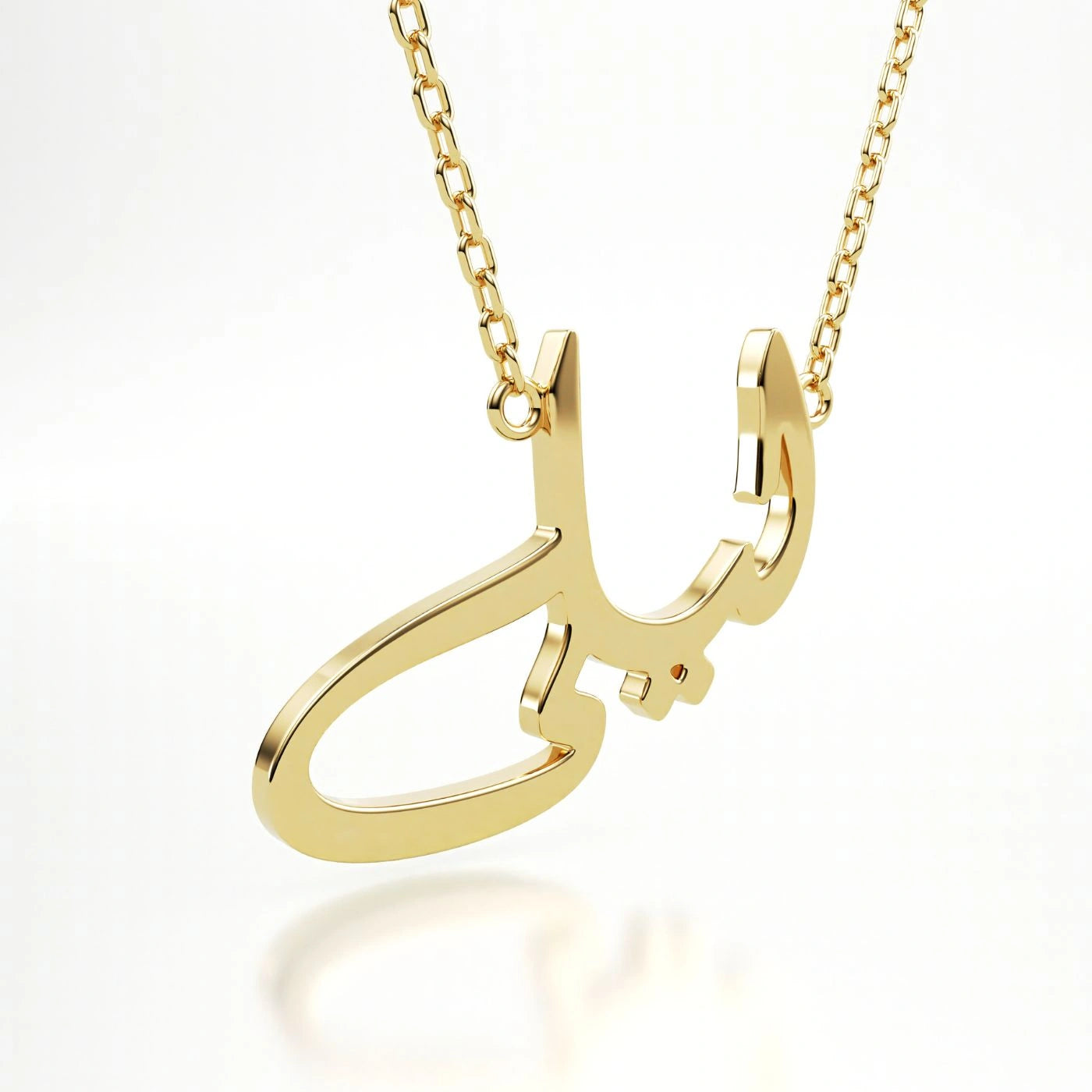
Modern Diwani Arabic Name Necklace

Written by Katie Silver