You’ve been eyeing that cute ear piercing, but then you start Googling and get hit with terms like “cartilage,” “helix earrings,” and “floating.” Suddenly, it feels like you need a dictionary. First off, every helix piercing is a cartilage piercing, but not every cartilage piercing is a helix.
Helix vs Cartilage Piercing: Types, Jewellery & Everything You Need to Know
Every helix is a cartilage piercing — but not every cartilage piercing is a helix. Here's exactly what that means, what to wear, and how to heal well.

Key Takeaways
- Helix is a type of cartilage piercing — not a synonym Cartilage covers any non-lobe piercing. Helix is specifically the outer upper rim of the ear.
- Regular earrings won't work Helix piercings need earrings designed for cartilage placement — flat-back studs, curved barbells, or purpose-made hoops.
- Healing takes 6–9 months Helix piercings heal more slowly than lobes. Other cartilage spots can take up to a full year.
- Material matters more here than anywhere Go hypoallergenic: titanium, 14ct gold, or surgical steel. Cartilage is more reactive than lobe tissue.
- There's no rule on which side Left is more common. Right is a little more unexpected. It comes down to your other piercings and how you wear your hair.
In This Guide
- Chapter I Cartilage vs Helix — The Difference — location, pain, and jewellery explained
- Chapter II Types of Helix Jewellery — hoops, studs, chains, floating, vertical and more
- Chapter III Pain, Healing & Considerations — what to expect and who should pause
- Chapter IV Mixing, Styling & Choosing the Right Jewellery — how to build an ear that works
Sounds like a riddle, but it isn't. This guide breaks down the exact differences, the types of jewellery involved, and everything else worth knowing before you make your decision.
Cartilage vs Helix — The Difference
The Simple, Basic Definitions
Cartilage piercing: any piercing that goes through the harder, firmer parts of your ear — not the soft, squishy lobe.
Helix piercing: more specific. The piercing sits along the outer edge of your upper ear. It's one location within the broader cartilage category.
Earlobes are soft and fleshy. Cartilage is firmer and more structured — which is why piercing it behaves differently, heals differently, and requires different jewellery.
Cartilage vs Helix — Side by Side
The main comparison points across location, pain, and jewellery.
| Feature | Cartilage Piercing | Helix Piercing |
|---|---|---|
| Location | Almost anywhere on the non-lobe ear: upper, lower, inner | Specifically the outer upper rim |
| Pain level | More than a lobe; varies by location (conch and rook are higher) | Lower end of the cartilage pain scale — a sharp pinch, then pressure |
| Healing time | Up to 12 months for high-movement areas | 6–9 months typically |
| Jewellery | Cartilage-specific — regular earrings won't fit or heal well | Helix-specific: flat-back studs, hoops, curved barbells, chains |

Types of Helix Jewellery
What Is Helix Jewellery and Its Popular Styles?
Helix earrings are different from regular earrings — not just in shape but in how they sit and heal on your ear. Right now, hoops and chains are leading, but the full range is wider than most people realise.
- Gold helix hoops Sleek, timeless, and perfect for everyday wear.
- Studs Subtle and ideal for new piercings or layered looks. Browse our earring studs.
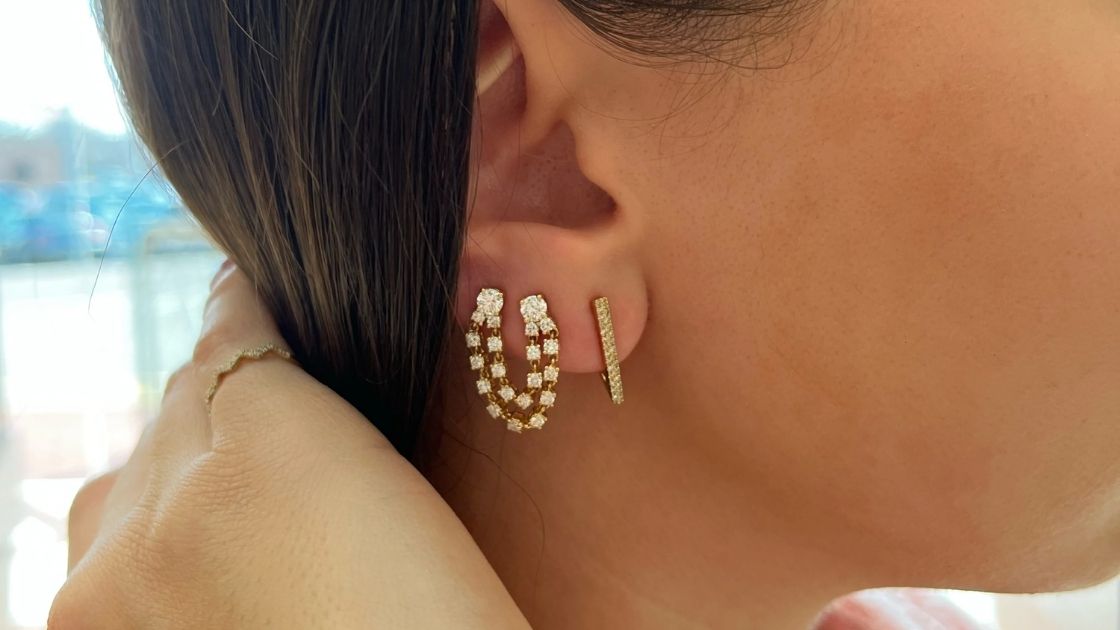
- Helix chains Trend-forward jewellery that connects two points on the ear.
- Floating helix jewellery Creates a modern "barely there" effect — the earring appears suspended on the surface of the ear.
- Hidden helix jewellery Minimalist and discreet — smaller stones or flat designs that don't draw attention.
The Helix Chain
A helix chain links two piercings with a delicate chain. Some versions wrap around the helix itself; others connect a helix piercing to a lobe piercing for an ear-spanning effect. It's one of the most visually impactful styles in the category right now.

Image source — Argent & Asher
Floating, Hidden & Vertical Helix Styles
Floating helix: gives the illusion that the earring is suspended on the surface of your ear with no visible posts or backs. These pieces are cleverly designed and look ultra-modern.
Hidden helix: if you're going for a low-profile aesthetic, hidden helix jewellery is the right choice. These sit subtly in the helix, often with smaller stones or flat designs that don't draw much attention.
Vertical helix: uses two vertically aligned holes on the helix. Curved barbells or stacked studs sit along the natural vertical line of your ear for a stacked, architectural effect.
Worth trying: the Diamond Curved Ear Bar and the Diamond Ear Chain from Argent & Asher — both designed for helix and cartilage placement.
Can You Wear Normal Earrings in a Helix or Cartilage Piercing?
Many people try it. It's not a good idea. Regular earrings are designed for earlobes — they won't fit as well in cartilage, and that's not just an aesthetic issue. The wrong fit can cause discomfort and slow down your healing significantly.
For helix piercings specifically, you want earrings made for helix placement: flat-back studs, curved barbells, purpose-made hoops. A regular pair won't sit correctly or lock in safely.

Pain, Healing & Considerations
Pain Levels, Healing Times & Who Should Pause
Pain: more uncomfortable than a lobe piercing, but less intense than some other cartilage spots like the conch or rook. Most people describe a helix as a sharp pinch followed by dull pressure — manageable for most.
Healing: helix piercings take 6–9 months. Other cartilage piercings, especially in higher-movement areas, can take closer to a full year. Patience matters here more than it does with a lobe.
Who should check in with a professional first: if you have skin sensitivities, autoimmune issues, or are prone to keloids, speak to a dermatologist before getting a cartilage piercing.
Five Types of Cartilage Piercing
There's more to cartilage than just the helix. Here are five popular types:
- 1 — Helix Outer upper ear. The most popular entry point into cartilage piercing.
- 2 — Industrial Two helix piercings connected by a single bar.
- 3 — Tragus The small flap in front of the ear canal.
- 4 — Conch Inner ear cartilage shaped like a shell. Higher on the pain scale.
- 5 — Anti-helix The ridge just inside the helix — also known as a snug piercing.

Mixing, Styling & Choosing the Right Jewellery
How to Mix Cartilage Piercings with Other Styles
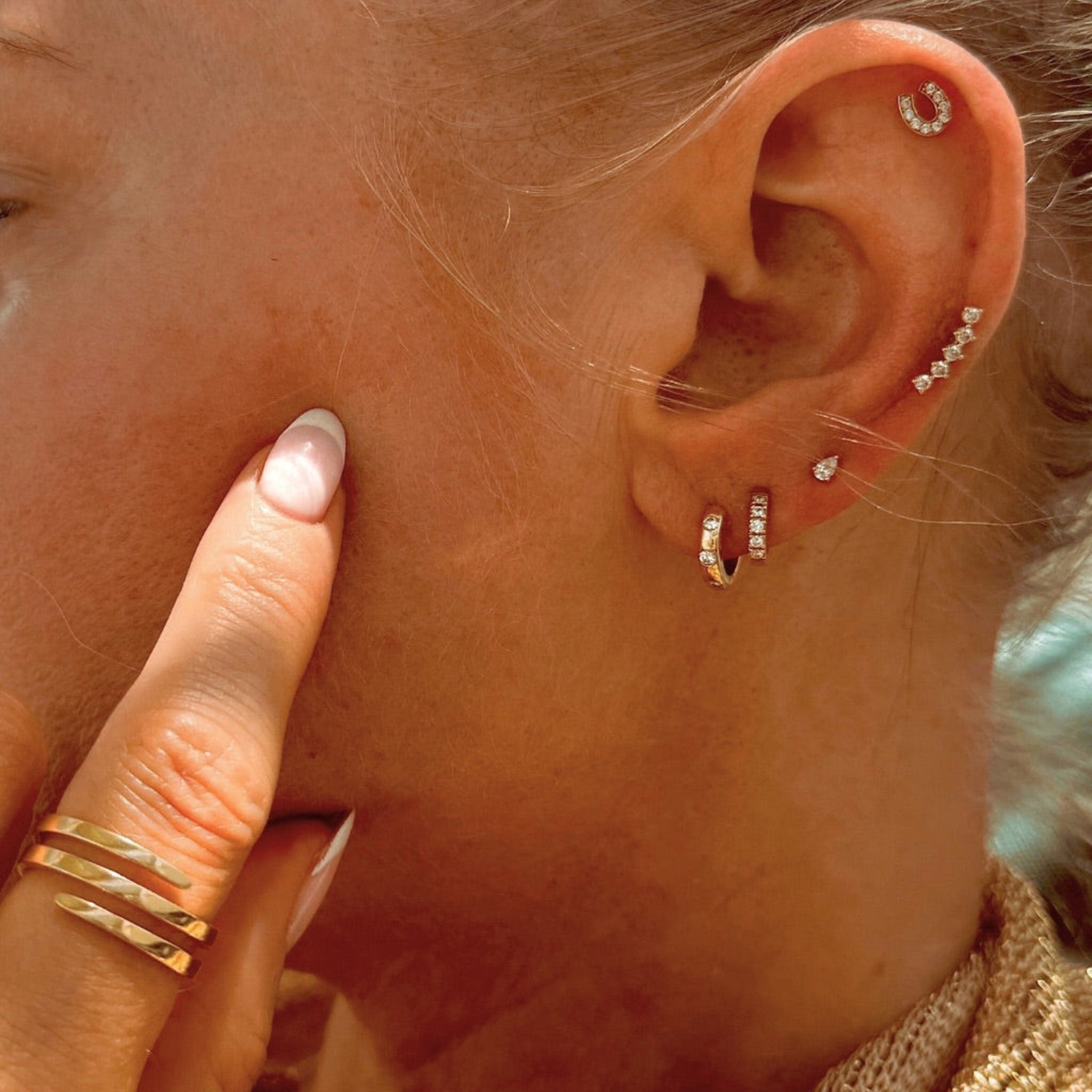
Mixing different piercings is one of the most expressive things you can do with jewellery. The trick is in how you layer — choosing complementary shapes and metals. Earrings for the top of the ear, like studs or helix chains, pair beautifully with bolder pieces in the lobe or inner cartilage.
For more styling tips: How to Style and Wear Chain Earrings Like a Pro
What piercing works best also depends on the shape of your ear:
- Small ears Stick to a single helix piercing or conch to avoid overcrowding.
- Wider ears You have more space — stack multiple helix or cartilage piercings confidently.
- Pointed ears or prominent tragus These can support standout pieces like vertical helix jewellery or ear climbers.
Three Things to Prioritise When Choosing Helix Jewellery
If you're investing in helix or cartilage jewellery, keep these three principles in mind:
- 1 — Material first Look for hypoallergenic materials: titanium, 14ct gold, or surgical steel. Cartilage is more reactive than lobe tissue — this isn't the place to cut corners.
- 2 — Style for your personality Edgy, minimalist, or luxe — helix jewellery exists across the full spectrum. Choose what you'll actually reach for, not just what looks good in a photo.
- 3 — Secure backing during healing Comfort and a secure backing system matter most while healing. You can graduate to more intricate styles once the piercing is fully settled.
Also read: 14 creative ways to wear ear chains
Everything Else Worth Knowing
What's the difference between a cartilage and helix piercing?
Cartilage is the broad category — any piercing through the non-lobe parts of your ear. A helix is a specific location within that: the outer upper rim of the ear. Every helix is a cartilage piercing, but not every cartilage piercing is a helix.
Can you wear regular earrings in a helix piercing?
No. Regular earrings are designed for earlobes and won't sit correctly in cartilage. For helix piercings you need flat-back studs, curved barbells, or purpose-made hoops — jewellery designed for that placement.
How long does a helix piercing take to heal?
6–9 months typically. Other cartilage piercings in higher-movement areas can take up to a full year. Don't rush it — changing jewellery too early is one of the most common causes of complications.
What side should I get a helix piercing on?
There's no rule. The left side tends to be more common, but the right is a little more unexpected. It comes down to your other piercings and how you wear your hair.
What's the most popular helix jewellery right now?
Hoops and chains are leading right now. The Diamond Ear Chain and Diamond Curved Ear Bar are among the most-requested styles at Argent & Asher — both designed for helix and cartilage placement.
What material should helix jewellery be made from?
Hypoallergenic materials only: titanium, 14ct gold, or surgical steel. Cartilage is more reactive than lobe tissue — the wrong material can cause irritation, slow healing, or complications even if you've worn the same earrings in your lobes without any issues.
Helix vs Cartilage — The Summary
Cartilage and helix piercings share space on your ear but they're not interchangeable. The helix is a specific spot with its own jewellery requirements. Choose high-quality helix earrings, take care during the healing period, and don't be afraid to mix pieces for a custom look that works for your ear shape and your style.
The most important decisions happen before the piercing: the studio, the material, and the jewellery itself. Get those right and the rest follows.
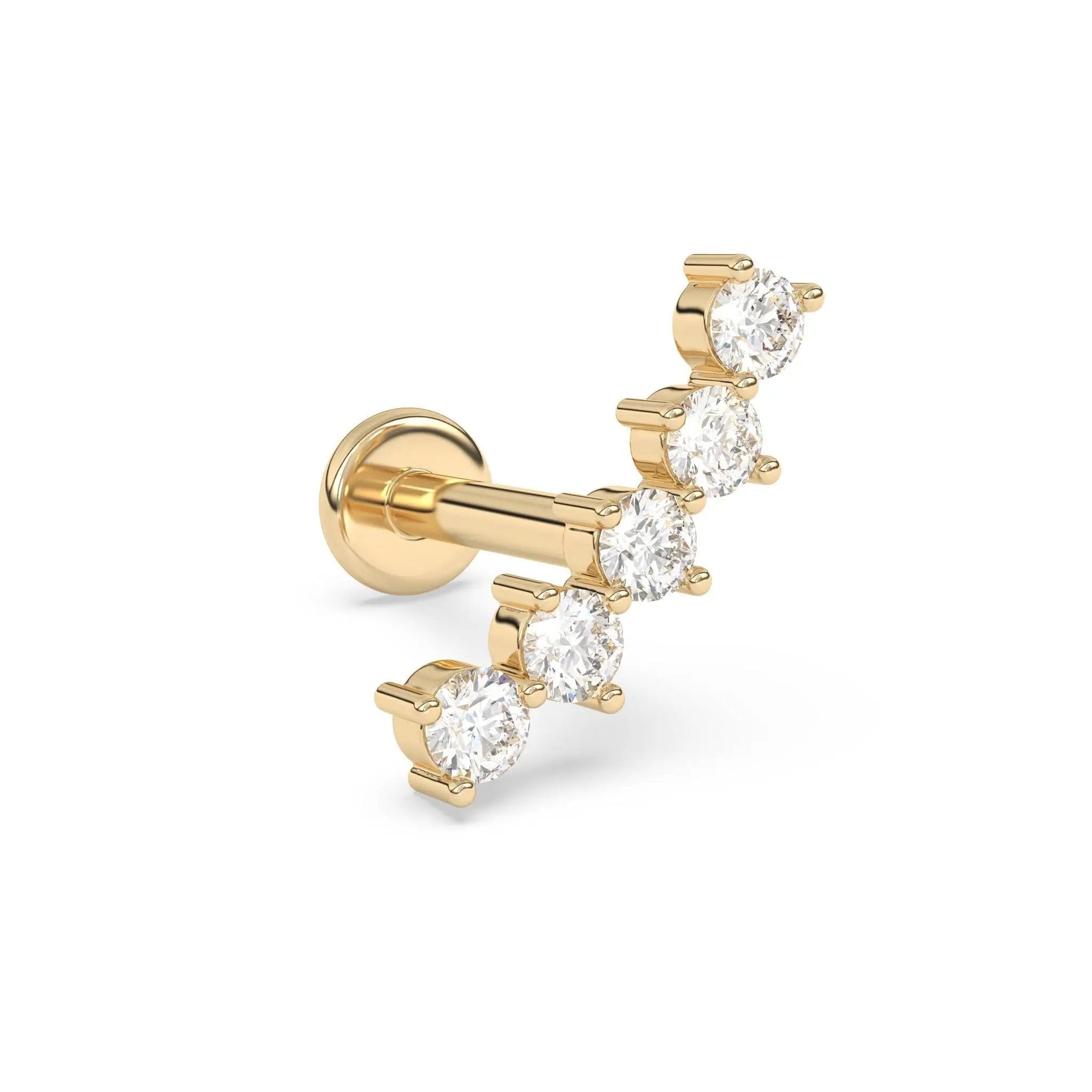
Diamond Curved Ear Bar
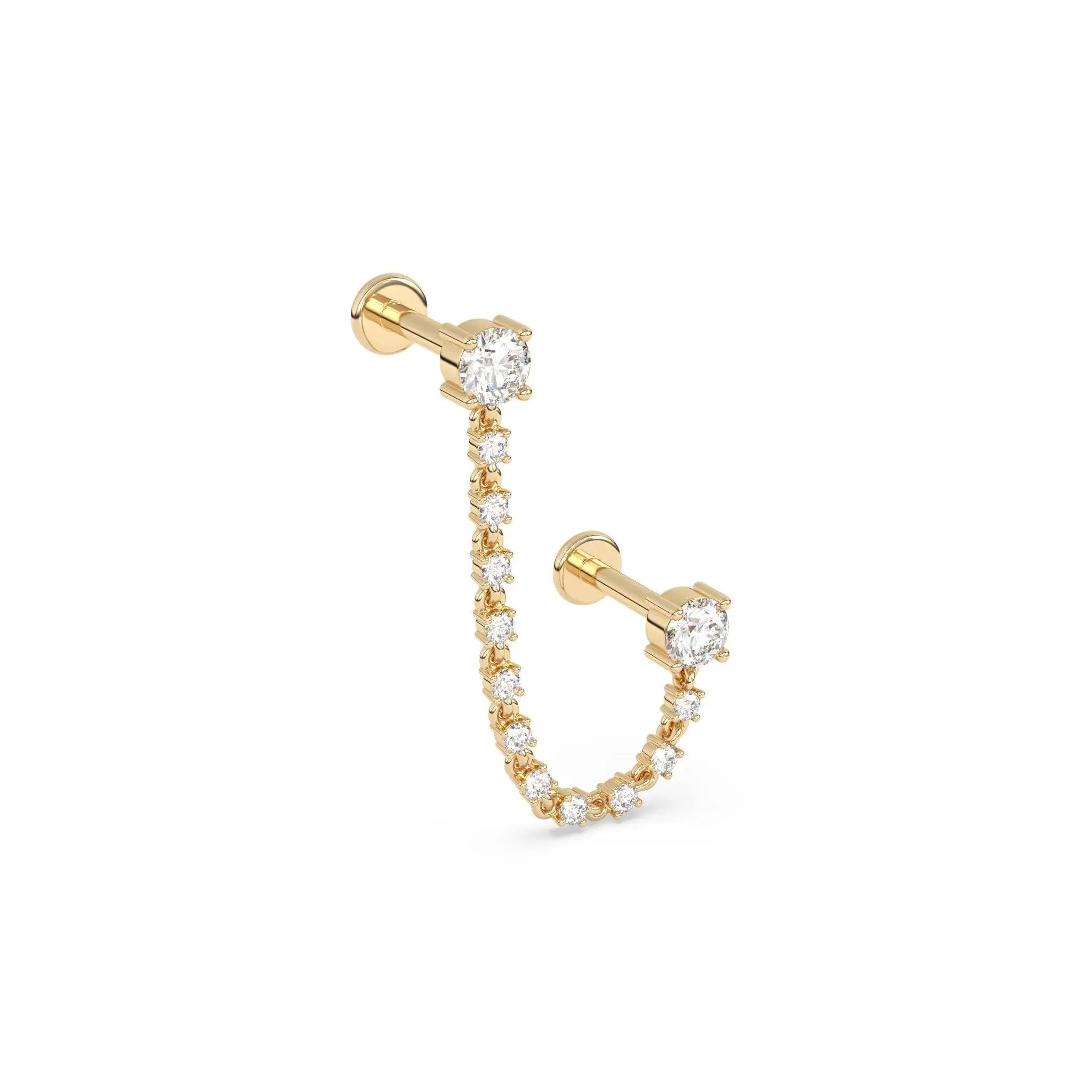

Diamond Ear Chain

Written by Katie Silver