The "ct" on a gold ring isn't just a stamp — it decides the colour, the price and whether the ring survives your actual life. Here's how 22ct, 18ct and 14ct really differ, and which one to choose.
22ct vs 18ct vs 14ct Gold Rings: Which One Should You Buy?
Karat decides the colour, the price and how well a ring survives real life. Here's what 22ct, 18ct and 14ct actually mean — and which one fits how you live day to day.
Key Takeaways
- Ct is purity, not quality 22ct is nearly pure gold, 18ct is 75% gold, 14ct is around 58%. None of them is "worse" gold — just a different mix.
- More gold, softer ring Pure gold is closer to lead than steel. The higher the karat, the easier it scratches, dents and thins over time.
- 18ct is the balance Rich colour, real weight, sturdy enough for a wedding band or the earrings you never take out.
- 14ct is the workhorse Paler, harder, cheaper. The one to choose if a ring has to survive a decade of daily wear without complaint.
- Skin reacts to the alloy, not the gold Higher karat generally means fewer base metals — and fewer chances of a flare-up.
- There's no wrong answer Only the wrong ring for your day. An engagement ring and a ring you wear once a year want different metal.
In This Guide
- Chapter I What "Ct" Actually Means — the maths behind the mix, in plain English
- Chapter II 22ct, 18ct and 14ct, One by One — what each is actually good for
- Chapter III Living With It — durability, sensitive skin and everyday wear
- The Verdict So, Which One Should You Choose? — our honest recommendation
22ct gold has a beautiful, deep tone, but it's soft — not ideal if your hands are never still. 14ct is far hardier, with a comparatively paler hue. 18ct sits between the two, which is exactly why it's the one most rings are made from.
Getting it right is really about being honest about your lifestyle rather than chasing the highest number on the label. Once you know what each karat is actually doing, the decision stops being a headache.
The Basics of Karat
What Does "Ct" Actually Mean?
Ct is short for carat, and it's all about the mix. Pure 24ct gold behaves more like lead than a ring you'd want to wear — soft, easy to dent, no interest in holding its shape. So we alloy it with other metals to make it practical. An 18ct ring is 75% gold. A 14ct ring is just over half.
Mix in silver or copper and you get a metal that's genuinely life-proof. An 18ct band carries a lovely weight and a high gold content; a 14ct one is harder and more resistant to knocks. It's the alloy doing the heavy lifting, not the gold.

22ct, 18ct and 14ct, One by One
22ct: The Purist's Choice
22ct is about as close to pure gold as a ring gets. It looks rich and expensive because it is — nothing beats that deep, buttery yellow for a ceremonial or traditional wedding set.
The trade-off: it's a delicate soul. Without much else mixed in to stiffen it, 22ct can thin or warp under daily wear. We wouldn't put it on a ring that's getting knocked about at the school gate or the gym. It's better suited to statement pieces you bring out for the moments that actually call for maximum golden impact.
18ct: The Everyday Standard
When someone's choosing a special piece, 18ct is usually the first thing we suggest. At 75% purity, it has a premium feel you don't get from lower-karat metals, and it's surprisingly practical with it — far more life-proof than 22ct, able to take the odd knock without losing its shape. That makes it right for the pieces you wear constantly: a wedding band, the earrings that live in your ears.
It's a bigger investment up front, thanks to the higher gold content, and it'll want a professional polish every few years to stay sharp. In exchange, you get the most balanced mix of luxury and long-term wear on the market.
14ct: The All-Rounder
14ct is the all-rounder of the jewellery world. At around 58% gold content, it sits at the sweet spot between luxury and genuine sturdiness — worth remembering if this is the first ring you've bought for daily wear, because your hands go through more than you'd think.
It handles knocks and scratches better than 18ct, which makes it a sensible choice for an active lifestyle or an engagement ring that needs to survive decades of daily wear. Lower maintenance, easier on the budget — a little less about prestige, a lot more about the everyday glow.
Living With It
How Durability Changes Everyday Wear
Think about your lifestyle before you settle on a purity, because we forget how much a ring actually goes through. Temperature changes, constant friction, impact against a hundred small surfaces a day. Gold is naturally soft, so the higher the purity, the easier it scratches or bends.
If it's a ring you'll wear for a lifetime, durability goes to the top of the list. 14ct is brilliant for that reason. 18ct gives you a middle ground of rich colour and decent strength. Save 22ct for pieces that aren't clashing with the world quite as often as a ring does.

Which Gold Is Kindest to Sensitive Skin?
If your skin reacts to jewellery, higher-karat gold is usually kinder. Higher purity means fewer base metals in the mix to cause a flare-up — pure gold itself is hypoallergenic, it's the alloy that occasionally isn't.
22ct is generally the gold standard for anyone who reacts to jewellery, and 18ct is a safe bet for most people too. 14ct can occasionally cause trouble if the alloy carries even a trace of nickel. Everyone's skin is different, but staying towards the higher end of the purity scale usually saves you the bother.
Also read: Nickel-Free Jewellery, Explained
Purity & Durability, Side by Side
The trade-off between price, beauty and brawn, at a glance:
| Gold Type | Purity | Durability | Colour Richness | Price Point |
|---|---|---|---|---|
| 22ct | Very high | Lower | Deep, buttery yellow | Premium |
| 18ct | High | Moderate to high | Rich, classic yellow | High-end |
| 14ct | Moderate | High | Softer, pale yellow | Mid-range |
Everything Else Worth Knowing
Is "ct" the same as "karat"?
Yes. You'll still see gold marked with a "K" — 22K, 18K, 14K — but it means exactly the same thing as ct. We use ct; older hallmarks and some international pieces use K.
Why is 22ct gold softer than 18ct or 14ct?
Because there's more pure gold in the mix, and pure gold is soft by nature. The alloy metals — usually silver or copper — are what give a ring its structure. Less alloy means less structure.
Is 18ct or 14ct better for a ring you wear every day?
Both work well. 18ct gives you richer colour with good durability; 14ct gives you the most durability of the three, plus a lower price. If the ring is coming off constantly — an active job, small children, a lot of hand-washing — we'd lean 14ct.
Does a lower karat mean lower quality?
No — it means a different mix, made for a different job. A well-made 14ct ring is not a lesser ring; it's the right ring for daily wear. Quality is about the craftsmanship, not just the number stamped inside the band.
Can 14ct gold be resized and repaired as easily as 18ct?
Yes, both resize and repair well in the hands of a good jeweller. 14ct's extra hardness can actually make fine detail work marginally slower, but it holds its shape well between visits.
So, Which One Should You Choose?
There isn't a single right answer, because the best gold for you depends on what your daily life looks like.
22ct is for purists who love that traditional, deep yellow and don't mind keeping it for special occasions. If you want something that feels high-end without letting you down day to day, 18ct is almost always the answer — it's the classic choice for a reason. And if you want the look of gold without the worry, 14ct is the sensible pick: more durable, harder to scratch, and easier on the budget, which makes it ideal for the ring you never take off.
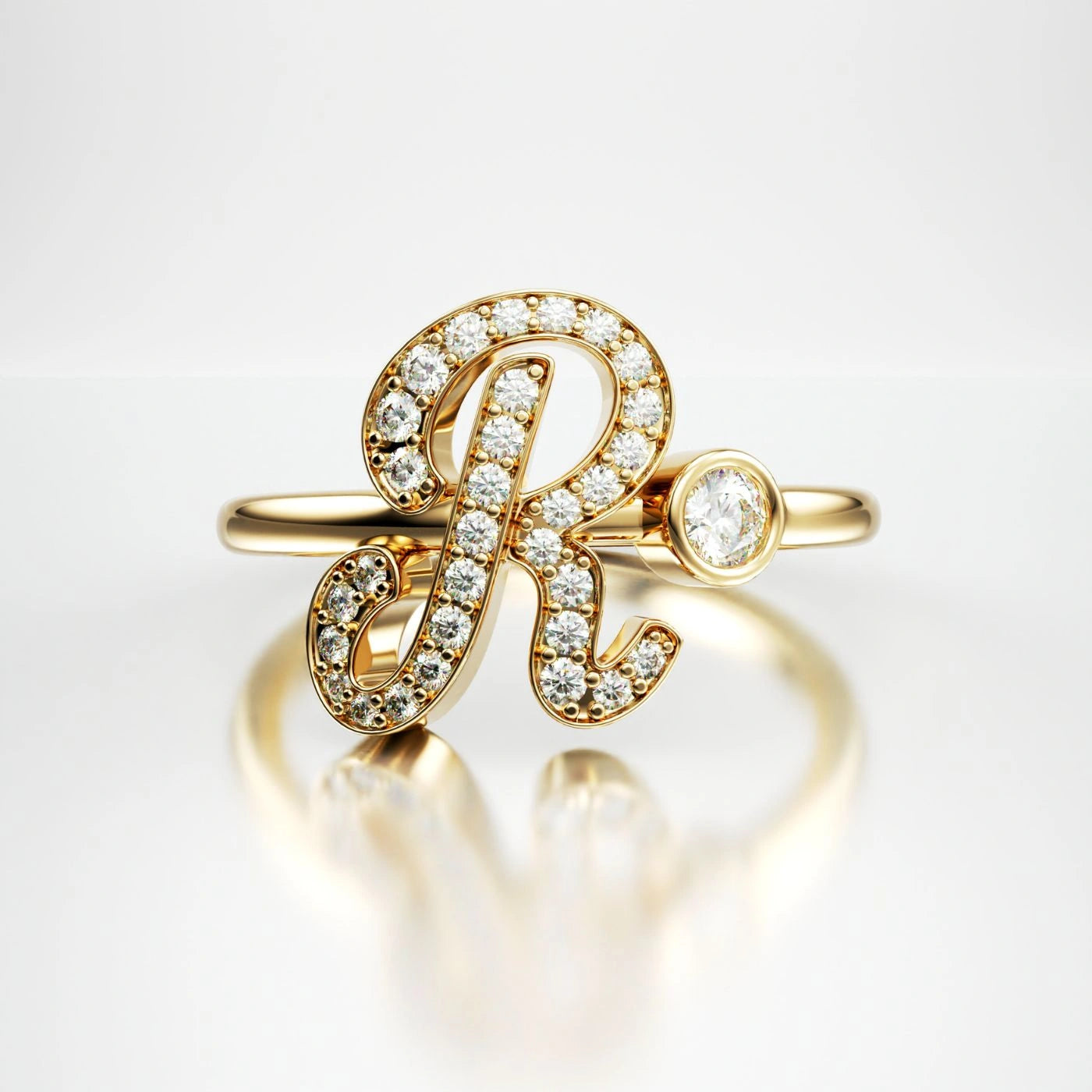
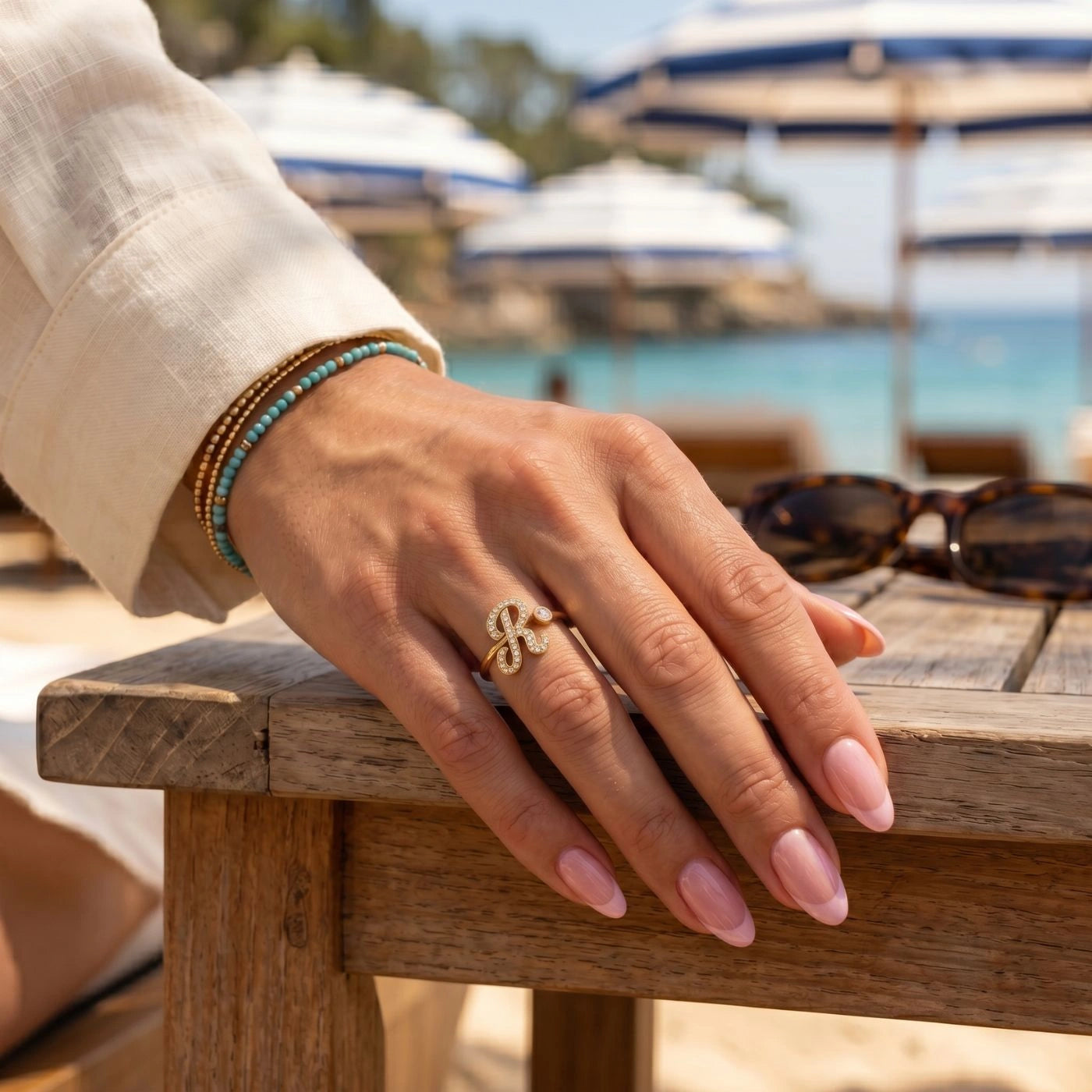
Letter Ring
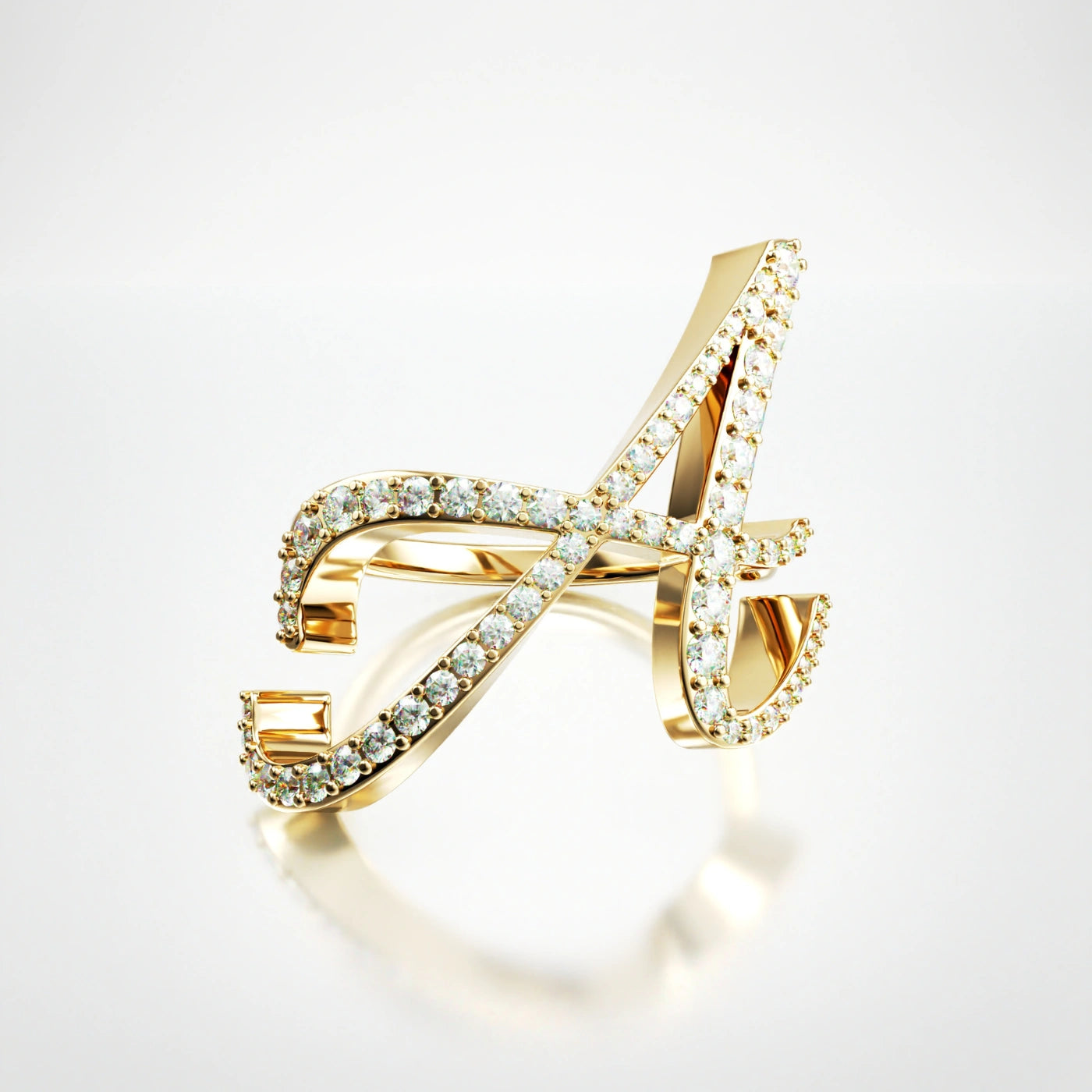

Luxe Initial Ring

Written by Katie Silver