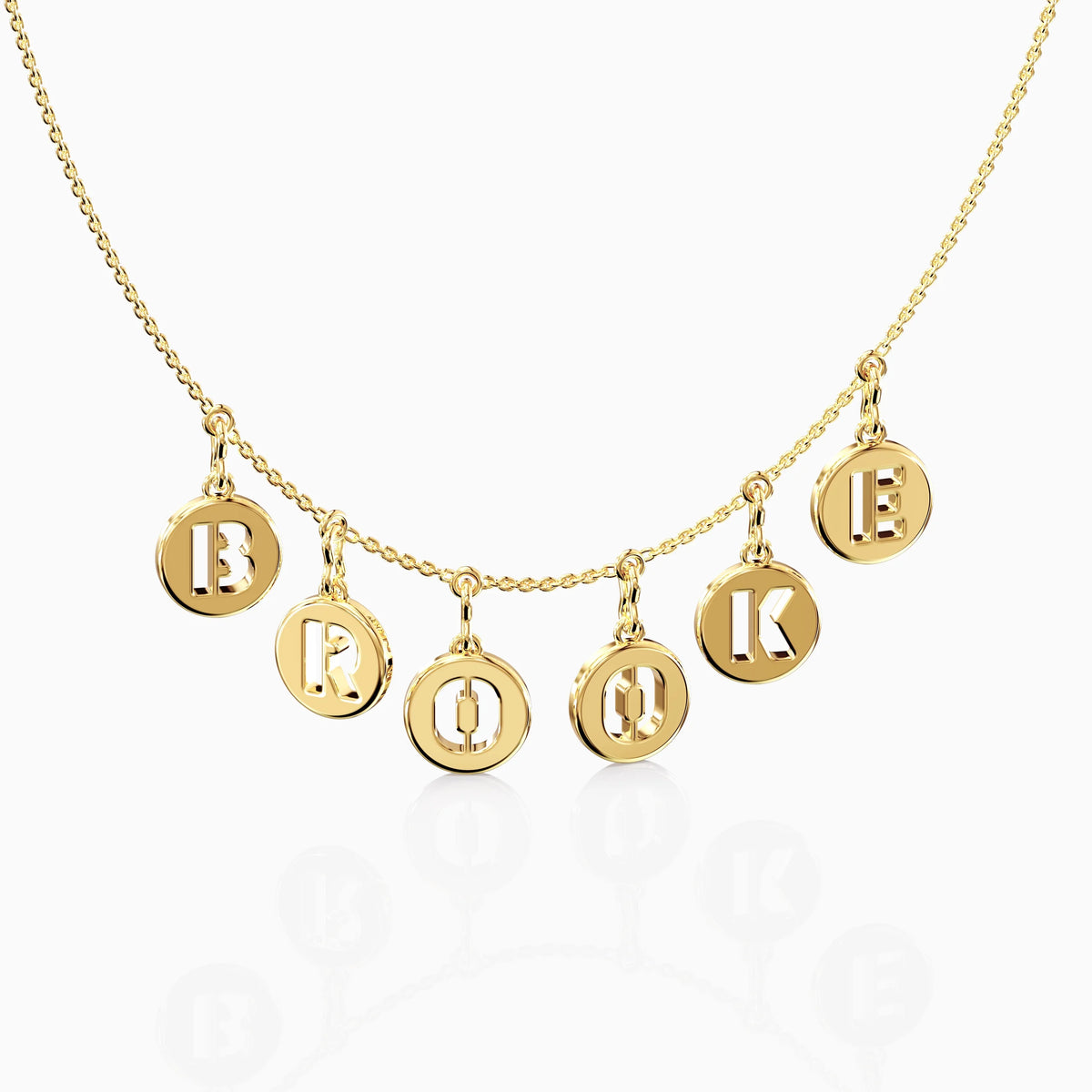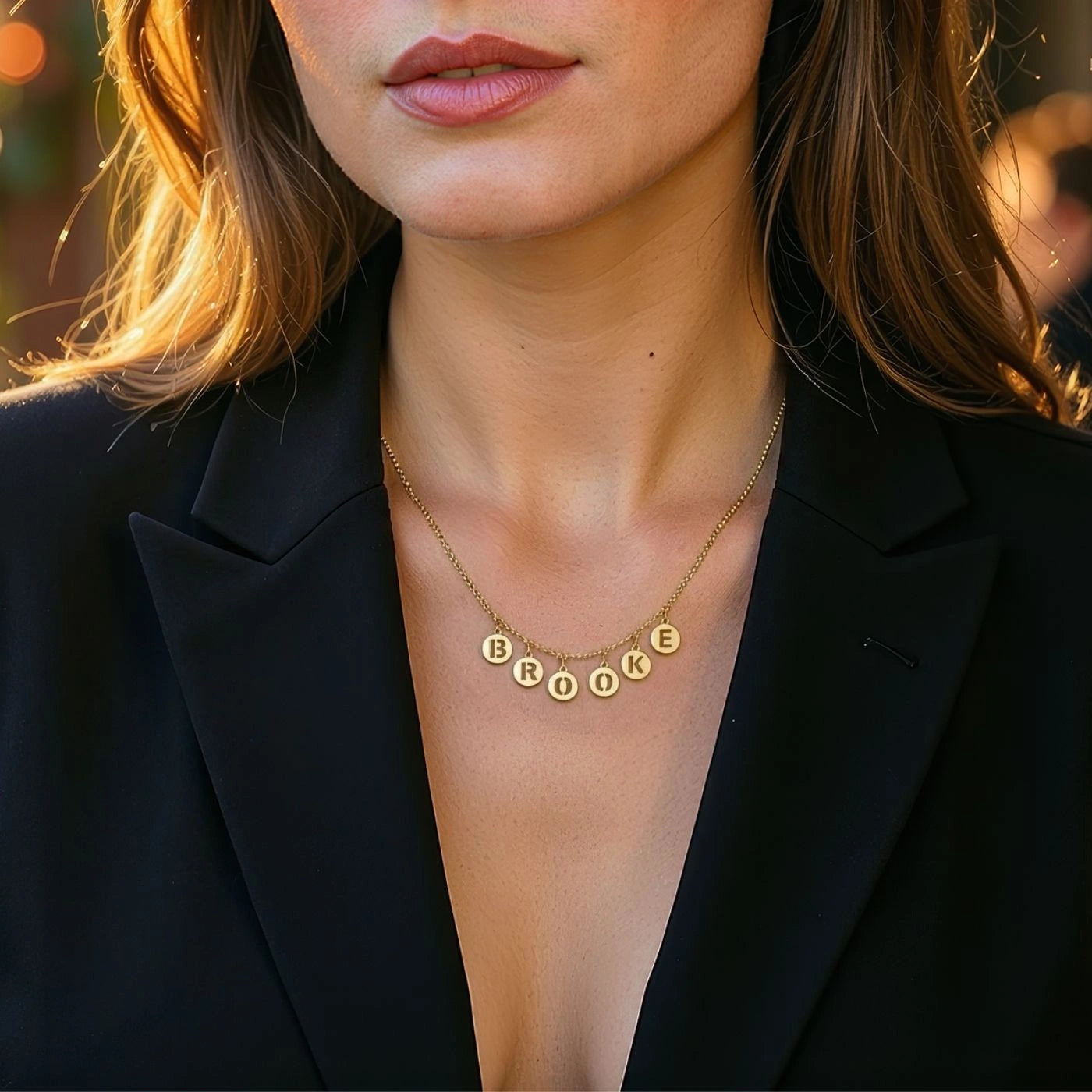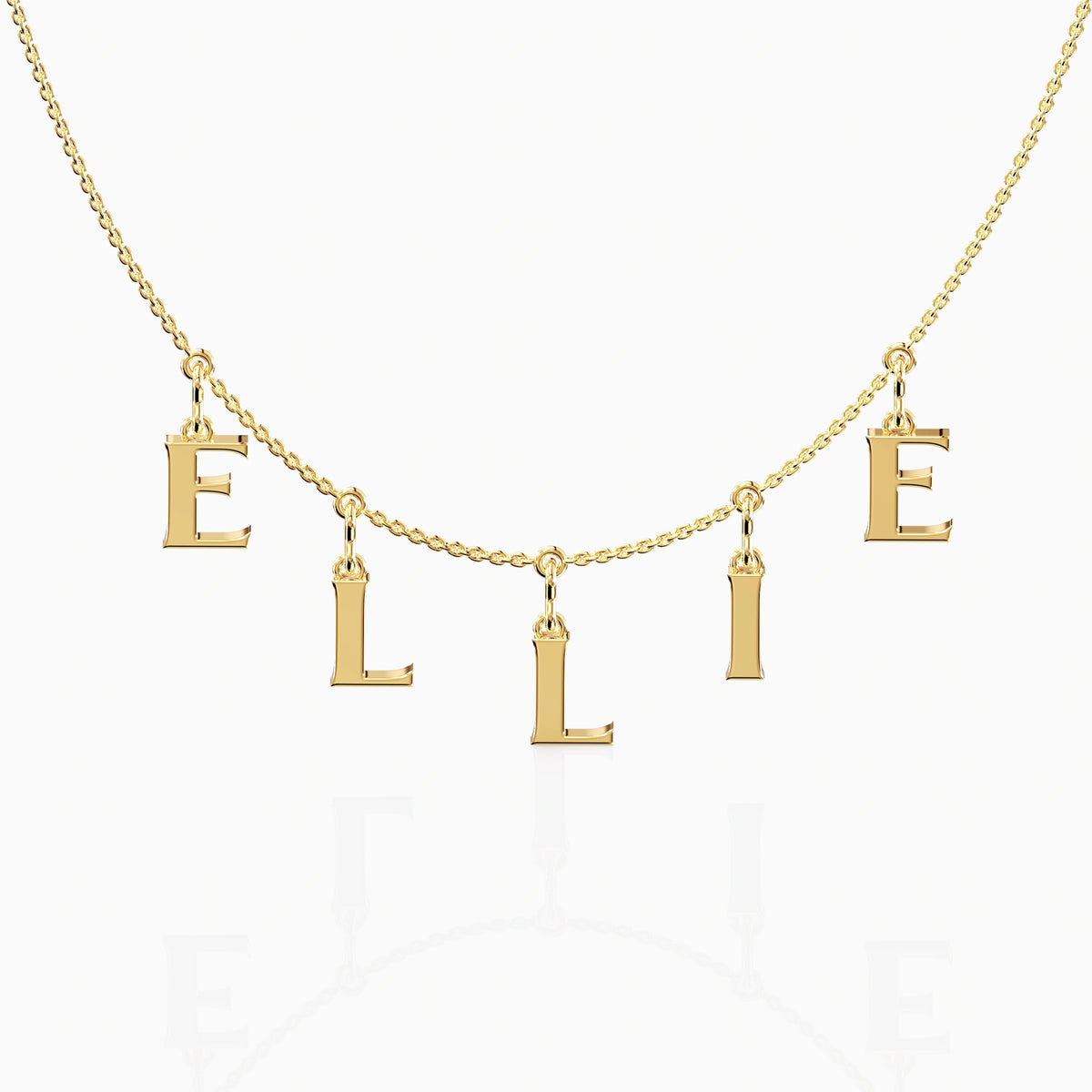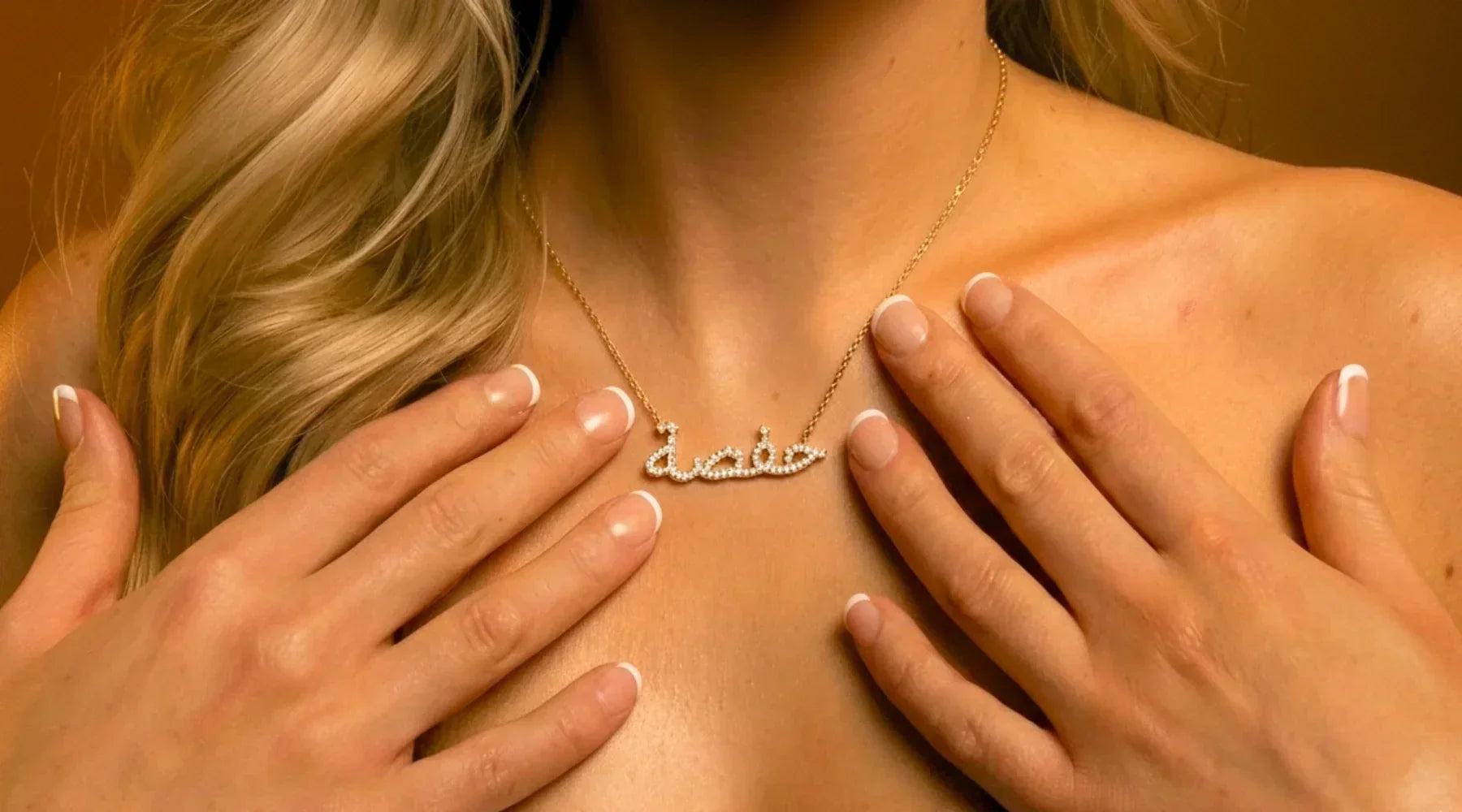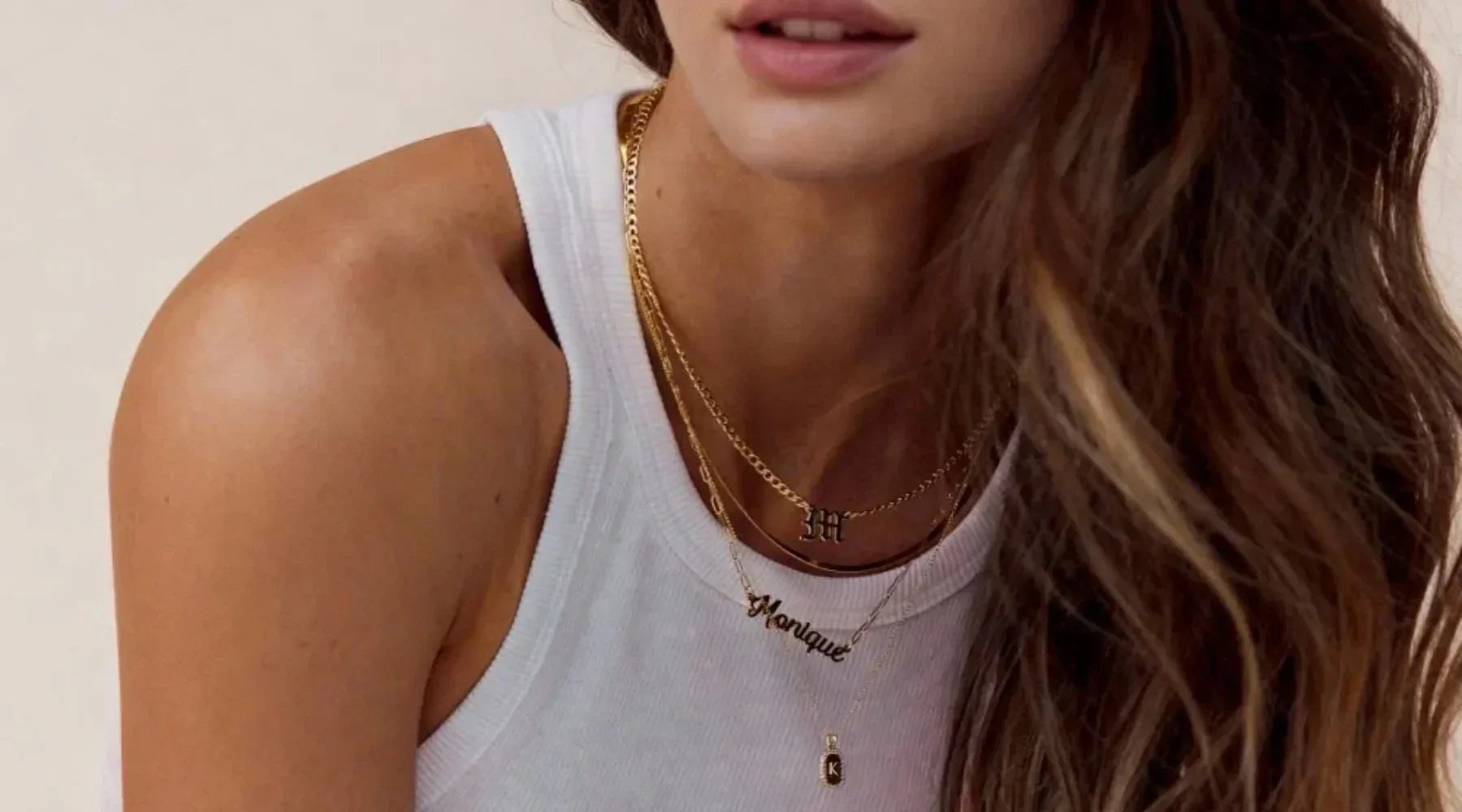
A gold name necklace is a small thing that can mean a lot, so choosing well matters. Beyond the font and finish, the type of gold determines the necklace’s colour, strength and how it wears over time. It can even decide whether your skin gets on with it.
This guide breaks down everything you need to know: from 24 karat gold to 14k gold, how purity is measured, and which option is best for your lifestyle.

Key Takeaways
- Think of gold purity as the ratio of real gold to everything else mixed in.
- 24k is the purest, but it’s too soft for name necklaces; it would bend or scratch easily.
- 18k gives you that rich, warm colour. 14k is the harder choice and copes better with daily wear.
- More pure = deeper yellow, softer metal and a higher price tag.
- Always check for hallmarks, purity certifications, and trusted jewellers.
What Does Gold Purity Mean for Your Gold Name Necklace?
“Gold purity” is simply the amount of real gold in the metal. Why not use pure gold? Because pure gold is soft, but mix in copper, silver, nickel or zinc and it becomes tougher and more wearable. The small letters and joints of a name necklace need strength; otherwise, they can lose shape quickly.
Quick definitions:
- 24k gold: 99.9 percent pure
- 18k gold: 75 percent pure
- 14k gold: 58.3 percent pure
These variations matter because name necklaces often have fine script details that need a metal strong enough to keep everything neat and in place.
How Is Gold Purity Measured for Gold Name Necklaces?
Gold purity is measured in karats (K), which indicate the gold content out of 24 total parts.
- 14k gold → 14 parts gold, 10 parts alloy
- 18k gold → 18 parts gold, 6 parts alloy
- 24k gold → 24 parts gold, no alloy
Other labels you’ll see:
- Gold-plated → A thin layer of gold over base metals. It looks like gold but contains very little actual gold.
- Gold alloyed → Includes metals blended with gold to enhance durability.
Higher karats mean more pure gold (richer colour, softer metal). Lower karats mix in other metals to make the necklace tougher and better for everyday wear.
The Different Gold Purity Levels: 14K, 18K, and 24K Gold Explained
| Gold Purity | Gold Content | Durability | Colour | Best For | Pros | Cons |
|---|---|---|---|---|---|---|
| 14k Gold | 58.3% pure gold | Very strong | Lighter yellow | Daily wear | Durable, affordable, less prone to scratches | Less rich colour |
| 18k Gold | 75% pure gold | Moderately strong | Deep, warm yellow | Luxury daily wear | Rich colour, higher purity, hypoallergenic | Higher price, softer than 14k |
| 24k Gold | 99.9% pure gold | Very soft | Deepest yellow | Collectors, ceremonial pieces | Purest form of gold | Too soft for necklaces, scratches easily, expensive |
Why Pure Gold (24K) Is Not Commonly Used in Name Necklaces
Although 24k gold is the purest form of gold, it’s too soft for everyday jewellery, especially something like a gold necklace with a name that includes a delicate script.
24k gold can:
- bend out of shape
- scratch easily
- wear thin over time
- lose definition in letters and curves
So, jewellers favour 14k and 18k gold because they strike a cracking balance: attractive, yet durable.
Which Gold Purity Is Best for Daily Wear in a Name Necklace?
For daily wear, these are the usual favourites:
14k Gold
- Strongest and most durable
- Ideal for daily wear
- More affordable
18k Gold
- Higher gold content
- Richer colour
- A balance of luxury and practicality
If you want your gold name necklace UK purchase to stay beautiful for years without constant worry, 14k or 18k are the best options.

How Does Gold Purity Affect the Durability of a Name Necklace?
Gold by itself is soft. As gold purity increases, the metal becomes:
- softer
- more malleable
- more prone to scratching
This means:
- 14k gold is the most resistant to everyday wear
- 18k gold is slightly softer but still durable
- 24k gold is not recommended for daily wear
For a gold piece that includes letters, curves, or Arabic script, durability is essential.
Does Higher Gold Purity Make a Name Necklace More Expensive?
Yes. The more pure gold used in the alloy, the higher the price.
- 18k gold name necklaces cost more than 14k due to higher gold content.
- 24k gold items are the most expensive but impractical for necklaces.
Higher purity = more gold = higher cost. If you are looking for something that lasts and still feels like a good investment, 14k gold is usually your safest bet for a name necklace.
Gold Purity and Allergies: What You Need to Know
Allergic reactions normally come from the other metals mixed in, not from the gold itself. If your skin’s sensitive, opt for alloys with fewer suspect metals.
Good news:
- 18k gold contains fewer alloy metals → best for sensitive skin
- 14k gold is still hypoallergenic, especially when nickel-free
- 24k gold is fully hypoallergenic, but impractical for necklaces
If you have very sensitive skin, 18k gold is the ideal balance of purity and performance.
How Does Gold Purity Influence the Colour of Your Gold Name Necklace?
Gold purity affects the depth of the gold’s yellow hue:
- 24k gold → deep, rich yellow
- 18k gold → warm, luxurious gold tone
- 14k gold → lighter, softer yellow
Additional metals shape the final colour:
- Rose gold → more copper
- White gold → alloyed with white metals + often rhodium plated
If you love a deeper yellow tone, 18k feels more luxurious. If you prefer a subtle look, 14k is perfect.
How Gold Purity Affects the Maintenance of a Name Necklace
Higher gold purity means more softness, more maintenance.
24k gold
- Scratches quickly
- Needs gentle handling
18k gold
- May show marks faster than 14k
14k gold
- Best for low-maintenance daily wear
All gold items benefit from proper storage and cleaning.
How to Care for Your Gold Name Necklace Based on Purity
| Gold Purity | Cleaning | Maintenance | Storage |
|---|---|---|---|
| 14k Gold | Mild soap + warm water | Low | Soft pouch, avoid chemicals |
| 18k Gold | Gentle polishing cloth | Moderate | Keep separate to prevent scratches |
| 24k Gold | Very gentle cleaning | High | Store individually, avoid friction |
Regardless of purity, avoid perfumes, chlorine, and rough handling.
How to Verify the Gold Purity of a Name Necklace
There are a few ways to check whether your necklace is real gold:
Acid test
A professional jeweller uses acid to reveal the true gold content.
Magnet test
Gold is not magnetic; if it sticks to a magnet, it contains more base metals.
Hallmark check
Gold comes with karat stamps like 585, 750, 999, or 14k, 18k, and 24k, etc
Always buy from trusted jewellers who clearly state purity levels and metal content.
Where to Buy Gold Name Necklaces with Specific Purity Levels
Always choose a jeweller who provides:
- clear karat information
- solid gold (not gold plated)
- purity certifications
- hallmarks
- transparent metal content details
If craftsmanship matters, Argent & Asher is an easy pick. Their 14k and 18k name necklaces are hand-made in solid gold.
Conclusion
When choosing a gold necklace with a name, purity is a key decision. 24k is pure gold, but it’s soft and scratches easily. 14k and 18k are stronger and better for everyday wear while still looking beautiful.
Match the purity to how often you’ll wear the piece and what you can spend, and you’ll end up with something that looks great for years.
Have a browse through Argent & Asher’s solid 14k and 18k ranges; you’ll find pieces built to last.